Yaw, Pitch & Roll

Ah, I get you Rholmes. Yes, I work with someone like that who decries the "crap equipment" we have to work with. Ya gotta work with the tools at hand and make the best of it. I'll take issue with someone when they use their kit badly.
 
[ QUOTE ]
a crane is a crane no matter what..... if it helps from lowering stuff by hand or loading block into the back of a dump truck then its helping you make money.it does not matter if it a 13t,40t or a 100t. thats my 2 cents

[/ QUOTE ]

RIGHT ON
 
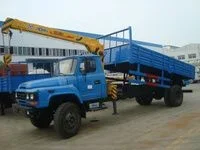
Agreed. The first crane I owned was around '75 and a used Chev railroad truck that was probably about 8 ton cap. with no boom out and maybe 15'stick but to make up for that it had a 11' dump bed behind the cab and crane. There were knuck booms back then but none with a load line you could walk out and don't remember any with dumps.

Lots to said for that truck being a one unit to go out and pick up wood and not have to crane off or hand unload logs. Also you could drag logs up embankments and pull over trees with it. Wish I still had every truck I ever owned :-).

Looked a little something like this without the boom out aspect....attchmt.
 

Attachments

  • 298816-dump_truck_with_crane_v0_jpg_200x200.webp
    298816-dump_truck_with_crane_v0_jpg_200x200.webp
    6.7 KB · Views: 88
Oh man that thing looks awsome. I'd give anything to drive something like that. Just rigid as a jackhammer and you could pull a house over with it. Great photo!
 
[ QUOTE ]
Oh man that thing looks awsome. I'd give anything to drive something like that. Just rigid as a jackhammer and you could pull a house over with it. Great photo!

[/ QUOTE ]

Thanks Whiz.

Had just an incredible day with our 25 ton crane, 75' bucket and a big ole 4' dia sycie over 2 houses on a sunny 50 degree day today. Man we love our crane. No wonder all these kids are flocking to these seminars being posted.

All that yawl pitchin and rollin etc. has to be considered when loading big honkers as well. You could get squashed like a gnat either it rolling or turning on ya in/on the truck or knock ya off the truck and then roll on your unlucky (butt). :} Stay safe guys.
 
I've said it before but the smaller cranes take more skill to run at their limits than a larger crane at the same radius. Driving the other day.....looked over at a farm and saw my Dad's old custom a- frame crane with dump bed and chip top on rails that slid forward (to load logs) from the early 60s. I was doing jobs with this thing by myself when I was 16. Farmer still runs it!!!! Next time will get pic. Basically I'm saying ditto to the RIGHT ON!
 
Jamin,

Your comments are good and I like your idea that communication is important. Don't mind all the extraneous comments. I think that since we're talking about communication and crane work (especially making tree picks) we should assume that the climber and operator have radio headsets. If they don't, they would have a hard time talking about things more important than yaw, pitch, and roll.

At our company we regard radio headsets as super-important for safety and I would say that the topics we discuss in order of importance are:

1. Load vs. Capacity ("How much you think that branch is if we cut it above that limb you're at?")
2. Getting the RigEm&Roll (ball and strap) back to where the climber wants it. ("which one you want to get next?")
3. Yaw, pitch, and roll, only we don't always use those terms. ("I think if we get it there it could roll over into the power lines. Instead, grab it out further on that other branch and boom up as I cut, we'll bend it away from the lines that way, what do you think?...")
4. Ground operations ("Cut it with that short piece of trunk because they're chipping fast over there")
5. Crew behavior that annoys us, hot women walking their dogs, etc., etc. ("Did you see that? She just gave you a look, dude, that was like, "can I have your baby?"")

By the way, reason number 5 is important. Life is short, and having radio headsets to chat about life is not a bad thing.

So, yeah, I think that yaw, pitch and roll are important. I think those are good terms, and I think that you could do better crane work of you knew the terms. But I also think that for most tree guys you'll need to always give context...what's the good in saying that piece is going to pitch down all by itself? You'd always say, "Hey, that one is tip heavy, so cable down as I cut and we'll just let the tip fall a little, sound good?" That way you're giving more information, tellng the guy everything that you expect. So the context makes it so the exact terms aren't as necessary. But it would still be better to say "...let the tip pitch down..." because as long as both people know what it means than you've given more precise information. I can think of a few times where the climber told me something about expected branch movement and I mis-interpreted it.

Thanks Jamin, you rock!

 
[ QUOTE ]
...But it would still be better to say "...let the tip pitch down..." because as long as both people know what it means than you've given more precise information. I can think of a few times where the climber told me something about expected branch movement and I mis-interpreted it.

Thanks Jamin, you rock!

[/ QUOTE ]

Thanks Tierson. And you did a good job with modifying what I'm saying. Being as precise with as few words necessary would be my goal as well.

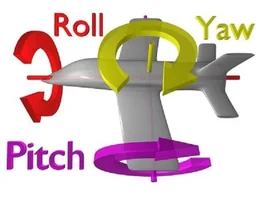
And indeed, it is very easy to mis-interpret what someone is saying when using general terms. For example, lets say we are simply loading a log truck with a crane. And if I said, "We need that log to yaw 180° to fit better." We should all picture in our minds what I meant.

In contrast, someone may commonly say, "Rotate it 180° to fit better" Well, since there are 3 axis' to deal with when the load is suspended, which way would one be talking about if they said "rotate it"?
grin.gif
 
Good example Jamin, now when we add to what it could do or we think or would like the piece to do

what we prescribe the op to make the piece to do after detachment to get it to exit the canopy or install it in a truck bed or come out from between buildings, etc.....say

"take it up or down x amount"

and/or take it in or out x amount"

and/or take it side to side x amount" this has many variables so say we dictate northeast, southeast, southwest, northwest....ahhhhh nevermind.

Sometimes it is a good thing to just shut down the engine have him pop outta the cab and have a little pow wow with the op.

ps. I love this pict. Think I might make a tat outta it lol. attchmt.
 

Attachments

  • 299012-281097-YawPitchRoll.webp
    299012-281097-YawPitchRoll.webp
    17.1 KB · Views: 60
Keeping communication on a level everyone can understand may be a better direction. Trade specific terms are confusing except in a group of that trade's people. Words like parenchyma, apical meristem, useless almost everywhere. Wound wood and tree top are understood. Good communication is based on respect and clarity.
 
[ QUOTE ]
...Trade specific terms are confusing except in a group of that trade's people...

[/ QUOTE ]

Absolutely. But, this doesn't mean what I'm suggesting can't be crossed over to our industry.

Sure, engineers would know and understand these terms. An aircraft pilot would know and understand these terms. Certainly the captain on a ship knows these terms.

Why? Maybe because they have the formal/advanced back ground in physics...

Think about it folks, they are dealing with controling an object that is subject to 3 axis' of movement.

This means, when we (tree guys) are attempting to stabilize a load, we are subject to that load moving in 3 axis'. (Technically there are 6 degrees of freedom) But, I sort of alluded this a while back...

Therefore, if the 3 axis' actually have formal names in physics, they should be communicated formally as well in our industry (as well as in the crane industry).

If the origins for many of our terms or working techniques originated from nautical names, then there should be no resistance to introduce the nautical terms for talking about the loads on a crane.

Of course, this is just my opinion.
smirk.gif
 
Wouldn't work for me at least.

I make every cut with absolute confidence....but when it doesn't quite work out any after-talk of yawing or pitching would be pointless.

And if it did come about where anticipating any kind of excessive movement then I am surely not doing my best job as a slinger....either that or I think the extra risk is worth while.

I do not make a connection between aeroplanes and cranes....or trees for that matter.

I do agree with universal signals/communication as a platform to build from, if thats the point then great....but this particular example relates to movements that shouldn't come to play in the first place.
 

New threads New posts

Back
Top Bottom