
Navigation
Install the app
How to install the app on iOS
Follow along with the video below to see how to install our site as a web app on your home screen.
Note: This feature may not be available in some browsers.
More options
You are using an out of date browser. It may not display this or other websites correctly.
You should upgrade or use an alternative browser.
You should upgrade or use an alternative browser.
Line installation device
- Thread starter treebing
- Start date


Burrapeg
Been here a while
- Location
- Puget Sound
The stem of the line setter is standard 3/4 NPT aluminium pipe embedded in the casting. Same OD as ordinary galvanized 3/4 pipe if you find a piece that you can try in your pole.Will the fiberglass big shot poles work with this device? Or are they fit to the poles @Burrapeg was using? Are they maybe the same size? It's almost to cool not to have one!
Merle Nelson
Been here much more than a while
- Location
- SF Bay Area, CA
Will the fiberglass big shot poles work with this device? Or are they fit to the poles @Burrapeg was using? Are they maybe the same size? It's almost to cool not to have one!
I needed to use a piece of broken fiberglass pole as a spacer. That was a bit too tight of an ID to fit the device so sliced the 3" +/- piece down the length of it and it fit well. I believe DSMc described doing the same thing.

treegongfu
Branched out member
Thank you!

Evo
Been here much more than a while
- Location
- My Island, WA
Hit me up when you have another batch. I at least want to play around with oneSold the last one this weekend but will be casting a couple more next week. I can let you know when they are ready. I will check on postage to Canada this week. Thanks for the interest! - Stew
Burrapeg
Been here a while
- Location
- Puget Sound
Will do. I can bring one down with me when I come see my girlfriend there in Langley when things ease up.Hit me up when you have another batch. I at least want to play around with one
Evo
Been here much more than a while
- Location
- My Island, WA
Rad!Will do. I can bring one down with me when I come see my girlfriend there in Langley when things ease up.

If changes were to be made, I do have a wish list.
1. Having it available in a larger size. Multiple sizes would be handy.
2. Increasing the depth of the U would make it easier to capture angled limbs.
3. On a similar note, an adjustable tilt feature with a rope guiding pigtail would further increase angled limb capture.
1. Having it available in a larger size. Multiple sizes would be handy.
2. Increasing the depth of the U would make it easier to capture angled limbs.
3. On a similar note, an adjustable tilt feature with a rope guiding pigtail would further increase angled limb capture.

treebing
Been here much more than a while
- Location
- Detroit, Mi.
I thought it would be cool it had some sling shot tube attachment points, so it could double as a big shot. Then it would be an all in one line setting tool.
Burrapeg
Been here a while
- Location
- Puget Sound
Actually, my Big Shot head fits into the same pole that I use with the line setter, and I carry them together in the same bag along with some 3 foot extensions that increase the pole length for the line setter. The bag used to have a folding camp chair in it. As to a larger size of the line setter, I am thinking about that. The original Happy Hooker that I saw back in the 70's was indeed quite a bit larger and could put a rope around a creosote piling when docking a boat. Unfortunately, casting a substantially larger one would significantly increase the cost due to size of moulding flask, amount of metal, size of furnace used, etc. Probably more than double. The way I settled on the present size was basically to suit the average size limbs I was encountering when climbing up through the big firs and cedars we have here. They don't have all that many larger limbs in many cases, but rather a whole lot of smaller limbs, so that the tree is like a huge bottle brush. Using a throwline is simply impossible in most cases and yet free climbing with a lanyard did not work very well either because eventually one would come to a place where the limbs within easy reach were not large enough to be safe. I would see a big enough limb up above me eight or ten feet perhaps through the clutter of smaller limbs, with no way to get a line over it. Being just a rec climber, I am never on spikes, so it was frustrating. Now, as to a tilting head, for getting a line around a spar above your head, this is more a function of tilting the top of the pole just below the line setter I think, and is probably doable as long as the rope is fairleaded through something also, at the tilt point, so that the pull that puts the rope around the spar is still in line with the line setter's sideways direction of motion. I am not sure how well this would work in practice but it would not be too hard to cobble up a prototype tilt apparatus for the top of one of my poles to try it out. Another nice isolation project! The third thing DSMc suggested was a longer and deeper throat for angled limbs. This may not be all that possible if the angle is too extreme because it might easily deflect the top piece sideways out of line as the line setter is pulled down. A shallow angle might be OK in most instances and I might try to make a new foundry pattern for a deeper model at some point. It will also require a longer moulding flask for casting them, but the same smaller furnace and crucible I use for the original will probably work for a slightly longer one as well. Anyway, thanks to all of you for the feedback and the interest! Stay safe and best regards, StewI thought it would be cool it had some sling shot tube attachment points, so it could double as a big shot. Then it would be an all in one line setting tool.
Mostly I was just throwing out ideas running through my head, no real needs.
I do like your line setter just like it is, Stew. Having an adjustable angle bracket would for the most part, negate the need for a deeper U. The caveat is weight, as in I wouldn't want to add any.
I do like your line setter just like it is, Stew. Having an adjustable angle bracket would for the most part, negate the need for a deeper U. The caveat is weight, as in I wouldn't want to add any.
Last edited:
Burrapeg
Been here a while
- Location
- Puget Sound
True, if the head tilted, the deeper throat might not be as necessary. I am curious now to see if a tilting arrangement can be added to the top of the pole, something that would work with the existing head, basically a separate attachment that can be quickly fitted or not, depending on the exact situation. As to weight, a somewhat larger version of the line setter might not weigh a whole lot more than the present size. Aluminium is nice that way. I think the extra cost to cast a larger one will be the main problem.Mostly I was just throwing out ideas running through my head, no real needs.
I do like you line setter just like it is, Stew. Having an adjustable angle bracket would for the most part, negate the need for a deeper U. The caveat is weight, as in I wouldn't want to add any.
theatertech87
Branched out member
- Location
- Rochester
I too think it needs to be a bit deeper, found a couple instances where it would fit around a top, but there wasn't enough space for the lever action to do it's thing. Video to come (maybe tonight)
I also think the tear drop should be rotated 90 degrees with a slightly bigger hole, that way you can stuff a non spliced rope through it and tie an over hand stopper knot and be off to the races. Pictures are with 10mm but most people around here use 1/2 inch for climbing and rigging
I also think the tear drop should be rotated 90 degrees with a slightly bigger hole, that way you can stuff a non spliced rope through it and tie an over hand stopper knot and be off to the races. Pictures are with 10mm but most people around here use 1/2 inch for climbing and rigging
Attachments
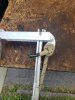
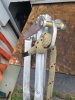
If you were to incorporate something like this, no other mods to the device would be necessary. You could use any size line spliced or not. You would need to choose the correct size for your range of cordage though. Very inexpensive and quick to deploy.
https://www.techtoolsupply.com/Fish-Tailz-Wire-Pulling-Sock-1-8in-p/85-901.htm
https://www.techtoolsupply.com/Fish-Tailz-Wire-Pulling-Sock-1-8in-p/85-901.htm
Burrapeg
Been here a while
- Location
- Puget Sound
I bought two of those last year! They work great on a throwline for pulling a rope through a tight crotch. The size is not critical; the 3/8 inch one works on any of our cordage. It expands quite a bit. One problem I have encountered is that if you briefly relax the pull on them, the rope can slip out sometimes. What I do to get around that is I have a little U-shaped piece of SS wire that I slip through both the sleeve and the rope. Only takes a second and it keeps it on there securely. I never thought about fitting one of these sleeves to the line setter. Great idea, Buick!If you were to incorporate something like this, no other mods to the device would be necessary. You could use any size line spliced or not. You would need to choose the correct size for your range of cordage though. Very inexpensive and quick to deploy.
https://www.techtoolsupply.com/Fish-Tailz-Wire-Pulling-Sock-1-8in-p/85-901.htm
Burrapeg
Been here a while
- Location
- Puget Sound
Rotating the present teardrop would be difficult due to the way it pivots and it is cut out of plate. But a 90 degree small casting would be possible. A casting would not be life support due to possible hidden flaws but the whole line setter itself is not used as life support, only to set the line. The small added casting would add a bit to the cost due to the extra foundry work. I will work up a pattern to make a few to test. This would be a very good option if trying to set a line with no spliced eye. I have tried it with an alpine butterfly and a bowline but both are quite bulky.
theatertech87
Branched out member
- Location
- Rochester
Maybe just a thicker piece of aluminum with a hole drilled across it. Or a piece of aluminum tubing welded to the tear drop, or that brass spacer with something brazed onto it.Rotating the present teardrop would be difficult due to the way it pivots and it is cut out of plate. But a 90 degree small casting would be possible. A casting would not be life support due to possible hidden flaws but the whole line setter itself is not used as life support, only to set the line. The small added casting would add a bit to the cost due to the extra foundry work. I will work up a pattern to make a few to test. This would be a very good option if trying to set a line with no spliced eye. I have tried it with an alpine butterfly and a bowline but both are quite bulky.
I understand the excitement of casting, got to do some in shop class, but maybe not quite that involved a solution is required?
Burrapeg
Been here a while
- Location
- Puget Sound
Well, I don't actually have any way to weld aluminium. I can cast it or machine it but I don't have a shieded arc welding setup. And if you own a small foundry and do it all the time, a part like this is really no big deal. A small casting with the holes already cored through it would actually be no more expensive than the cutting and drilling involved in modifying the present teardrop. And if the teardrop was made of much thicker stock so that the holes could be at 90 degrees, this type of thicker stock is pricey and then there is still the machine work of drilling the holes. One the other hand, once a small foundry pattern is whittled out, the little castings are actually quick to produce and would require a minimum of machine work if the holes are cored through when it is poured. (This is done with small cylinders of hardened sand shaped like the hole that you want. Easy to do since I keep these little core cylinders in stock in several common small sizes, 1/4, 3/8, 1/2 inch, etc.). Casting work is really very under-rated these days. Guys will spend huge amounts of time whittling something out with a milling machine or a lathe, from a big piece of expensive solid stock, when a simple casting would do the job with a minimum of waste. And unless it is a CNC machine, you would have to machine each piece from scratch. With a casting process, once you have the pattern made, you can quickly cast as many identical pieces as you want and they are all the same. It is not expensive to set up on a small scale too. Lots of small castings can be done with a small front loading ceramic kiln, about $500 to $600. or so, and the crucibles are only about $50. and good for a lot of pours. This compares quite favourably with the thousands of dollars that even a small milling machine costs. My small mill is foreign made and was over three grand; an American made Hardinge mill the same size is over twenty grand. And, unlike buying metal stock, the metal I melt is often free - I recycle a lot of old aluminium bike parts which are high strength, good quality metal. Anyway, I like the idea of the teardrop at 90 degrees and may take some time to work up a pattern. This is done in wood so is actually rather fun work. I use mahogany or walnut which are both fairly stable woods and beautiful to work with.Maybe just a thicker piece of aluminum with a hole drilled across it. Or a piece of aluminum tubing welded to the tear drop, or that brass spacer with something brazed onto it.
I understand the excitement of casting, got to do some in shop class, but maybe not quite that involved a solution is required?

- Location
- Home of the New Jersey Devils
Stew, I was thinking about sharing this discussion on Instagram to shine a light on the beauty of these interactions. Are you alright with that,?Well, I don't actually have any way to weld aluminium. I can cast it or machine it but I don't have a shieded arc welding setup. And if you own a small foundry and do it all the time, a part like this is really no big deal. A small casting with the holes already cored through it would actually be no more expensive than the cutting and drilling involved in modifying the present teardrop. And if the teardrop was made of much thicker stock so that the holes could be at 90 degrees, this type of thicker stock is pricey and then there is still the machine work of drilling the holes. One the other hand, once a small foundry pattern is whittled out, the little castings are actually quick to produce and would require a minimum of machine work if the holes are cored through when it is poured. (This is done with small cylinders of hardened sand shaped like the hole that you want. Easy to do since I keep these little core cylinders in stock in several common small sizes, 1/4, 3/8, 1/2 inch, etc.). Casting work is really very under-rated these days. Guys will spend huge amounts of time whittling something out with a milling machine or a lathe, from a big piece of expensive solid stock, when a simple casting would do the job with a minimum of waste. And unless it is a CNC machine, you would have to machine each piece from scratch. With a casting process, once you have the pattern made, you can quickly cast as many identical pieces as you want and they are all the same. It is not expensive to set up on a small scale too. Lots of small castings can be done with a small front loading ceramic kiln, about $500 to $600. or so, and the crucibles are only about $50. and good for a lot of pours. This compares quite favourably with the thousands of dollars that even a small milling machine costs. My small mill is foreign made and was over three grand; an American made Hardinge mill the same size is over twenty grand. And, unlike buying metal stock, the metal I melt is often free - I recycle a lot of old aluminium bike parts which are high strength, good quality metal. Anyway, I like the idea of the teardrop at 90 degrees and may take some time to work up a pattern. This is done in wood so is actually rather fun work. I use mahogany or walnut which are both fairly stable woods and beautiful to work with.
Burrapeg
Been here a while
- Location
- Puget Sound
Sure, Mark. But I don't do Instagram so anyone interested would need to get in touch through the TreeBuzz here.Stew, I was thinking about sharing this discussion on Instagram to shine a light on the beauty of these interactions. Are you alright with that,?
New threads New posts
-
test
-
 Alternatives to standard asphalt around roots
- Started by southsoundtree
- Replies: 5
-
-

-

-
 For Sale: 2018 Vermeer BC1000XL Chipper | 918 Run Hours | Deutz Diesel
- Started by Blue Ribbon Tree
- Replies: 2
-

