davidwyby
Branched out member
- Location
- PNW to SoCal

Follow along with the video below to see how to install our site as a web app on your home screen.
Note: This feature may not be available in some browsers.

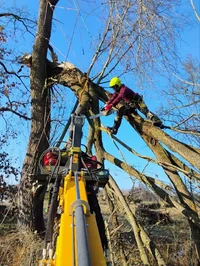
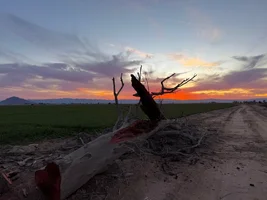
What's happening with that rope redirected over your loaded climb line?storm damaged willow that we sawed down to a habitat-pole to resprout, i‘m so glad to have the intrepid/knikmops.
Hammer time.
(I was able to knock that piece out with a maul, which dropped the 'deck' piece down. It was too tight and too heavy to lift the section up through the deck)
View attachment 100921
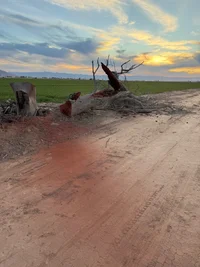
What species is that? The tree, not the human…

looks a little like a Japanese torii gate...very nice work
I think coast live oakWhat species is that? The tree, not the human…

With what I can see of the structure and the old bark, and the living one behind it, I am getting interior live oak vibes, Q. wislizeni, but Q. alternifolia do make it deep inland as well, so it could be. Was that down by your neck of the woods?I think coast live oak
The fauna is a whackamenno
How did the top round land when the lower round came out?
Was it difficult?
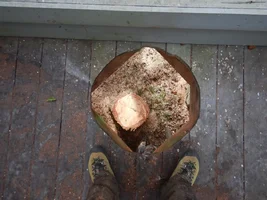
I have a trick for preventing pinch where I shove sticks in the kerf. They also work for rollers.I knocked it out using an 8 pound maul, and the upper piece actually landed and stayed on the stump. A little luck was involved, but the technique is very workable on trees through decks, where trunk-flare won't allow the piece to go upwards.
View attachment 100926
Couple hours west towards the coast, 3,000 ft ish.With what I can see of the structure and the old bark, and the living one behind it, I am getting interior live oak vibes, Q. wislizeni, but Q. alternifolia do make it deep inland as well, so it could be. Was that down by your neck of the woods?
At that elevation and latitude, it's even more likely the interior live oak. Can't say for sure, but they also fall apart more slowly than the coast live oak; denser and harder wood.Could hours west towards the coast, 3,000 ft ish.
good eyeWhat's happening with that rope redirected over your loaded climb line?
 that is the control side of a doublewhip with a downrigger and ring that i had already setup for the next piece. in the picture we were just picking stuff up with the loader and cutting without rigging.
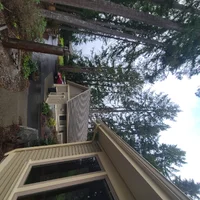
We ran some natural structure rigs a few days back. Sometimes requires a routing trick or two in hardwoods, but clean and simple and most often quick.Dense branches!
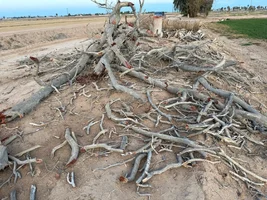
Pruned large branches overhanging the shop.
My favorite self-lowering device
View attachment 100931View attachment 100932View attachment 100933View attachment 100934View attachment 100935

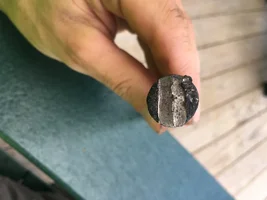
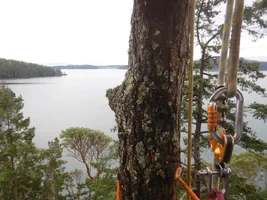
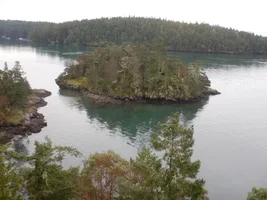
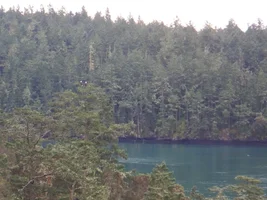
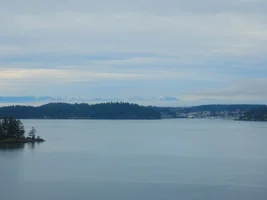
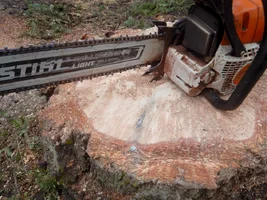
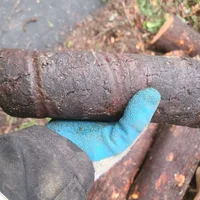
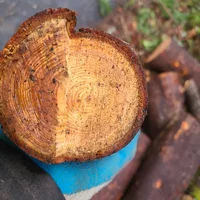
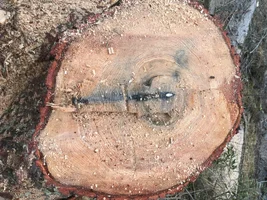
Sometimes we find a branch stub in the hinge wood…sometimes we find nail. :/Some nice views today, and a nice nail while low-cutting a different stump. I mean, cutting it the LONG way? Come on...
View attachment 100951
View attachment 100952
View attachment 100953
View attachment 100954
View attachment 100956
View attachment 100955

Sometimes we find a branch stub in the hinge wood…sometimes we find nail. :/
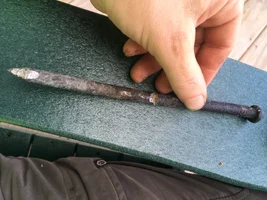 Sometimes you hit it a few times...