Rope Wrench Ruminations

[ QUOTE ]
Also, in regards to working the tree on your way up with a basal tie, on an excurrent tree, please use extreme caution. That taut line can easily be cut. Cutting the line below you when on doubled rope, will just shorten your line. Cutting the down line on the basal tie, could be your last cut...ever.

[/ QUOTE ]

True, but the same could be said for any climbing system if one isn't secured with two points of attachment, such as a lanyard.

Regardless of anything, the wrench is a great tool that doesn't break the bank to acquire. Just get on the thing and try it out. If you don't like it, put it on 'TreeBay' and I'll buy it from you. ;)
 
[ QUOTE ]
[ QUOTE ]
Also, in regards to working the tree on your way up with a basal tie, on an excurrent tree, please use extreme caution. That taut line can easily be cut. Cutting the line below you when on doubled rope, will just shorten your line. Cutting the down line on the basal tie, could be your last cut...ever.

[/ QUOTE ]

True, but the same could be said for any climbing system if one isn't secured with two points of attachment, such as a lanyard.

[/ QUOTE ]

A base tied SRT system really does demand more care and thought in its use than that of a Ddrt. It can easily be cut inadvertently when not at a work station, and therefore a second tie-in/lanyard may not be in place.
This is not something to be feared, but it needs to be understood.

Dave
 
[ QUOTE ]
Hey Reg,

I recently came across this exact problem when ascending up some rather large trees in the High Sierra's...What I found to work best was to install the access line as high as I could get it either anchored to the ground or send up with a running bowline. I carried up a 120' line with me during the ascent so that once I got to the top of the access line I could pull out a throwball and set the lanyard up another 60' or so...I found it best to send up another running bowline to anchor off the lanyard. With the removable pin on the RW it was easy to switch off the initial access line and then transfer to the lanyard. After you get off the access line you can either untie the bowline or have your groundie disconnect the basal anchor and then take it with you while you ascend the shorter line.

Once at the top you can reset the super long access line or leave the access line installed lower and just work the top with your secondary line depending on the height of the tree.

Worked super smoothly and was unbelievably efficient compared to what could have been achieved with Doubled Rope.

[/ QUOTE ]

Sorry Rich, didn't even notice your post....and I'll have to read it a couple more times.

If I read the throwball part correctly, you threw it another 60ft upon reaching your first tip? The congestion on the doug-firs I'm talking about would make it near impossible to throw a line 20 ft for the best part....the same reason I wont even use a FS when I eventually reach my TIP as it just so easy to hit a snag, stub of or have that thing wrap its-self around a limb....sounds far-fetched, it isn't and I've been left shaking my head either at the bottom or mid-way down a tree too many times already not to have learnt the lesson.

I dont believe I have the quick release pin you speak of either.
 
[ QUOTE ]
[ QUOTE ]
...Doesn't really sound like I'm gaining anything to be honest....or at least nobody has said what I stand to gain?
Any thoughts/experience on crane-removals, anyone?

[/ QUOTE ]

Reg, there is going to be some head scratching in utilizing SRT per your requirements.
How are you ascending the first 100' now? A well-tuned frog-walker, on a tall, excurrent tree, where your boots come in contact with the tree, is as easy as walking up a ladder and a lot safer. Get this part right first, as it is the base to which everything else is added.
Also, in regards to working the tree on your way up with a basal tie, on an excurrent tree, please use extreme caution. That taut line can easily be cut. Cutting the line below you when on doubled rope, will just shorten your line. Cutting the down line on the basal tie, could be your last cut...ever.
In a situation like this, I will have my tied-off leg over the outside of the canopy. Obviously this takes some fenagling with your shot placement and does require analyzation in determining that it will stay secure. But it is worth the extra effort keeping the down line away from the work area.
On most removals and crane work I will use a length of rope long enough to reach the ground from a choked tie in one pitch. This, of course, will depend on just what you are doing, especially with the crane. This is where it can get complicated and you just have to try different options and see what works well for you.
In most situations you will be able to work a tree with half the amount of rope than what you normally would. In most cases this will negate the need for a rope bag, as the odds of the rope getting tangled are much reduced.
A small bag of throwline can easily hold enough to attach to the tied end of a choke, tied rope to allow it to be retrieved from the ground in an emergency.

Dave

[/ QUOTE ]

Thanks Dave, I use the frogwalker for the first 100, yes.

I'm not about to cut my life line, I know better than that but thanks for the warning.

Kevin, you say lanyard up the remainder of the trees to set the high TIP, thats pretty much what we do anyway, but obviously we're utilising the Ddrt instead of having to carry two lanyards.

Since I'm being lifted around to each slinging point by the crane, setting the slings, rappel, untie from the ball and cut piece off etc then the Srt doesn't seem to figure much in that equation, but I thought ask just in case.
 
Appreciate your imput FS, thanks.Pull-down lines at 160ft, is that a seperate line you are refering to? Do I have to take that with me to the next tree if I want to re-set my tie-in? or do I have to stay tied into tree no.1 and then set the line over an adequately strong limb in the top of tree.2?

Doesn't really sound like I'm gaining anything to be honest....or at least nobody has said what I stand to gain?

Any thoughts/experience on crane-removals, anyone?

Apart from Trev's does anyone know of a working SRT vid on youtube, I dont mean rec-climbing? Thanks

[/ QUOTE ]

Yes if you are up 160 I would suggest a 160ft pull down, probably a seperate line. You wouldnt need to have another climbing line for this, you could use throw line or anything smaller diameter (I want to try black widow). As for going to the next tree you could swing over and drop over a strong limb or bring your pull down line with you and retrieve the set up and re install in the new tree. If you did drop over the limb pulling down may be more difficult due to the friction of pulling the fall side up and over the second crotch. I got thinking though, I think you could replace the ring on the monkies tail with a pinto pully to reduce the friction of the ring. Would kinda make an expensive monkies tail but I think it would work.
I agree with Kevin, I dont thing RW and cranes work right now. But Im sure someone will come up with something that works sweet.
One thing i think I gain from it is Im able to use a shorter rope because I am only going from the top to the ground once. The pull down line can be seperate this way I can use a 100' line on most normal climbs. this I think also saves a ton of wear on that 200'er that costs so much. Improving that bottom line
grin.gif
, a very important line
icon10.gif
 
[ QUOTE ]
Appreciate your imput FS, thanks.Pull-down lines at 160ft, is that a seperate line you are refering to? Do I have to take that with me to the next tree if I want to re-set my tie-in? or do I have to stay tied into tree no.1 and then set the line over an adequately strong limb in the top of tree.2?

Doesn't really sound like I'm gaining anything to be honest....or at least nobody has said what I stand to gain?

Any thoughts/experience on crane-removals, anyone?

Apart from Trev's does anyone know of a working SRT vid on youtube, I dont mean rec-climbing? Thanks

[/ QUOTE ]

Yes if you are up 160 I would suggest a 160ft pull down, probably a seperate line. You wouldnt need to have another climbing line for this, you could use throw line or anything smaller diameter (I want to try black widow). As for going to the next tree you could swing over and drop over a strong limb or bring your pull down line with you and retrieve the set up and re install in the new tree. If you did drop over the limb pulling down may be more difficult due to the friction of pulling the fall side up and over the second crotch. I got thinking though, I think you could replace the ring on the monkies tail with a pinto pully to reduce the friction of the ring. Would kinda make an expensive monkies tail but I think it would work.
I agree with Kevin, I dont thing RW and cranes work right now. But Im sure someone will come up with something that works sweet.
One thing i think I gain from it is Im able to use a shorter rope because I am only going from the top to the ground once. The pull down line can be seperate this way I can use a 100' line on most normal climbs. this I think also saves a ton of wear on that 200'er that costs so much. Improving that bottom line
grin.gif
, a very important line
icon10.gif


[/ QUOTE ]

Again, thanks a lot....but I'm just not convinced its worth all the extra trouble. On smaller trees perhaps but on the stands that I refer to it just doesn't sound viable. Being able to re-tie into the adjacent tree still seems like the more sensible option as opposed to running a horizontal line from between two skinny tops way up there. But even where it might work, using 160ft of throwline to retreive lets say a 250ft climbing line which is running through perhaps 3 tree tops and then down and out the furthest one, with all the friction involved would be quite the task in itself
crazy.gif


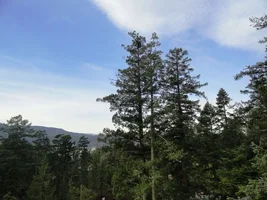
Furthermore, often we are absent of groundworkers for one reason or another, yet there might be another climber only a couple of trees away (see attachment). What i'm trying to say is its not the same as residential climbing where everything and everyone is at hand. Ideally you want to be able to work independently in not relying on anyones assistance where possible. If I could set the high TIP with the big-shot on a single tree then I can forsee plenty of advantages....but for the senarios I've just tried to explain there would probably be too much 'head-scratching' (as Dave put it) where keeping it simple would appear the more sensible approach.

I thought I'd just put it out there, and it didn't seem worth starting a whole new thread over. I have the wrench now and will give it a good go under more favouravle circumstances. I'll get some video, with some action, although probably after Christmas now. Thanks again

 

Attachments

  • 302360-DSC01587.webp
    302360-DSC01587.webp
    82.8 KB · Views: 121
[ QUOTE ]
[ QUOTE ]
[ QUOTE ]
Also, in regards to working the tree on your way up with a basal tie, on an excurrent tree, please use extreme caution. That taut line can easily be cut. Cutting the line below you when on doubled rope, will just shorten your line. Cutting the down line on the basal tie, could be your last cut...ever.

[/ QUOTE ]

True, but the same could be said for any climbing system if one isn't secured with two points of attachment, such as a lanyard.

[/ QUOTE ]

A base tied SRT system really does demand more care and thought in its use than that of a Ddrt. It can easily be cut inadvertently when not at a work station, and therefore a second tie-in/lanyard may not be in place.
This is not something to be feared, but it needs to be understood.

Dave

[/ QUOTE ]
Me personally would NEVER work with a base tied SRT system. I don't trust people working with chainsaws and handsaws ever except myself, I don't care who you are. Rec climbing maybe, but I don't want to be in a tree working and wondering if my base tie is being " looked after ", just something that I would always be thinking about, renting space in my head. However that being said I will be wrenching after Xmas with an in the tree TIP with a throwline release although I am having doubts with our tees down here and the amount of back and forth movement through these dense crowns if I will be able to retrieve the rope after I return to the ground but I am sure going to give it a try. I don't let anything beat me so I will figure MR Wrench out. My $.02 worth, for a person who is about to embark on the new generation of working the trees. Paul down here in the tropics.
cool.gif
santa.gif
 
Man you guys that don't trust your ground help to not cut your trunk tied rope... You need better ground help.

Having a hungover, untrained stick picker on the ground is just plain unprofessional. Hire smart workers, pay them well and keep their training up to date. If someone is stupid enough to cut a basal tie, they don't belong in the work zone anyway.
 
[ QUOTE ]
Man you guys that don't trust your ground help to not cut your trunk tied rope... You need better ground help.

Having a hungover, untrained stick picker on the ground is just plain unprofessional. Hire smart workers, pay them well and keep their training up to date. If someone is stupid enough to cut a basal tie, they don't belong in the work zone anyway.

[/ QUOTE ]

NUFF said
grin.gif
cool.gif
 
[ QUOTE ]
[ QUOTE ]
Man you guys that don't trust your ground help to not cut your trunk tied rope... You need better ground help.

Having a hungover, untrained stick picker on the ground is just plain unprofessional. Hire smart workers, pay them well and keep their training up to date. If someone is stupid enough to cut a basal tie, they don't belong in the work zone anyway.

[/ QUOTE ]

NUFF said
grin.gif
cool.gif


[/ QUOTE ]
I respect what you are saying, my ground staff ARE very competent and professional, I am the one who has the trust issues in this regard. I PREFER my TIP above me where it can be easily monitored in most cases, and that is just me. I feel the only thing that going to mess with it is a helicopter ( joke ) and in that scenario I guess I am just one unfortunate dude. I have done a lot of dangerous work and I like to be in control of my own safety. That being said I appreciate the well intended comments but I will forego the base tie in the work environment. Thanks Paul.
santa.gif
 
I think the base tie is a good way to access a tree if it would otherwise take a while to isolate a TIP in a dense crown. I think working of a base tie can be risky, but potentially less risky if tied in an adjacent tree. I have yet to do an extensive job off a base tie. I have generally been using the base tie for quick access to my desired TIP and set up a L-ring to S-ring FS, set up either with an Alpine Butterfly stopper tied mid-length, or tied close to the end with a throwline retrieval set in place. It would depend on the height of the tree and the susceptibility of the down side to damage.

$.02

Hey, Swing! Nice new avatar...
 
"I feel the only thing that going to mess with it is a helicopter ( joke ) and in that scenario I guess I am just one unfortunate dude."

Or someone in the tree using a chainsaw with one hand! I'm sorry I had to be that guy.
 
Aha Cary ( hoped I spelled that correctly ) just a mix up of wording on my part sorry, you are correct. However you understand what I am saying I like the anchor ( TIP ) above me better. I would prefer to use a Running bowline With yosemite tie off choked on the limb with a throw line retrieval ( SRT ). I have climbed Ddrt only so I guess this is where I have to change my way of thinking and modernize the same way I did moving from blake's to a hitchclimber VT. I am assuming ( be patient here ) that removing the rope after a climb is easier with a base tie, and also I know it's easier to set as you negate isolating the throw line. Makes sense as to why everyone prefers it. I can see I in for some change how exciting and are'nt you guys happy for encouraging another I know I surely would be. You dudes are really stoked on the wrench. Now I can't wait so this weekend I will order the wrench, will be here when I get back from England after Xmas. Thanks everyone for the MR Wrench posts very good teaching stuff, and helping me get out of my comfort zone keeping the old ticker ticking. Paul.
santa.gif
 
Oryou could Stan on a chair and tie the Basal tie. I use my ground person and I trust her to tie it back up for me. I don't see why they would have chainsaws anywhere near any rope. Its kind of fun figuring out a good Single Rope Climbing system. Reg, it sounds like your problem is not being able to access the tops of those trees. You need more fire power. Check out the cross bows or those air cannon shooters. Coompoind bow? 150 seems doable some kind of way. I never need to go higher than I can throw here
 
I felt the exact same way Paul, going from hitchclimer DdRT, to the SRT rope wrench rig...but now I would not go back.


give it time, learn and grow.
 
Oops better remove that avatar too while I am at it, one handing chainsaw and all, that picture was not meant to be my new one damn computers. Paul.
 
My opinion, for the sake of simplicity say your TIP is your tie in point which is the point at which your rope is tied in. Any rope between you and your tie in point should be monitored constantly and sharp things kept far away.
 
[ QUOTE ]
I felt the exact same way Paul, going from hitchclimer DdRT, to the SRT rope wrench rig...but now I would not go back.


give it time, learn and grow.

[/ QUOTE ]
Thanks I really appreciate that encouragement at 44 it's getting harder to succumb to change, just when you get comfortable. Tree work seems to be advancing now at a heck of a pace. Very revolutionary, I am glad to be a part of it. Love the sugar maples wrench vid by the way. Paul.
cool.gif
 

New threads New posts

Back
Top Bottom