Puzzled about back ups

[ QUOTE ]
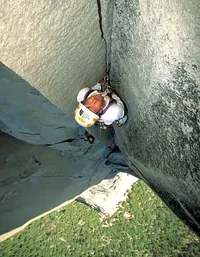
3000 feet of rope must heavy as hell. I've climbed the captain twice, I would be skeered to jug it all at once. That thing is so overhanging in parts you be hanging way out in space.....WILD! I still ain't gonna set two ropes to access a tree....I'll leave that to the tech weenies.

[/ QUOTE ]

According to PMI's specs, 11mm EzBend weighs 5.37 lbs per 100'. That'd make the 3000 foot rope weigh 161 lbs! But you should have seen the bulk of all that rope coiled up!

I tend to agree with you about using two ropes to access a tree. Although, I did have a questionable TIP and I configured an equalized system from the ground that did in fact, equally distribute my weight between the two TIPs. Also, if one TIP failed, essentially half my weight would be gently transferred to the other TIP with a very minimal shock load. When I got up to the stronger, but lower TIP, I could see the higher, questionable TIP was solid and fine so I disconnected from the lower one and went on up on a single line and TIP.

But that's a relatively cumbersome arrangement and I haven't used it since. If I don't trust a TIP, I select another that I do trust and use one rope.
 
Am I beating a dead horse by saying, "I don't use a back up in my regular double line work."

It would be kind of, sort of, or really hard to manuver in a tree with two two doubleline systems.

Just trying to err on the side of safety and be practical at the same time.

3000 feet on a single ascent! Oh, baby!
 
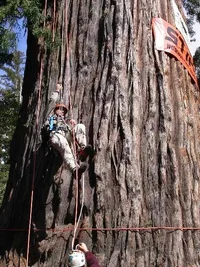
Three thousand feet down doesn't even match Mark Chisholm climbing non stop to the top of the Tree house. Almost two hundred feet up and he didn't even stop to rest on the way. Now that's a feat. It was on a single line to boot. What a GUY!
 

Attachments

  • 108644-MarkChisholm.webp
    108644-MarkChisholm.webp
    101.9 KB · Views: 175
[ QUOTE ]
Sure would like to know how the arboraddict attaches to that 2nd srt BU and his thoughts on placement.

[/ QUOTE ]

He'll be Bach.
 
Truely a pity. He should spend more time tending to his "forum" instead of acting the fool at others.

Perhaps he'll grow out of it.
 
[ QUOTE ]
AA won't be back but another version of Ekka might be.

[/ QUOTE ]

This is a statement to remember folks!


As to the topic at hand, once again I have to thank everyone for posting.

I have learned so much from participating at the TreeBuzz,.... thanks!

Gerry, the thought was to have two separate ropes for ASCENDING the tree, not working within the canopy.

[ QUOTE ]
Ron said: I tend to agree with you about using two ropes to access a tree. Although, I did have a questionable TIP and I configured an equalized system from the ground that did in fact, equally distribute my weight between the two TIPs. Also, if one TIP failed, essentially half my weight would be gently transferred to the other TIP with a very minimal shock load. When I got up to the stronger, but lower TIP, I could see the higher, questionable TIP was solid and fine so I disconnected from the lower one and went on up on a single line and TIP.

[/ QUOTE ]


What puzzles me about the concept of two different TIPs, is what you illustrated, Ron. If you do set two separate TIPs, each one will be on separate leaders or parts of the tree.
So each TIP will be far apart from each other. Unless the tree structure gives a better position which happens infrequently.
So having two separate TIPs, that are spread far apart sort of negates the idea of having dual disparate TIPs. At least for everyday work.

Am I wrong or unsafe to have climbed for years using only one TIP?
My gut feeling says all this is a bunch of malarky.

The one part of my gear that I totally trust is my rope and my climbing hardware.
It is the tree itself which is the unknown IMO.
 
[ QUOTE ]
Gerry, the thought was to have two separate ropes for ASCENDING the tree, not working within the canopy.

What puzzles me about the concept of two different TIPs, is what you illustrated, Ron. If you do set two separate TIPs, each one will be on separate leaders or parts of the tree.
So each TIP will be far apart from each other. Unless the tree structure gives a better position which happens infrequently.
So having two separate TIPs, that are spread far apart sort of negates the idea of having dual disparate TIPs. At least for everyday work.

Am I wrong or unsafe to have climbed for years using only one TIP?
My gut feeling says all this is a bunch of malarky.

The one part of my gear that I totally trust is my rope and my climbing hardware.
It is the tree itself which is the unknown IMO.

[/ QUOTE ]

The proponents of the 2 line system (in Ontario) use this perspective. A worker at height will have a work positioning system, this requires a redundancy, therefore a fall protection system.
roofer:
wp - hands and feet
fp - a rope and harness (travel restraint)

rock climber
wp - hands and feet
fp - rope and harness (fall restrict/arrest if lead climbing)

window washer
wp - harness/bosun's chair
fp - rope and harness (often a separate FB in ON, fall restrict or arrest)

Arborist
wp - hands and feet for portions
fp - rope and harness (fall restrict)
wp - aerial device
fb - FB harness and lanyard (fall arrest)
when in mid-air
wp - rope and harness
fp - doesn't exist (in their eyes)

A perspective from the legislator's eyes. Remarkable to me is a pole climbing system of a lanyard and spurs is adequate in their eyes. the work positioning is in the feet and hands, the FP is the lanyard and harness.
 
[ QUOTE ]
Ron said: I tend to agree with you about using two ropes to access a tree. Although, I did have a questionable TIP and I configured an equalized system from the ground that did in fact, equally distribute my weight between the two TIPs. Also, if one TIP failed, essentially half my weight would be gently transferred to the other TIP with a very minimal shock load. When I got up to the stronger, but lower TIP, I could see the higher, questionable TIP was solid and fine so I disconnected from the lower one and went on up on a single line and TIP.

[/ QUOTE ]


[ QUOTE ]
frans said: What puzzles me about the concept of two different TIPs, is what you illustrated, Ron. If you do set two separate TIPs, each one will be on separate leaders or parts of the tree.
So each TIP will be far apart from each other. Unless the tree structure gives a better position which happens infrequently.
So having two separate TIPs, that are spread far apart sort of negates the idea of having dual disparate TIPs. At least for everyday work.

[/ QUOTE ]

First, what I described was a unique situation. Not only did I use the dual TIP and rope as a load sharing backup system, I also wanted to evaluate the possibility. Plus, this probably wasn't obvious, but it was for entry only.

The tree had two limbs 90° apart, with the stronger limb about 40 feet off the ground, and the upper, questionable limb about 50 feet off the ground.

So, absolutely, unless the geometry of the tree supports dual ropes and TIPs, it's pretty useless. In fact, my real feeling is that dual ropes/TIPs can give a false sense of security, leading a climber to do something unwise.

[ QUOTE ]
frans said: Am I wrong or unsafe to have climbed for years using only one TIP?
My gut feeling says all this is a bunch of malarky.

[/ QUOTE ]

In my opinion, for what it's worth, IN A TREE, I don't think a single rope/single TIP is any less safe than two ropes and two TIPs. My concern is that if we feel we have a backup, we may succumb to the temptation of using a marginal primary TIP, which could fail, and whether the backup fails or not, even a short fall could be serious. It's not like we can assume we'd just fall cleanly and straight down and have a soft catch on the backup. We could take the skin off our hands, fall on a limb and break a leg or arm, etc.

My position is, if I've selected a TIP and/or am using a rope that I feel warrants a second TIP and rope for a backup, I need to pick a single TIP and use a single rope I can trust.

It almost goes by definition that if the primary TIP/rope justifies a backup, we should pick a better TIP/rope to start with.

[ QUOTE ]
frans said: The one part of my gear that I totally trust is my rope and my climbing hardware.
It is the tree itself which is the unknown IMO.

[/ QUOTE ]

Absolutely!
 
Before we chase the topic of two ropes for access/working too far we need to go back to the origin of this red herring.

AA was not making a sincere addition to the thread all along. It was another example of his disruptive behavior. Like in the past things go along for a while until his behavior needs to be curtailed by blocking. You can bet that he'll be back again with some other made up persona.

The topic of a two rope system is valid to have out in the open. There are many things that arbos can use from other rope access disciplines. We do have to remain vigilant and make sure that the unique environment that we work in is understood by the technocrats and bureaucrats that make decisions that will effect how we work.
 
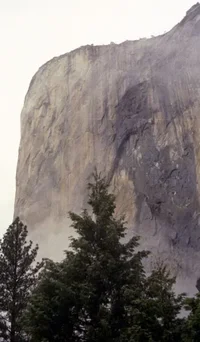
Way cool picture!

It would be nice to have a front shot of that face with an arrow added in to show where you are on the climb.
 

Attachments

  • 108835-CRElCapnose.webp
    108835-CRElCapnose.webp
    29.5 KB · Views: 160
Sure is an ugly place.


tongue.gif
 
yeah, mark's right, that prusik will fail if one cam opens.must backup both ends in which, "the skyyyyyy was the limit"(tom petty-into the great wide open)
about 2srt rope backup syst.
safety first! haha!
redundancies/backups, are essential in our practice: however... redundancies can be overused.what is defined by this can be debated til the end of "time". ie. trad rockclimbers could place a cam every 2ft (which would insure maybe a failproof anchor) but most will leave from 5-20ft gap leaving room for up to 40ft falls.
i always have one backup,after that maybe use knowledge, experiance,and intuition to determine whats safe and applicable.
3 possibilities for failure:
-tree failure:if one leader is used for 2tip then 2 or 6 ropes will all fail if the tree fails
-gear failure:do your gear inspect.
-climber error:be mindfull, don't cut ur rope or sideload gear against the tree
regardless, if you wanna be over reduntant in a tree please do so, but not on my jobsite, you'll burn all the daylight setin up and it's very painful to watch. all advanced tech. have their place.

death or injury are the risk we take when we leave the ground.without those elements against skill and safety this trade might be too boring to wake up for.
 
Hahaha! And as Jerry said, we were starting to work in the first 100 feet!
grin.gif


I thoguht it was closer to 250' no? At any rate, I was just too enthusiastic to climb to the top of my first Redwood that I didn't even think of stopping. What a great experience. Thanks for reminding me Robert. And thanks to Jerry for asking us to participate!
cool.gif
 
Hey Mark, seeing you climb that redwood like that a few years ago in Jerry's dvd really showed me what the SRT way of climbing could really do for you.

This past year after many talks with Paolo and listening to Tom D. I feel you can't beat it for ascending. For me the Tree Frog system is the way to go.

Sorry if I'm distracting this thread.
 
[ QUOTE ]
Remarkable to me is a pole climbing system of a lanyard and spurs is adequate in their eyes.

[/ QUOTE ]

Not any longer.
Fall arrest is mandatory in Ontario.
I climb with a Jelco pole choker now.
 

New threads New posts

Back
Top Bottom