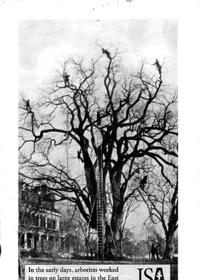
With all this talk on the timelines of when synthetics became available, I was starting to doubt my memory. A quick search found this and reaffirmed that I did, indeed, work for one of the most progressive companies of its time. Ed Hobbs wasn't a follower, even though he learned in the Northern California logging camps, he was quick to recognize and utilize better tools and techniques.
"Dacron®, Terylene® (Polyester):
Polyester
Polyester
History: The Polyester, Terylene®, was developed by Imperial Chemical Industries in 1941. The rights were purchased by duPont in 1946 who subsequently developed the related similar fiber, Dacron®. The introduction of Dacron® rope in 1953 changed things again. The practical benefits of Nylon® were retained with the critical difference that elasticity was markedly reduced. In 1957 Samson introduced the Double Braid construction, and Dacron® ropes were rapidly adopted for halyards, sheets, and static climbing ropes. "
"Dacron®, Terylene® (Polyester):
Polyester
Polyester
History: The Polyester, Terylene®, was developed by Imperial Chemical Industries in 1941. The rights were purchased by duPont in 1946 who subsequently developed the related similar fiber, Dacron®. The introduction of Dacron® rope in 1953 changed things again. The practical benefits of Nylon® were retained with the critical difference that elasticity was markedly reduced. In 1957 Samson introduced the Double Braid construction, and Dacron® ropes were rapidly adopted for halyards, sheets, and static climbing ropes. "