Tim - to be honest with you - this is just fun; to be able to share your findings about something new is...
I was on the chipper all day yesterday... not that there isn't plenty to see and do there, but still... plenty days can be like this.
Most of the times I have used the hook, there simply wasn't any lower limb (never-mind it being conveniently directly below a short distance with the branches angled correctly).
I think the thing more important than the general angle of the branch is the actual angle of where the hook will be oriented when you have tension on it (and how this angle may change as your climbing position changes) You know, this is all part of the fun of it - again, it's all problem solving; it's a great tool - every single branch, limb, tree is going to be different.
On the left side of the page - the bottom row, right hand corner; the climber has the hook on a downward sloping branch, and is not tied in; if that climber were tied in, and they were on the opposite side of that tree (at roughly the same height) - that downward sloping branch might now be perfectly usable - because it is the angle that the hook is oriented (now at roughly 90 degrees to the branch angle) on the branch while under tension that matters most of all.
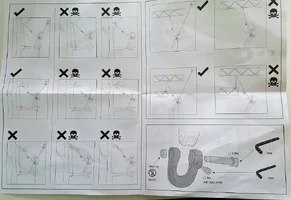
They couldn't possibly describe every tree climbing scenario that the hook may/may not be safe/unsafe useful or not - they're just trying to give us a little guidance to set us off. I think they know that people are going to start using it in all manner of ways. I think they just don't want anyone to be stupid, which is understandable.



