Serf Life
Been here much more than a while
- Location
- Maine Island
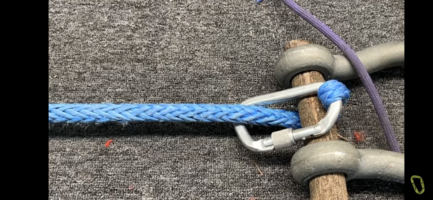
Fun video thanks. Worse scenarios than cinching in tree work and the hardware stood up better than I would have guessed.

Follow along with the video below to see how to install our site as a web app on your home screen.
Note: This feature may not be available in some browsers.
I feel like it's totally relevant to the thread/discussion of rigging carabineers as well as tree work in general. Some people really push the limitations of using rigging carabiners to choke off wood/limbs . It's cool and informative to see the failures play out with force data with discussion including deformities and damage to the biners.I like the video but I don’t think it’s relevant to tree work. I just can’t see how rigging down a small diameter limb will generate enough force to break a side loaded biner. A inch and half limb weight what 30-40 pounds maybe 80-100 pounds for a big blue spruce limb and those are often speedlined. Generally as weight goes up so does diameter therefore lessening side loading. Just my observation.

I see what you're saying and partially agree but did you watch the video or see the photo? He literally choked off a larger chunk of wood as well. I'm pretty certain arborists have broken biners used in similar choking configurations for rigging (larger wood). At the very least deformed them. I broke a 72 kn steel biner on a slackline once.I still can't see the comparison. They are loaded to two different axis. maybe if they had rigged up a chunk of wood instead of a large shackle it might be close. The shackle is testing side loading to failure around an extremely small diameter. My point is you will never see forces high enough at that diameter to break a biner rigging out a tree.
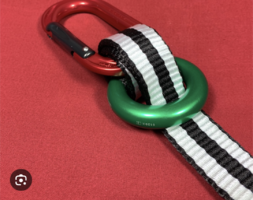
Using it as a slackline anchor sorta like this photo but steel ring and 72 kn Omega steel locking biner that was double checked beforehand. Other side was connected to choked off spanset. Not ideal but was common practice back in the day and still is for small park lines. Biner exploded during a dynamic movement and almost hit my friend. Luckily he fell into a foam pit and it flew over his head.What are the details of breaking the 72 kn biner?
Ok so I’ll ask the rest of the folks reading this thread: Has anybody broken a biner due to side loading? I haven’t. I have seen an aluminum non locking biner pulled to almost failure. Deformed and unusable but it didn’t fail.
Here's from another thread, 50kn steel biner snapped rigging this log with a half hitch (edit no half hitch).What are the details of breaking the 72 kn biner?
Ok so I’ll ask the rest of the folks reading this thread: Has anybody broken a biner due to side loading? I haven’t. I have seen an aluminum non locking biner pulled to almost failure. Deformed and unusable but it didn’t fail.

From Tree Buzz, whole description and discussion in the thread. That's just the first I saw come up in a quick search. Negative rigging sappy pines from what I recall, definitely abused. I did miss read though (no half hitch) which makes more sense.@Lignotuber sorry but I call bs on that. That or where ever this photo came from seriously abuse this line. That knot is borderline welded and if a half hitch was used I can’t see any reason the knot would have loaded that strongly.
At that diameter the biner wasn’t side loaded just overloaded.Here's from another thread, 50kn steel biner snapped rigging this log with a half hitch (edit no half hitch).

Maybe once or twice, there is a level of efficiency yet this isn’t it. It takes so little time and effort to tie a knot.Nobody else uses a carabiner for life support in this way? Rigging aside, I found it super relevant enough to our purposes. He literally references the Petzl Zillon manual in the intro.
Yea, I don't always do it, but when I do it's in places and situations where there is no doubt at all that it will not matter if it goes slack, it can not move into a dangerous position, like right over a union, or on trunks that have the right set of conditions. I also always intend for it to be a short term placement, though occasionally, it ends up staying that way through a short climb.Maybe once or twice, there is a level of efficiency yet this isn’t it. It takes so little time and effort to tie a knot.
Yet I have little issue with a steel carabiner for rigging small stuff. As in 1/2 rigging line pieces.
Only biners I can recall deforming were decommissioned aluminum ones used for winching in a pinch. Same setup as in the video and they took amazing abuse before bending. Think the video was enjoyable to watch, break testing anything is fun.Ok so I’ll ask the rest of the folks reading this thread: Has anybody broken a biner due to side loading? I haven’t. I have seen an aluminum non locking biner pulled to almost failure. Deformed and unusable but it didn’t fail.
If it’s within arms reach, no biggie.. way back, when we would climb off a static false crotch ddrt style we would do a bounce test by throwing the non moving end of the ddrt system around the trunk and x2 person bounce on the moving leg.Yea, I don't always do it, but when I do it's in places and situations where there is no doubt at all that it will not matter if it goes slack, it can not move into a dangerous position, like right over a union, or on trunks that have the right set of conditions. I also always intend for it to be a short term placement, though occasionally, it ends up staying that way through a short climb.

I hear you, and here and there I’ll choke a biner for a climb system, but temporary as you say. It’s not the side loading and potential bending or braking of biner (no way in hell that’s going to happen), it’s the very real threat of the gate opening up, which it has done before my very eyes. (The person in the video mentions this at one point as well).Yea, I don't always do it, but when I do it's in places and situations where there is no doubt at all that it will not matter if it goes slack, it can not move into a dangerous position, like right over a union, or on trunks that have the right set of conditions. I also always intend for it to be a short term placement, though occasionally, it ends up staying that way through a short climb.
In the above, when we would raise out ddrt false crotch system, we used opposite facing petzl hms screw gates.I hear you, and here and there I’ll choke a biner for a climb system, but temporary as you say. It’s not the side loading and potential bending or braking of biner (no way in hell that’s going to happen), it’s the very real threat of the gate opening up, which it has done before my very eyes. (The person in the video mentions this at one point as well).
This can also be mitigated in some circumstances by wrapping a loop of the rope in the biner.. I’ll take a picture of that and add it later.
I have seen someone send up a canopy tie with two biners with the gates facing opposite directions. These days a quickie costs the same as two biners and continues to be my favorite way to play but maybe you already used your quickie and want to set up a second system, etc.


A little over 20 years rigging with steel carabiners and spliced eyed ropes (always using a half hitch) , and I agree with everything you said and experienced the same. I've only seen one snap, and that was due to over weight...a small crane lifting a small piece of wood that wasn't fully cut through (wasn't me...i was there helping them with other work).I’ve been using the same steel carabiners for rigging wood and limbs for well over a decade. I try and orient them with the spine taking the load and with a half hitch if taking something large. In all my years of doing this I’ve only had to retire a few carabiners because the gates didn’t function at 100% and zero carabiners break or cease to function completely.
Sometimes I’m thinking to myself “should I be doing this” but other times I find myself thinking “how many rigs have I done in the last 15+ years WITH THE SAME CARABINERS and not had an issue. Years of removals and the number of rigging events I’ve done over that timespan is quite the test. Is it a testament to how conservative I am in my rigging? The religious nature of how I use the half hitch? The quality of the carabiners I use? I can’t answer those questions. What I will say is I have a tremendous amount of faith in the strength of an ISC carabiner improperly loaded while clipped around a limb or log.