Tapered Hinge: Diar(y)rhea of a thread gone wrong and left un-moderated

Use Tapered Hinge against Side Lean?

  • Huh?

    Votes: 0 0.0%
  • Never

    Votes: 0 0.0%
  • Hardly

    Votes: 1 3.7%
  • Sometimes

    Votes: 15 55.6%
  • Preferably

    Votes: 7 25.9%
  • Religiously

    Votes: 4 14.8%

  • Total voters
    27
  • Poll closed .
Do you fine felling folk have any other suggestions on readable felling material?

I noticed a mention of “Professional Timber Falling” by Mr. Douglas Dent which I’m looking into.

What other books would you consider essential for tree felling ?
So 10k in CAD is about a cuppa right? If that’s the case, man that sucks for the learning just to adapt it into Arboriculture. I guess I’d still look around, I’m sure there is some backwoods knuckle dragger gypo like Rico up your way. Perhaps, this is just to become a certified feller? What about other jobs in the woods? Perhaps you could partner up with someone to be their mule. Pack saw, fuel, wedges, axe, in for them. You don’t actually need too much time behind the saw, just first hand observation, drive wedges, lookout for hangers, and see what they do and why.

Hands on is great, but there is little trial and error. Meaning once that saw is in your hands you’re on your own. Learn by watching, asking questions, and adapting it to your Arboriculture a peice at a time. Surely you don t need to do the certification process as a timber feller.
 
If you are going to be a fkn tool.....be the sharpest one in the shed!
Word

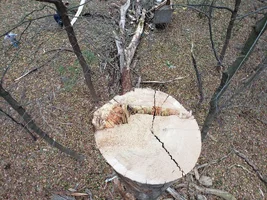
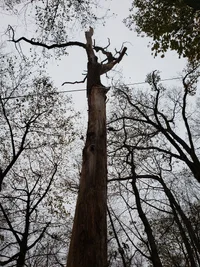
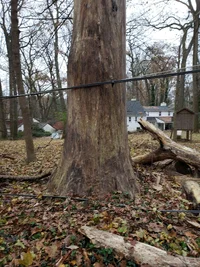
Rico, do you think I cared how the stump (45' tall) looked?
View attachment 55450
Judging by that cut I would say no, but what the fuck do I know?
Even with all that room it appears that you managed to hit the only structure within reach.
Super-duper awesome job buddy!
 
So 10k in CAD is about a cuppa right? If that’s the case, man that sucks for the learning just to adapt it into Arboriculture. I guess I’d still look around, I’m sure there is some backwoods knuckle dragger gypo like Rico up your way. Perhaps, this is just to become a certified feller? What about other jobs in the woods? Perhaps you could partner up with someone to be their mule. Pack saw, fuel, wedges, axe, in for them. You don’t actually need too much time behind the saw, just first hand observation, drive wedges, lookout for hangers, and see what they do and why.

Hands on is great, but there is little trial and error. Meaning once that saw is in your hands you’re on your own. Learn by watching, asking questions, and adapting it to your Arboriculture a peice at a time. Surely you don t need to do the certification process as a timber feller.

I’ve considered moving to another country to build up my 2 years and then challenging the exam here. Felling abilities is one of my biggest downfalls in my arboricultural skillset.

$10k-11k gets you the initial 30-days training program (10 in class, 20 outside) and then you complete a working 180-day apprenticeship. Seems bass-ackwards in my opinion as well. I might just look for an arboricultural outfit farther out in the rural areas where they might take on more felling projects
 
Word


Judging by that cut I would say no, but what the fuck do I know?
Even with all that room it appears that you managed to hit the only structure within reach.
Super-duper awesome job buddy!
Not much, but you make it up anyway...

Swinset was history, so were the maples... customers just bought the house... neighbors got a survey and said get rid of the tree... if I damaged the maple I would have to remove the rest of it... swinset stays as it is....
 
Tapered hinge starts at 2:13


<iframe width="560" height="315" src="
" frameborder="0" allow="accelerometer; autoplay; encrypted-media; gyroscope; picture-in-picture" allowfullscreen></iframe>
 
All these years and here it is again.

I still say bull shit.

Cutting a hinge shorter will effect lay, ( as in a length less than the initial % of diameter) but to what degree and how much? It lacks predictability for Arborist work demanding a high degree of certainty. Shortening the hinge is a gamble, plain and simple. If that is your deal and you accept the risk I am not here to judge you.

With a full length hinge in solid, sound, wood across the entire face, how can it effect lay? If it works, why does it not effect a crane pick pulling up into a face? Go ahead try it on a straight piece. The physics don’t add up.

The wood to the rear of the “fat” part pulls first. Any effect to lay is probably due to the MA of a wedge and/or gravity, after the hinge weakens and fails.
(For the record uselessinfo, that above paragraph is 33 words total. Take out the articles and conjunctions that make it readable and I am at or really close to 29 words)

For the record, I have stated my point here and in the past. As a trainer I felt obligated to state it yet again. Since this is an argument that produces much heat and no light. My comments end here. Not out of fear of being wrong or disinclination to argument. I just don’t have the time or energy.

Let me be crystal clear.

I have not nor will I ever teach or use this technique on a arborist production work site. It was bull shit when the article came out, shitty pictures and all, and it’s B. S. now, lacking effect, perdictibality and flys in the face of most if not all safer felling practices.

Respectfully or not, (your choice)
Tony
 
Not much, but you make it up anyway...

Swinset was history, so were the maples... customers just bought the house... neighbors got a survey and said get rid of the tree... if I damaged the maple I would have to remove the rest of it... swinset stays as it is....

So I will take that as a yes to smashing the little structure in question, and fucking up a few nearby trees? A $1000 for one fugly cut (from a bucket?), and thats the service you provided? Fucking blatant, unadulterated laziness in my book.

Again, I have to question why you would post pictures of such shoddy work here Daniel?
I'm starting to think you are just a self-promoting troll looking for a reaction, or a little much needed attention.
 
I’ve considered moving to another country to build up my 2 years and then challenging the exam here. Felling abilities is one of my biggest downfalls in my arboricultural skillset.

$10k-11k gets you the initial 30-days training program (10 in class, 20 outside) and then you complete a working 180-day apprenticeship. Seems bass-ackwards in my opinion as well. I might just look for an arboricultural outfit farther out in the rural areas where they might take on more felling projects

Do you get paid for the apprenticeship?
 
Let me be clear the little structure you refer to in those pictures is a swing set that was probably 20 years old. The clients are an older couple with no children and were just bought the house and we're going to have the swing set removed I said Hey I could put that dream on the ground from the bucket but that swing sets probly gonna get damage no problem before that we had talked about the maples coming down .


They didn't have any problem with the maples coming down either . Basically wild trees, Norway maples, wild area top of property..

Customer just wanted this big nasty tree down, and no one else would touch it... electric company took a pass even after it wiped out their lines and was left hanging 4 feet off the ground, touching the tree...

Do you have tulip trees out west... very brittle even when alive... no bark on this tree.. long dead...

I made the decision to cut low to clear the maples knowing the swing set would probably get hit.. that was to both make my job a little easier by not having to remove the maples, and because I thought the maples did have some value as screening from the neighbors even though Norway maples could be considered an invasive species, or at least a weed tree...

Plan worked... cleared the maples with only one broken lower limb...

Dropped the stick with the second cut. Mitigated a serious hazard in hours, probably saved the customer a thousand dollars or more and made it look easy...

It's been the wettest year by far on record around here. Lawns have been soaked. the only way to get the bucket truck back to the tree was through 2 neighbors yards using mats for most of the way.

It was supposed to start raining yesterday by noon but it held off till just after we finish the job. Perfect synchronicity everything in the flow...
 
Trainer Tony, am i really reading don't teach tapered hinge?
Did you vote?
Sorry if i got it wrong;
but to me that would be like saying aligning a pillar to more under the load in wodden box wouldn't make better geometric support.
.
The Tapered Hinge has it's own MA per amount of fibers x tension per fiber x leverage distance from hinge pivot(most compressed fibers) as control/effort/ballast against likewise collective Center of gravity load x distance, both affected by their geometries as they meet at central pivot.
.
This is a see-saw balance of load (CoG)/pivot (compressed fibers of hinge)/controlling work done by tensioned fibers in barest schematic; then distance/angle multipliers. All else is fluff of distraction, hitchpoints as well as windsail etc.
.
We aren't creating MA with Tapered Hinge really, as so much not being belligerent enough to remove the pre-existing MA that is already keeping the tree from not going where you don't want it to go. To be clear,that is my own biting sarcasm/mantra to self am offering!
.
A Tapered Hinge simply offsets the controlling tensions to the offset load to side, so i think is most mechanically correct to clean balanced movement. Balanced load/ balanced control, off balanced load/ offset control to balance is rule in all mechanix i think. Step Dutchman is later correction, but to same mindset of offset load, to offset correction. Not generic control to offset load at such extremes. You shouldn't buy anything that is made that way!
.
Dent's prescriptions do work, make mechanically logical sense when compared to other mechanical support things, totally consistent to architecture and engineering from what i've seen.
In smaller scale, but much harsher angle; work out very well on horizontal sweeps in tree etc.
Tapered Hinge WOULD NOT WORK POINTING OPPOSITE DIRECTION, possibly catastrophic.
.
Same tree will fold FORWARD with same loading/wedge push/rope pull FORWARD at a certain hinge resistance (point of just not enough to leverage support) to allow travel across hinge.
Within the allowable hinges that fold forward on the same total load we can arrange fibers different to counter the sine/SIDEWAYS force against the cos/column path of fall.
Really the compression pivot doesn't need physical connection just contact to be most loaded pivot(like if Dutchman pinches shut). But besides the standard pivot most compressed fibers serve,they are also anti-swing to other side. So,really the tension fibers, that must be physically connected are the total control before faces slap, as hinge rides pivot are most critical (assuming solid pivot). Hinge is not generically loaded inside because is all wood colored outside. i think forces are as i color them, because i think that is how mechanical forces are in all things, once again trees just larger example.
.
This IS engineering, it is about balance and mechanical logic.
Engineer simply would not use a finite amount of materials to build a strip hinge as generic support of specialized loading.
We shouldn't either for a temporary one time use support hinge ushering tons.
.
In side leans, Tapered Hinge better holds against side loads on 1 axis, as allows passage on other axis. The re-arraingement of fibers to same forward resistance while geometrically optimizing against the sideward forces. The load and control both have pulls modified by their distance and angle geometries from and across a common, most loaded pivot. i can't think of anything that doesn't work like this as model i'm sorry.
.
Hope that wasn't too harsh.
 
Last edited:
Trainer Tony, am i really reading don't teach tapered hinge?
Sorry if i got it wrong;
but to me that would be like saying aligning a pillar to more under the load in wodden box wouldn't make better geometric support.
.
The Tapered Hinge has it's own MA per amount of fibers x tension per fiber x leverage distance from hinge pivot(most compressed fibers) as control/effort/ballast against likewise collective Center of gravity load x distance, both affected by their geometries as they meet at central pivot.
.
This is a see-saw balance of load (CoG)/pivot (compressed fibers of hinge)/controlling work done by tensioned fibers in barest schematic; then distance/angle multipliers. All else is fluff of distraction, hitchpoints as well as windsail etc.
.
We aren't creating MA with Tapered Hinge really, as so much not being belligerent enough to remove the pre-existing MA that is already keeping the tree from not going where you don't want it to go. To be clear,that is my own biting sarcasm/mantra to self am offering!
.
A Tapered Hinge simply offsets the controlling tensions to the offset load to side, so i think is most mechanically correct to clean balanced movement. Balanced load/ balanced control, off balanced load/ offset control to balance is rule in all mechanix i think. Step Dutchman is later correction, but to same mindset of offset load, to offset correction. Not generic control to offset load at such extremes. You shouldn't buy anything that is made that way!
.
Dent's prescriptions do work, make mechanically logical sense when compared to other mechanical support things, totally consistent to architecture and engineering from what i've seen.
In smaller scale, but much harsher angle; work out very well on horizontal sweeps in tree etc.
Tapered Hinge WOULD NOT WORK POINTING OPPOSITE DIRECTION, possibly catastrophic.
.
Same tree will fold FORWARD with same loading/wedge push/rope pull FORWARD at a certain hinge resistance (point of just not enough to leverage support) to allow travel across hinge.
Within the allowable hinges that fold forward on the same total load we can arrange fibers different to counter the sine/SIDEWAYS force against the cos/column path of fall.
Really the compression pivot doesn't need physical connection just contact to be most loaded pivot(like if Dutchman pinches shut). But besides the standard pivot most compressed fibers serve,they are also anti-swing to other side. So,really the tension fibers, that must be physically connected are the total control before faces slap, as hinge rides pivot are most critical (assuming solid pivot). Hinge is not generically loaded inside because is all wood colored outside. i think forces are as i color them, because i think that is how mechanical forces are in all things, once again trees just larger example.
.
This IS engineering, it is about balance and mechanical logic.
Engineer simply would not use a finite amount of materials to build a strip hinge as generic support of specialized loading.
We shouldn't either for a temporary one time use support hinge ushering tons.
.
In side leans, Tapered Hinge better holds against side loads on 1 axis, as allows passage on other axis. The re-arraingement of fibers to same forward resistance while geometrically optimizing against the sideward forces. The load and control both have pulls modified by their distance and angle geometries from and across a common, most loaded pivot.
.
Hope that wasn't too harsh.

You have completed missed the point. You are applying your general physics to an entire population of trees in all conditions. Which is why you should not teach this in this manner. Danny’s dead tulip tree is gonna react differently than the river birch we are gonna cut next week.
This whole fibers being arranged is all a guess, you have no clue how they are lined up until you have it laying on the ground, at which time you have already been lucky or unlucky. I can’t say how many times I have cut a fir tree and an old limb had grown through the entire hinge (except the outside edge). Those fibers are supposed to hold but they really aren’t even connected. Too much generalization and not enough stump time. Too many big words, forces, liniars etc, not enough time standing behind a saw. Books are great trees are better
 
Sorry, once again, i do show these as outer parameters/potentials,
diseased, weak structure or species will not run the full distance of these potential rangess before blowing out. That includes brittle, frozen, dead etc.
But,certainly would not test directly against these theories (tapered or dutch on wrong side)even in these conditions, could very well take the physics further w/o fail as relief!
.
Perhaps don't say enough like that, and assumed is in conversation of forum.
But, to me; this is just like mapping rope force at angle amplifying loading.
>>can show force pattern and potential reach
>>then factor in reliefs and fails/overload in system within that domain/range of potential reach.
So, can show rope forces at angle, theory still true if weaker rope that doesn't go the distance; but i get more of what you are saying.
But there has to be a place for this; no one wants to cause injury. But i think this stuff needs said, and this the defined place for it. Will try to be care full, but user is to assume all responsibility etc.
.
But besides dead/frozen/distressed or regional/species weaknesses as exceptions (which i could id in my own little pond and totally march on with this); i totally get and support Dent and Beranek on this.
Especially as theory turned sideways in tree, under less loading even less favorable species,and some dead play along more i found. Just like can get away with full face Dutch in tree as a top hop over fence, or more ofa straight drop down in horizontal but barberchair in full tree range.
.
And i do mean all this to digest and review experiences as a base
>>to better define what are looking at, and what can learn from it
>>to then carry forward and watch more as own hands dance.
i try to find a mechanical sense, and thereby polished targeted purpose(my version of Dr. Wayne Dyer Force of Intention) to every move of what am allowing and disallowing.
 
All these years and here it is again.
I still say bull shit.
Let me be crystal clear. I have not nor will I ever teach or use this technique on a arborist production work site. It was bull shit when the article came out, shitty pictures and all, and it’s B. S. now, lacking effect, perdictibality and flys in the face of most if not all safer felling practices.

Tony

Absolutely no offense taken Tony... And very much appreciate your input as your background and record are well known by me and many others. Calling you a Professional trainer and industry expert would be accurate. So there you have it! We have a professional trainer telling us that the tapered hinge is bullshit, and not reliable enough to be taught as an approved technique in arboriculture. That is my understanding of the present state of the industry, and has been for some time, at least since the article was published in 2004. There are no professional training organizations that I know of that teach the tapered hinge, and clearly some that argue adamantly against its use..

It is also my understanding that the kerf dutchman is not taught any more for the same reason. It's not reliable enough to be taught. I personally have found that the tapered hinge gives added holding power (sometimes excellent) when falling side leaners in most (perhaps nearly all) situations, but I also have experienced a few times when it did not. And while using the technique thousands of times, the "failures" have been so few that I never have figured out what were the factors that influences the reliability. But I do know for sure that there are times (white ash tops come to mind) when it has not worked, and so I can see how from a trainer's perspective you cannot teach this technique. But just because you can't teach it doesn't mean it doesn't work.

Most of us have steered a tree during the fall, by staying at the back cut and changing the angle of the bar and tapering the hinge during the fall. So we don't need a scientific study to say that changing the angle of the back cut during the fall can effect the direction of the fall.... That alone is enough to "prove beyond a reasonable doubt" that tapering the hinge does have an observable effect. Saying it hold against side lean is another issue.

So calling the tapered hinge "bullshit" has so little specificity as to render the statement useless (other than clearly stating you are giving it a thumbs down). Whereas saying the TH is too unreliable to be taught by professional training organizations, is much more specific and therefore meaningful.

I would like to take it to the next level and understand what are the factors that influence the TH's reliability. I literally spend hours thinking about such things and plan ahead, waiting for opportunities to test my theories in the field. Try all kinds of outside the box cuts in non-critical situations. And then review what worked and what didn't, then try to figure out why. Study video, sometimes frame by frame. Study the stumps, and take plenty of photos. And use threads like this to help me re-think and take understanding to the next level. We've all seen some crazy things happen in this business. When they do, I want to understand "WHY!!!"

Fortunately I've had the opportunity to work with and learn from some of the best tree climbers that ever walked the planet. And I AM often faced with risk vs reward situations that favor risk, in a way that would not favor an employee. I've pushed the limits of what is possible countless times, and mostly gotten away with it. My real passion lies in trying things outside the box. Looking for creative solutions to get a tree on the ground in a way that no one else would ever try and few would even think possible. I've done it over and over again and have shown plenty of examples on video, and have many more that never made it to video. And I have developed cutting techniques that have never shown, that would blow you mind!

Yes there are tried and true methods of cutting and rigging trees. That's about all you can teach. And if that's where you feel comfortable keeping your own personal skill level and experience, that's up to you. But to move any industry forward there have to be outliers... Do you think that ever possible cut has already been figured out? NO WAY!!! Look at the triple hinge.. Just found out about it and have yet to try it... that's not going to be found in a book or a training, until it is...

SO I'll continue to experiment and look for a complete understanding of all factors involved is new and controversial techniques. The tapered hinge has been a huge piece in my arsenal. I use it because it works (10,00 trainers could tell me it didn't and that wouldn't mean a thing to me) .That is not going to change. And I do appreciate these forums for allowing us a place to "debate" these issues.. No matter how ugly it can look, underneath there is a lot of good served. If nothing else it gets people thinking!
 
Gheesh....
88fc91a16e906a98acbc830dcfccbcf4.jpg
 
At best the tapered hinge has a small effect on assisting a tree into its undercut, thus hitting its intended lay. At worst it is actually dangerous, when one is dumb enough to destroy the downhill hinge.

The reality is that the tapered hinge is for the most part an unnecessary practice for our needs. I imagine most folk here probably rarely get to fall full trees without the assistance of ropes, using only wedges or jacks. Most here are climbers with the ability to easily set a well executed tag/pull line, which is an exponentially more powerful, predictable tool for our purposes.

If it makes you feel better using a gentle tapered hinge, then have at it, but for good sakes Please don’t cut off your fucking hinge.
 

New threads New posts

Kask Stihl NORTHEASTERN Arborists Wesspur TreeStuff.com Teufelberger Westminster X-Rigging Teufelberger
Back
Top Bottom