Suckers - What do you tell the client?

[ QUOTE ]
There are many ash trees in detroit where the sucker growth, after 6 years of EAB has gown into a replacement tree. Hiding the dead older limbs completely. These trees in my opinion are survivors of the plague and are still hustling and doing their thing.


[/ QUOTE ]

This opinion has stuck in my mind since you posted it treebing. It just seemed very curious to me that eab would actually stop feeding without intervention (and not finish the tree off) and epicormics would form a "replacement tree"...so I emailed a contact I have had for about 10 years, a lead researcher from Ohio State on EAB and ALB as no time to drive up to Detroit and witness (or not) this.

He said he has not seen ANY ash that have survived with trunk sprouts sustaining the tree. He said that if they did he would be reluctant to leave them as they would become hazardous branches (not a daydreamer like many on this thread). He said any that he has seen with sprouts were from the roots. He said he would like to see a picture of them if you have any.
 
[ QUOTE ]
Blinky says

"Pruning is art in the same way as architecture. The science makes the structure strong but it's the mind of a human that applies it to create something aesthetically pleasing.

Urban trees have to look good in the eyes of the property owner, it's up to the arborist to keep them pretty without killing them. ...just my opinion."

I completely agree.

[/ QUOTE ]

"keep them pretty without killing them"? I think that is wrong in so many ways (probably the thought process behind a topping decision as well or cropping the ears and tail on dogs etc.).

Very low standards and wrong both professionally and ethically. Pruning for profit despite knowing the consequences.
 
"Dave, you asked for citations and I delivered. Turnabout being fair play, how about showing us where it is chiseled that 3 years is research-based, and not just a SWAO? Not everything a researcher says is based on research!"

Still waiting for you to back up your previous claim. Your credibility is shot, yet here's more unsubstantiated hearsay from another 'authority'. TROLL ALERT!

"He (DH or DS?)said he has not seen ANY ash that have survived with trunk sprouts sustaining the tree. He said that if they did he would be reluctant to leave them as they would become hazardous branches (not a daydreamer like many on this thread)."

Tree risk assessment is different coming from a govt employee, because the assessor typically has very low risk tolerance--the state has deep pockets and does not want to be sued. This report of an overthephone assessment, made far from the site, is hearsay, twice removed from evidence.

If you think anyone else sees value in this trolling, then yes, there is a daydreamer on this thread!
9lame.gif


""keep them pretty without killing them"? I think that is wrong in so many ways (probably the thought process behind a topping decision as well or cropping the ears and tail on dogs etc.). Very low standards and wrong both professionally and ethically. Pruning for profit despite knowing the consequences."

omg do you really need blinky to tear you out another new one? How many do you need?

CLEARLY the others here are talking about consequences that the tree can adapt to, but you still toss the Ethics hand grenade. Consider the Edit button, please, before the bullets fly, again.

Gotta wonder--if all epicormics are forever unreliable, even after they have become endocormic, how do YOU manage them--by calling for Basil Kutz to finish the job?
crazy.gif
 
treevet says

""keep them pretty without killing them"? I think that is wrong in so many ways (probably the thought process behind a topping decision as well or cropping the ears and tail on dogs etc.).

Very low standards and wrong both professionally and ethically. Pruning for profit despite knowing the consequences. "

I say

killing a tree can be a function of behavior that does not result in the Immediate death of the tree. (some actions, although the cause of death, can take time to manifest)... Topping, I believe, falls into this category as it puts the tree at great risk and severely lowers its chances of achieving it's full potential as a tree (quality and length of life), therefore I do not think that it qualifies as an argument against "keeping them pretty without killing them".

Additionally, trees do not feel pain or suffering as we, or dogs, know it, therefore I think that comparison is not accurate either.

Furthermore, I would take such actions on my own trees, therefore "profit" is not the factor in my decisions.

Lastly, if the consequence is known and the consequence is: "not killing the tree", what is the issue with the action?

I respect your disagreement with the philosophy although I disagree with your basis.
 
Beauty or "pretty" is definitely a personal perspective. The tree is their property, BUT...

Form, function and safety should be what arborists are considering first. The client may interject their perspective of "pretty" but is should weigh little on what we say to them as it pertains to course of action with a saw or whatever - IMO most definitely. I get the "but they are paying" argument all the time... personally WILL NOT do what is requested if it means butchery by my definition. I would use much stronger language if I were allowed.

If it means losing a sale, fine by me.
 
Unless you have a business entirely devoted removals or to mitigating tree hazards or for correcting defects that are judged to result in a future hazard if not corrected, you must be pruning for aesthetics.

This includes removing deadwood. I don't think the tree gets any benefit from having humans sawing off dead chunks. I'll accept that this is not done for aesthetics when a dead limb might be a hazard.

Even correcting 'defects' is often a human interpretation. Crossing and rubbing branches are reduced or removed primarily for aesthetic reasons.

When a tree seems denser one one side than another, we often thin to balance out the crown. Aesthetics.

Width reduction, such a common pruning goal, is often done for aesthetics. Now, before anyone wants to flip to the part in Gilman's book and poke fingers at the part where he writes about limb reduction for the benefit of the tree, OK I buy his arguements to some extent and in some cases.

Pruning for aesthetics can be done to industry accepted standards and usually is by professionals who understand proper pruning practices. I don't equate proper pruning for aesthetics as equivalent to topping, lion's tailing or hard shaping at all.

In my experience, pruning that is mainly aesthetic happens on smaller ornamentals, rarely on large broadleaf trees. These small trees are called ornamentals for a reason.

And yes, it is a compromise. Almost all pruning we do, including hazard reduction is for the benefit of humans, not trees.

Total derail, but I'm not apologizing.
 
I recently got some feeback from a customer that wasn't so "great job" related. We spent a 5 hours in a Oak pruning dead wood and crossing limbs. The customer called me and asked if we did the work I proposed. My reply was "yes we did, what do you think?" She then replied "it doesn't look very different." I then replied "Then we did a GREAT job." I make a habbit of photographing the process and sharing them with the customers. When she looked at the work we did, the tone changed and she was happy.....er. HAHAHAHA!!!! If we pruned or "trimmed" trees the way allot of our customers expected, the worlds canopy would be in really bad shape.
DISCLAIMER: Drank a descent ammount of beer prior to writing this. YUP.....I did :-)
 
[ QUOTE ]
Unless you have a business entirely devoted removals or to mitigating tree hazards or for correcting defects that are judged to result in a future hazard if not corrected, you must be pruning for aesthetics.

This includes removing deadwood. I don't think the tree gets any benefit from having humans sawing off dead chunks. I'll accept that this is not done for aesthetics when a dead limb might be a hazard.

Width reduction, such a common pruning goal, is often done for aesthetics. Now, before anyone wants to flip to the part in Gilman's book and poke fingers at the part where he writes about limb reduction for the benefit of the tree, OK I buy his arguements to some extent and in some cases.

Pruning for aesthetics can be done to industry accepted standards and usually is by professionals who understand proper pruning practices. I don't equate proper pruning for aesthetics as equivalent to topping, lion's tailing or hard shaping at all.

And yes, it is a compromise. Almost all pruning we do, including hazard reduction is for the benefit of humans, not trees.

Total derail, but I'm not apologizing.

[/ QUOTE ]

I am afraid I am in need of correcting you again like the link I pm'd you from TBuzz where I corrected you before and you "forgot" about in regards to your misinterpretation of cambium.

Removal of deadwood from trees eliminates a vector for disease and insects and IS very much beneficial to trees.

It also facilitates closure and allows wall 4 to come into play.

You make some surprising statements sometimes. Pls. don't start talking about my underwear again.
 
"Word" to treevet's take on removing deadwood. For many many other arguments and theories on that there is The Great Deadwood Thread.

"Word" to the rest of Nora's post.

"Word" to the beer in my hand.
 
AC, good idea documenting your progress on pruning jobs.
Writing objectives and specs would go that one better.

"Almost all pruning we do, including hazard reduction is for the benefit of humans, not trees."

Every time I hear this Rousseauian myth, I cringe. When I hear it from someone who really does know better,
confused.gif
. Trees benefit the most from hazard pruning, because it is they who do not break. Their lives are not shortened, their vitality and size are not decreased. Trees benefit from pruning.

"Pruning for aesthetics can be done to industry accepted standards and usually is by professionals who understand proper pruning practices."

If 10 arborists were asked what "accepted" and "proper" mean above, I think you could get 11 answers. A300 REQUIRES Objectives to be established first, for starters (6.1). I skip this one sometimes--anyone else wanna fess up? How about 5.1.1?

I also agree with vet about deadwood, but his outing alleged personal messages in public is one step below his previous trolling. How low can you go, Dave? And, have you found that stone tablet with {Thou shalt let sprouts grow 3 years} chiseled therein as of yet?
 
[ QUOTE ]


Every time I hear this Rousseauian myth, I cringe. When I hear it from someone who really does know better,
confused.gif
. Trees benefit the most from hazard pruning, because it is they who do not break. Their lives are not shortened, their vitality and size are not decreased. Trees benefit from pruning.

"Pruning for aesthetics can be done to industry accepted standards and usually is by professionals who understand proper pruning practices."

If 10 arborists were asked what "accepted" and "proper" mean above, I think you could get 11 answers. A300 REQUIRES Objectives to be established first, for starters (6.1). I skip this one sometimes--anyone else wanna fess up? How about 5.1.1?

I also agree with vet about deadwood, but his outing alleged personal messages in public is one step below his previous trolling. How low can you go, Dave? And, have you found that stone tablet with {Thou shalt let sprouts grow 3 years} chiseled therein as of yet?

[/ QUOTE ]

I do think us humans are actually violent animals that control and change the world we live in drastically. I just watched a nature show on Chernobyl and the wildlife thriving, despite the radiation harm. We humans harm it more than radiation, is what i got out of it. Amazing.

anyway, I agree, proper pruning and deadwooding definitely help a tree last many many years longer.

But.... is that the best for the specie of tree?

I have been thinking about weeping willow over the years.

such a brittle tree, foliage weight outgrows what the limbs can support.

If we want a weeping willow to grow large and old, we have to do proper trimming, crown reductions, weight reductions about every 3 years in order to prevent a failure.

This is intense frequency.

It made me think, why is this tree still around then?....

It didn't take much thinking. This tree grows in wet swampy areas in nature. Out doing other species that can't deal with the wet conditions.


Think about it. I'm sure that most of you know that all it takes to grow a new willow tree is to break off a limb and stick it in the mud. It will root and grow a new tree.

These trees grow in wet soft ground. If they break up, chances are, part of the falling limb will sink into the wet ground.

and bammm! a new tree is started.

much faster than seeds.

It makes sense to me.

Sometimes tree failure, is not failure in nature, but a strength.

I can imagine a weeping willow stand of trees in a swamp, all originating from the central tree due to it breaking up in storms.
 
[ QUOTE ]
[ QUOTE ]


Every time I hear this Rousseauian myth, I cringe. When I hear it from someone who really does know better,
confused.gif
. Trees benefit the most from hazard pruning, because it is they who do not break. Their lives are not shortened, their vitality and size are not decreased. Trees benefit from pruning.

"Pruning for aesthetics can be done to industry accepted standards and usually is by professionals who understand proper pruning practices."

If 10 arborists were asked what "accepted" and "proper" mean above, I think you could get 11 answers. A300 REQUIRES Objectives to be established first, for starters (6.1). I skip this one sometimes--anyone else wanna fess up? How about 5.1.1?

I also agree with vet about deadwood, but his outing alleged personal messages in public is one step below his previous trolling. How low can you go, Dave? And, have you found that stone tablet with {Thou shalt let sprouts grow 3 years} chiseled therein as of yet?

[/ QUOTE ]

I do think us humans are actually violent animals that control and change the world we live in drastically. I just watched a nature show on Chernobyl and the wildlife thriving, despite the radiation harm. We humans harm it more than radiation, is what i got out of it. Amazing.

anyway, I agree, proper pruning and deadwooding definitely help a tree last many many years longer.

But.... is that the best for the specie of tree?

I have been thinking about weeping willow over the years.

such a brittle tree, foliage weight outgrows what the limbs can support.

If we want a weeping willow to grow large and old, we have to do proper trimming, crown reductions, weight reductions about every 3 years in order to prevent a failure.

This is intense frequency.

It made me think, why is this tree still around then?....

It didn't take much thinking. This tree grows in wet swampy areas in nature. Out doing other species that can't deal with the wet conditions.


Think about it. I'm sure that most of you know that all it takes to grow a new willow tree is to break off a limb and stick it in the mud. It will root and grow a new tree.

These trees grow in wet soft ground. If they break up, chances are, part of the falling limb will sink into the wet ground.

and bammm! a new tree is started.

much faster than seeds.

It makes sense to me.

Sometimes tree failure, is not failure in nature, but a strength.

[/ QUOTE ]

Some good points brought up here...

Tree's genetics were initiated in a woods setting...a failure of one tree is of benefit to the stand.

Very little sprouting going on in the midst of the woods unless breakage occurs and then they are likely shaded out unless the canopy is opened up and will likely close in the future. Or unless they are accomplished understory dwellers like beech, sugar maple, dogwood, et al.

So sprouting is in part the story of man removing the tree from its genetic heritage? Maybe even the willow in excurrent form that we have all seen survive in the midst of a woods much longer without breaking.
 
Good point about failure leading to propagation. bad for the specimen, but okay for the species. As arborists, isn't our objective typically the specimen? Taking the species view may work too; depending on the objective.


"If we want a weeping willow to grow large and old, we have to do proper trimming, crown reductions, weight reductions about every 3 years in order to prevent a failure. This is intense frequency."

That depends. There are some trees that need annual or more frequent pruning attention. 3ish years is what I usually prescribe for pecans, silver maples, and some others that seem inclined to self-destruct. Too long an anticipated cycle can lead to overpruning; I've seen live oaks raped and ruined for this reason.

3-5 years is the pruning cycle I and my clients typically shoot for, probably closer to 3, really. Is that an intense level of care? It depends...
tongue.gif
 
there is a large weeping willow we prune. Started trimming it when it was somewhat small, after a large diameter limb failure for the first trim.

We tend to trim it every 2 to 3 years. usually 2 years.

last year, 2011, it had two small limbs break in a huricane remnant, since we have been taking care of it. First failure since we have been trimming, for many years now. Not sure of the starting year.

The tree is freakin' huge now!

Other strong deciduous trees, (if not right next to a house), can tend to go 5 to 7 years before a trim is "needed". And not over trimming.

I wonder if growing season length has an affect on our trimming frequency. You are in Carolina's, right?
 
[ QUOTE ]
3ish years is what I usually prescribe for pecans, silver maples, and some others that seem inclined to self-destruct.
tongue.gif


[/ QUOTE ]

Do you mean pecans and silver maple with bad genetics? What I mean is prolific tight V crotches throughout the tree.

I find some silver maples in my area strong and designed to live for 200 years, others, ready to fall apart in 10 years.
 
There are many great points here.

Willow trees being that great pioneer to the drainage ditch or swampy area for starters and that they do not last long. I took out the "if not pruned" part of that cause I dunno
confused.gif
I have made attempts to try to save the declining willow more than once, sometimes it works, sometimes it doesn't. Just looked at one yesterday. The area couldn't possibly be any drier. Add some previously quesitonable limb removal and off to the golden years for the willow. Assuming we are talking babylonica and not alba. Anyone have a native habitat history on babylonica? Northern China ? Cultivated for a long time? OOPS. A little genetic stagnation?

Death of the individual being good for the species. Hmmmm... Guess an individual can't live forever. Hope they made a few babies along the way.

In a course I took once about forest succession, trees have pretty specific ranges most of the time. In the case of the willow, found in an area that is wet. Wet areas will fill in if left unchecked and "unmaintained". We have a retention pond that has currently treed up pretty well with willows and, gulp, pears. Left 30-40 years, I would expect those dominant species to change. They have a "program" that has worked for a really, really long time. A program that I really know darn little about. If I can just get an understanding of a little bit here and there, I feel I am moving forward.

In my world of residential arboriculture, the out of natural context trees are fashion accessories. Added to enhance. I really don't care what you like and if you wish to wear a large clock face to adorn yourself, GREAT! My opinion about how goofy it looks is really not relevant unless you ask me. Tough to make sure the word goofy doesn't come out of my mouth unprovoked. I will do my best to make sure the time is correct and that all the parts are oiled up good and functioning. If you want to go out in the rain, expect some trouble with the operation of your clock.

About the A300 and specs: Lawyer up. You mean you didn't spell out the objectives??? Really? YOU ARE SO BAD! No soup for you! I will get back to you on 5.1.1 after I go and look it up... OMG, the estimate is FREE for crying out loud. Change the industry protocol to cover my hour and a half and I will be happy to write it down in this way (well, not really HAPPY about it). A customer showed me what I think was an estimate generated from a computer program and asked me what I thought of it. Ummm... I don't have time to read it but here is the check. How many contracts have you signed and READ the entire thing and understood ALL of the ramifications of the words. CYA.

On the other hand...

Prune - completely the judgement (opinion) of the person doing the pruning. What is your definition??? 11 answers at least from 10 people.

Opinion: I'd prefer less description of task to allow me more latitude to better do my job once I am airborne. Spelling it out gives license to not do something that in my judgement makes sense. I try to exercise good judgement, though the definitions and support are often lacking.

I started this post with that very question about a part of it. I thank all of you for putting out there all of your takes on both the initial topic and the others that came up. Keep it coming
grin.gif
 
X yeah it's a rare silver I see, period, and much rarer yet one without bad genes and tight Vs. With pecans though it's more about endweight than bad Vs. Exposed ends get nipped, regardless of fork.

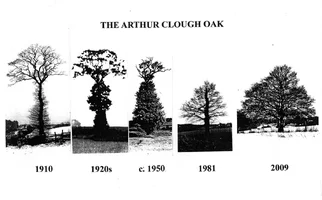
Re sprout management, here's a tree that was restored almost completely from sprouts. The arborists--we're assuming there was more than one!--failed to observe the Shigo/Shaw 3-Year Rule (Dave, we're waiting for that stone tablet--did you drop it on your way down Mt. Sinai?) They did not remove all epicormics. Amateurs!

Is there still doubt that epicormics can transition to endocormic, and stability? Pic was in Arborist News 2010, in Neville Fay's fine article.
 

Attachments

  • 322009-EpitoendoArthurCloughOak.webp
    322009-EpitoendoArthurCloughOak.webp
    161.9 KB · Views: 51
[ QUOTE ]

But.... is that the best for the specie of tree?

I have been thinking about weeping willow over the years.

such a brittle tree, foliage weight outgrows what the limbs can support.

If we want a weeping willow to grow large and old, we have to do proper trimming, crown reductions, weight reductions about every 3 years in order to prevent a failure.

This is intense frequency.

It made me think, why is this tree still around then?....

It didn't take much thinking. This tree grows in wet swampy areas in nature. Out doing other species that can't deal with the wet conditions.


Think about it. I'm sure that most of you know that all it takes to grow a new willow tree is to break off a limb and stick it in the mud. It will root and grow a new tree.

These trees grow in wet soft ground. If they break up, chances are, part of the falling limb will sink into the wet ground.

and bammm! a new tree is started.

much faster than seeds.

It makes sense to me.

Sometimes tree failure, is not failure in nature, but a strength.

I can imagine a weeping willow stand of trees in a swamp, all originating from the central tree due to it breaking up in storms.

[/ QUOTE ]

I like this kind of thinking. Trees grown wildly out of context might seem to need help from us. But it's still for our benefit. We don't want broken branches all over the place and the tree can't do anything ueful with them when they fall on lawns. We should prune these trees. It;s still dominantly about aesthetics.

I alluded to it, but didn't elaborate - in Gilman. Trees that are normally forest-grown shed lower limbs when they become shaded out. These trees, in a park setting may grow limbs too long in their un-natural setting and become prone to breakage. We mimic the gradual shedding through staged reduction pruning. Anyway, this is the conventional wisdom. It makes sense to me, but I could be swayed by intelligent arguments to the contrary. I expect some species are more prone to issues than others.

But natural breakage is not necessarily a dire scenario for a tree. It can be for people underneath! An interior limb may become shaded out and the tree abandons it.
Weight is lost as it dries or fungus may help speed this along. The lighter limb can fall eventually without tearing out part of the trunk with it. We intervene in our urban trees. It makes sense. I'm not arguing against it. We have to manage trees in urban settings. We put them there, usually out of context and we need to maintain them. For our safety and for aesthetics.
 
[ QUOTE ]
X yeah it's a rare silver I see, period, and much rarer yet one without bad genes and tight Vs. With pecans though it's more about endweight than bad Vs. Exposed ends get nipped, regardless of fork.

Re sprout management, here's a tree that was restored almost completely from sprouts. The arborists--we're assuming there was more than one!--failed to observe the Shigo/Shaw 3-Year Rule (Dave, we're waiting for that stone tablet--did you drop it on your way down Mt. Sinai?) They did not remove all epicormics. Amateurs!

Is there still doubt that epicormics can transition to endocormic, and stability? Pic was in Arborist News 2010, in Neville Fay's fine article.

[/ QUOTE ]

I have tried to ignore this :-}...but I guess like a bad haircut it is not gonna go away...

Suppressed sprouts (you must say this quickly 3 times to proceed reading) as opposed to "elites" last for 3 years and to allow them to do their deeds for 3 years and prune them even before dead (they get pinched out by the collars) is not a crime against nature.

You seem on a bandwagon here Guyzer. Do you not believe Shigo said they lasted 3 years, do you not believe Shigo is right about the 3 years or ...what? You bought the Shigo stuff a couple of years ago...bet you can find it. I remember you saying you talked to Judy (Shigo) when we were on TWorld so don't tell me you had them longer than that. Think you got tired of me beating you over the head with them and pulled out the wallet.

I asked fsquirrel for research data on the 1/3 rule (you have always been anti 1/3 rule til Gilman promoted it...dogma you say...). I was not challenging the validity of it as much as wanting to know what the objectives of all this cutting 1/3 this and that was. Were objectives met and what about the consequences outweigh the positives?

When you remove 1/3 of the sprouts in a "clump" you are likely to get some decay in the collar (like a pollard head in my mind) and as such the elite sprout you chose to leave will not be as stable embedded in this decay.

So again...in hopes of you not (blathering :-) on and on about my quote...I guess I could search thru all my Shigo stuff (virtually every book and vid he ever published) and find some data on the observation (I am looking for data for a treatment...you looking for data on an observation) that suppressed sprouts live for 3 years...hell, I could search thru my CD of "A collection of over 5,000 items from research and travels worldwide over a forty year period" by Al and likely I'd find what you are asking for

but

probably not gonna do that cause I'd rather hop on my motorcycle and take a nice ride out in the country on my day off...and...I am just gonna take his word on it cause I know any statement he made he had the science to back it up and I have seen him eat up no college BCMA types like you a hundred times in lectures, walks in the woods and not do it in a malicious way...but quite embarrassing to witness I must say.

Cheers Guy
 

New threads New posts

Back
Top Bottom