Suckers - What do you tell the client?

[ QUOTE ]
Great discussion.

I've never been satisfied with parroting from books. Great minds and solid research form the basis of my analysis or explanation for each case I see, or request I'm dealt with. Then I try and puzzle it out.

And I don't have books published and a degree in biology either.

[/ QUOTE ]

My gawd, another Binky offended by basing pruning decisions on sound scientific data. Wasn't it just a month or so ago I had to teach you what cambium is?

Sure you can look up to the sky and draw upon all the mystic powers of man and all the trees you scrambled up as a kid and skinned your shins on...and presto...a pruning decision will be written in the stars for you to follow...

I never said I was going to remove every sprout I encounter...it is just another consideration to make while arming yourself with as much knowledge and experience you can then "doing the right thing".

A heavy sprout over a play area, a heavy sprout based in decay or callus/woundwood, in an area with high prevailing winds affecting it or frequent ice storms. Yes, even aesthetics are a consideration to remove a mature (or non mature) epicormic. Another tool in the box if you will.

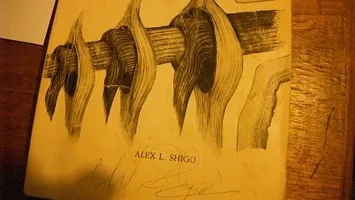
Does a sprout have this kind of architecture? Let's stop "puzzling it out".

321362-015.JPG
 

Attachments

  • 321362-015.webp
    321362-015.webp
    22.5 KB · Views: 30
I should've left the nastiness in.

You just aren't all that bright. You haven't taught me anything but you have confirmed my long held belief that the twits with the biggest, most cocksure mouths are the ones with the least to offer.

Everybody has seen the illustration you posted... a LONG time ago. You are so stuck on what you've read in one place that you not only will NOT learn till it hurts... you won't learn at all. You're too sure you're the expert to learn.

Based on your website, maybe you should change your name to 'landscapevet'.

Let us know when you learn something from the 21st century cupcake.
 
Jeez.

Get a larger size of tighty whities mister treevet.

I wasn't even trying to get after you. And you have no idea what offends me. It certainly isn't a discussion about sprouts or suckers whateverthefuck you think you are keeping score about.

I don't remember the cambium thing. Did you win a prize?

I never said you said anything about sprout removal. I, in turn never made a comment about how they are attached.

The tightness in your crotch is giving you agro. Get over yourself.
 
I tell the clients "Yep, better bring them tall trees down, might crush yer house this winter!"
Those suckers fall for it every time!
 
Oh wait! I get it mr. landscapevet...

You think you taught a CA and writer and professional speaker about cambium because she ACTUALLY has the humility to listen to and learn from, pretty much anyone.


That's precious.
 
Why don't you ask HER if I taught her what cambium is recently.

And...I have been waiting breathlessly for you to tell me (as you accused me)...just where I "took it out of context" when Alex Shigo said

"EPICORMIC SPROUTS HAVE WEAK UNIONS....SIMILAR TO A BRANCH WITH INCLUDED BARK". I will tell you or anyone if interested since you are bluffing.

You got ANY books (how to rebuild a carb don't count).
 
I did. She says... well, you know what she said. Feeling a bit wrinkly little man?

She's smart enough to ask questions to get a point across. Fact is, she probably taught YOU about cambium by getting you to go look it up. Like I said, you just aren't very bright, I mean that as an obvious statement of fact.

Even if you were smart and educated, you're inflammatory, holier than thou attitude would neutralize it. You have no credibility because no one with any self respect will listen to you.

Do you think... or did you READ, that epicormics remain weak for the life of the tree? Hmmm? Got another quote? Maybe one that isn't repeated by some speaker at every conference as though it's a standalone statement of absolute fact.

Like I said before, no one is saying epicormic branches are AS strong as a branch originating in the pith... although it's safe to say that after many years they're more than strong enough...

I don't see how you can rationally argue that. The illustration above shows perfectly what happens each time the tree puts on a woody cylinder.

I have a fair collection of books. I really like books. Is that supposed to go somewhere?

I generally rebuild carbs without a book though, they're kinda simple... but you should get a book.
 
"A heavy sprout over a play area, a heavy sprout based in decay or callus/woundwood, in an area with high prevailing winds affecting it or frequent ice storms. Yes, even aesthetics are a consideration to remove a mature (or non mature) epicormic. Another tool in the box if you will."

"A mature epicormic" = The quintessential oxymoron. A complete contradiction in terms. If it is mature, how can it be outside the core?

Epi transitions to endo, as night turns into day. Actually Dave, that graphic also illustrates the epi/endo transition into maturity, too! If a dormant bud releases in year 20, how inferior can it be in year 50 to the 'original' branch? With 30 years of overlapping a buttress...3 may be enough to gain a reasonable level of stability.

If pruning for aesthetics is a tool, then the pruner is a tool! {Nah that was too easy. Don Rickles is not such a
cool.gif
role model.} I prune for aesthetics often, if it doesn't seem to hurt the tree's feelings. The thing is, pruning to the tree's natural form is aesthetically delightful!
laugh.gif


Namaste'--good idea, Bodhisattva.
 
I apologize for my part in screwing up this thread. I would delete my inflammatory posts but I always hate that when other people do it, so I'm leaving it as is.

This was a good thread and I let a baseless attack get the better of me. I'm sorry.


Discussing things like sprouting and pruning and tree growth with customers is one of the arborist's greatest tools. Education for everyone, everywhere is nothing but good.

We all have something to teach as well as to learn, so do our customers. A really good way to educate is to listen. Get the customer to answer their own questions so to speak. Lead them with stories and experiences to the idea that a healthy tree is a strong beautiful tree.

The more people we have working to keep trees healthy, the better we can elevate this profession and give urban trees a chance.

One last time, I'm sorry I dumped on this thread.
 
[ QUOTE ]
I apologize for my part in screwing up this thread. I would delete my inflammatory posts but I always hate that when other people do it, so I'm leaving it as is.

This was a good thread and I let a baseless attack get the better of me. I'm sorry.
...

One last time, I'm sorry I dumped on this thread.

[/ QUOTE ]

It wasn't dumped and it wasn't stooped. We ain't done yet thrashing the topic. Get ready for round too.


Bob the W
smile.gif
frown.gif
smile.gif
frown.gif
smile.gif
 
[ QUOTE ]
Prune them off? Reduce, remove, leave?

I usually say that the tree is in adjustment mode. Wouldn't put them out there if they weren't needed. Cut one off and get 4 back.

I suspect they are put on to principly aid with water movement. Anyone read <u>evidence</u> of purpose? Like a research doc. or study. I have read lots of opinions.

I see many, many jobs where they are removed repeatedly. I assume that this is the advice that is typically given.

[/ QUOTE ]

My original question stands unanswered. I have unsuccessfuly looked for an answer.

I understand (plant class was a long time ago) the cellular mechanics of how they form and what they do over time.

Why, o why, are they called water sprouts? Sorry again for the earlier misnomer. It seems to me that suckers have similar growth characteristics.

I am looking for a study that compares the photosynthetic capacity and/or transpiration capacity of the adventitious tissues to standardly formed tissues. This would give some insight as to why they are so dramatic in their different appearance and perhaps functional difference IF there is any difference at all.

Has anyone ever seen a tree sucker without any prompting by an environment change? Incidentally, I consider pruning to be an environment change for the tree. The new house, the removing of its companion tree and just about any change to the surroundings of a tree.

The reason in analogy form for the inquisitivity:

You have the garden hose watering wand who's operator is only happy when it delivers 100gpm (making up numbers) through 100 little holes in the shower head at STP. Now, the wand is ONLY happy when it delivers 100gpm. Stupid oak flowers got caught in the nozzle and plugged up 10 of the holes. Now it only flows 90 gpm. This is an unacceptable condition (takes me 10% more time to water). Would it not be grand to poke 10 more holes into the head to make it happy again. If the STP alters, then what happens? Additional increase or decrease in flow (don't know which), which is the ONLY thing that matters to the nozzle operator. For fireman tim, it matters when you are staring at the flames and it is frickin hot.

This example is water under pressure. The transpiration of trees is considerably more complex. Is it not still a flow problem?

Food source doesn't sit right with me. There are usually other, higher sunned areas to facilitate photosynthesis. All the energy produced is not used locally right? Something has to be sent elsewhere?

When there is not consensus, I get concerned. In this topic are we to work off dogma (new word for me :|)?

The goal is to have something that resembles a fact that is evident or can be similarly discovered by another person without being told. There are too few facts and way too many opinions.
 
That would be an interesting study on a specific species. You could probably extrapolate something from it with respect to other trees. I think you would need to study lots of species to get a good picture of how the rate of transpiration varies between sprouts and 'standardly formed tissues' ... their really isn't a good common term for that is there?

So many factors to try to control... it would be fascinating if you could measure transpiration in real time because it would vary with other factors like time of day, temperature, humidity...

Any of you ISA boffins know of a study like that?
 
[quote

Has anyone ever seen a tree sucker without any prompting by an environment change? Incidentally, I consider pruning to be an environment change for the tree. The new house, the removing of its companion tree and just about any change to the surroundings of a tree.


[/ QUOTE ]

Hey Tim, I have always assumed, possibly incorrectly that an environmental change is alway necessary to provoke epicormic buds to cause these types of shoots to appear. But we may not alway know the cause.

My airy-fairy thinking is that each tree has an energy budget and when it is called upon to use some of that in response to a change - let's say an antagonistic change for simplicity sake, that the tree will 'decide' how best to spend that. Choices are growing more wood, adding more leaves, manufacturing chemicals to repel invaders, going into reproduction mode, or building callus and woundwood.

If adding more leaves is a better emergency response than growing normally branching wood or some other option, then it sends up the suckers and watersprouts. Like putting on the emergency tire of your car rather than repairing and re-installing the flat tire on site. Quicker to get you where you need to go.

But maybe the leaves are important not so much for overall energy increase, but maybe to serve that part of the main trunk or branch directly on which it is growing. Say a tree has been lion's tailed - now branch girth is insifficient for teh weight carried. Tree wants to increase girth along that limb. Get leaves there fast. I've seen branches regrowing on many limbed up spruce, and this is what makes me wonder about these things.

A possible experiment on the transpiration/photosynthesis thing. Put plastic bags around normal limbs and waterprout shoots that are in the same shade/sun conditions, containing about the same number of leaves, and look at the moisture level in the bags the next day. May give a non-quantifiable kind of ballpark idea.
 
While I've been in this biz my whole life since the age of 14, I'm probably one of the least formally educated members here in terms of books and classes attended. I'm a paid tree killer who's killed far more trees than I ever pruned.

That said, after 37 years I have pruned a few trees and dissected quite a few trees. My observations have led me to believe that trees sucker as a direct result of stress, be it over pruning, storm damage, environmental change of grade, water availability, insect attack or even just old age. One of the last things an ancient old tree does is put off a bunch of suckers in a dying last gasp of breath to continue breathing/growing.

In my opinion trees are basically water pumps soaking up water and minerals like a big wick driven by photosynthesis and evaporation, storing both for potential hard times ahead. When you take too much of the leaves powering the pump away for whatever reason? The tree quite naturally puts off as many suckers as it deems necessary to reach a state of balanced equilibrium again. The tree knows what it's doing far more than we probably ever will.

A reliable test of an arborist's class one pruning skills in my opinion is whether he or she can make small enough cuts to barely thin the tree's canopy so that you can barely tell it's been pruned at all, and doesn't trigger the tree's suckering instinct at all. The result should be a uniform canopy density when the tree's viewed from every angle. This kind of high quality class one pruning requires so much meticulous attention to detail throughout the entire tree canopy, and is so time consuming, that it's almost become a lost art in today's modern tree industry in my opinion.

Of course suckering trigger points vary widely with varying tree species, and some species like Blue Gum Eucs can't be pruned at all without hitting that trigger point other than deadwooding!

I'm convinced that trees know what's best for them 98 percent of the time. And that two percent of the time our installing artificial steel structural support aids in structurally compromised trees is of true benefit to the tree itself and lengthens its lifespan.

The overwhelming majority of trees pruned today are over pruned in my opinion. That's why suckering trees touched so severely by mankind, do so quite profusely. They want to live, maintain equilibrium, and that's why they sucker, in my humble uneducated opinion.

Jomoco
 

New threads New posts

Back
Top Bottom