Insect & Disease ID Trivia

Re: What Did This?

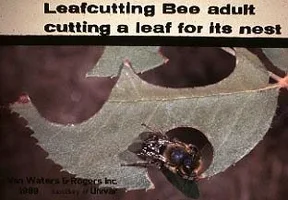
Leaf cutter bee damage looks like that.
 

Attachments

  • 261186-leafcutterbee.webp
    261186-leafcutterbee.webp
    16.4 KB · Views: 57
Re: What Did This?

Nice pictures! I've watched a species of leafcutter wasp try to fly into a small piece of steel presumably nest but the opening was smaller than the leaf piece and it couldn't get in. It tried for at least 5 minutes straight.

I've noticed lots of this type of damage on various plants, never enough to worry about. I've always liked seeing leaves with such perfect cuts on them.
 
Re: What Did This?

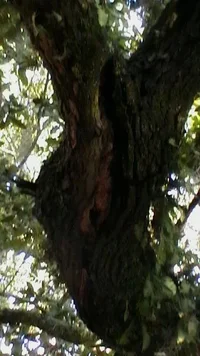
Yeah. It fell down.
It was one in a long line of very tall, old spruce with branches only near the top.
It came right through the power lines during a severe lightning storm. I guess there was some drama.
Some people said it was lightning struck, but maybe just wind. I don't remember how windy that storm was - just the thunder and lightning.
What do you see on the stump that shows rot Guy? I'm not very up on diagnosing fungal tree diseases.

I just thought the way the trunk broke was cool.
 
Re: What Did This?

That tree likely had a root rot like tomentosus or another brown rotting fungi. Brown rot is a generic term that refers to the "rot" caused by a fungus that consumes cellulose and leaves lignin. Super weak of course, you can crush the tissue into powder.

No way lightning did that, all rot + wind. You can clearly see the thin ring of live sapwood is very thin and that is the part of the tree that buckled at the bottom.

I'd bet carpenter ants were involved too. IF there are other adjacent trees that are still standing, they are likely infected by the same root rot and should be inspected. We use a resistograph but there are other fancy, more digital tools out there.

We have the same vintage of spruce here and i find that any tree with a declining crown and vertical cracks int he trunk will be well on it's way to a result that your photo shows.

I'm now packing a new iphone and i've been taking lots of pictures lately, i'll see what i can do to post another in this thread.

v
 
Re: What Did This?

Use bait to kill them. Spraying or dusting only goes so far. The bait they will take inside the colony and poison the whole bunch.
 
Re: What Did This?

I'd have to say that carpenter ants are your friend too. They don't destroy sound wood, they only make nesting galleries in wood that's already compromised. They don't feed on cellulose like termites. I know when I see them that something else has caused a loss of wood integrity in a tree and that I need to figure out what it is.

If they're migrating nightly from a tree to a satellite swarm in a dwelling, that's a different cup of tea.
 
Re: What Did This?

Vince, those do not look like carpenter ants, which are typically bigger and glossier. early in the vid there was a white ant aka termite.

I agree with richard, except to say that based on inspecting galleries that carpenter ants do occasionally expand into living wood. Not enough to go medieval on them imo. I can't guess what that white powder is, but i would not want to be downwind of it.

Frax, we have pileateds here too. As in your pic they prefer dead wood, even houses, to living trees.
 

Attachments

  • 285898-IMGA0014.webp
    285898-IMGA0014.webp
    39 KB · Views: 38
Re: What Did This?

Guy, the white ant was just coated in the product that i was using.

Are you two saying that you don't find trees that are structurally compromised from carpenter ant damage?

I find that the wood they excavate is certainly dead heartwood and possibly with some decay but still will add to the integrity of the tree. Well worth treatment imo if only to delay the inevitable by several years.

"If they're migrating nightly from a tree to a satellite swarm in a dwelling, that's a different cup of tea. " Richard are you saying that houses are more important than trees?

v
 
Re: What Did This?

The carpenter ants are just undertakers and pallbearers. Something else caused the original decay. They don't eat wood. The trees have to already be structurally compromised and decayed, for carpenter ants to find suitable harborage in them. That being said, once they establish a primary brood chamber in damp and/or rotted wood, they'll try to colonize a satellite nest, either elsewhere in the tree, or nearby. As Guy points out, they have been seen working in sound wood, but that's not generally where they start out. There's even a line of thought that, by removing decayed wood, carpenter ants may prolong the viability of the tree, by removing fungally infected wood from the tree.

And yep, that's what I'm saying, particularly since there's no live wood in most houses. Houses and people contending with an ant swarm is worlds away from ants taking the rotted wood out of a tree.

Arborist News Oct 2008 has a very informative ceu article about carpenter ants. It's still viewable in the archived issues.

 

New threads New posts

Back
Top Bottom