Crane Rigging & Knots in Them

Re: Crane Rigging & Knots in Them

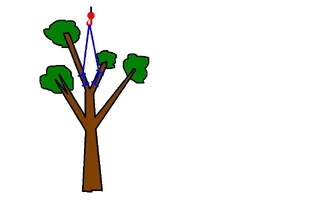
Okay. My first illustration was a poor one. I made another one.
tongue.gif


Doesn't this type of set up simply reduce each choker's SWL in half?
 

Attachments

  • 201792-CraneChoker2.webp
    201792-CraneChoker2.webp
    17.5 KB · Views: 130
Re: Crane Rigging & Knots in Them

TMW if you have a spiderleg that is good for 10,600 is that per leg? or for all legs combined? If so, then if knotted do you reduce the capacity by 50 percent? Then since it is a spiderleg and you are almost always going to be dealing with angles do you reduce that even lower? Example you have a 10,600 capacity with 4 legs attached sharing 2650lbs per leg, then you knot each leg and reduce again by 50 percent down to 1325lbs. Finally, at a 30 degree angle making for an additional 50 percent reduction down to 662.5lbs per leg giving your spider leg a total real capacity of 2650lbs. I have never used a spiderleg so I don't really know but if any of this makes sense your spiderleg might not be as useful as you first thought. Then again I could be completely wrong please let me know either way because i'm really not familiar with these but would not want to find out the hard way. Any ones thoughts would be helpful. One more thought if it has four legs and you attach only two is it still good for its maximum rating regardless of how many you use or do you have to use all legs to achieve maximum rating? please help.
 
Re: Crane Rigging & Knots in Them

Your illustrations are excellent, choking a sling reduces it by 50 percent which is a perscribed use. It seems to me that using a half hitch that you would naturally have to reduce the capacity of the sling below the 50 percent threshold. Of couse in your second drawing I would reduce it less than I would have in your first. I've never seen anything on this in writing again it is not an accepted practice maybe a manufacturer would answer a question regarding this. I think we all do this, I would recommend that we be aware that this may cause the sling to be the weakest link in our systems by causing their rated value to be lower than that of the choked configuration rating. When I find myself pushing a sling to the max in any configuration I try to either take a smaller pick or grab a larger capacity sling.
 
Re: Crane Rigging & Knots in Them

so we should rig everything with a 1 inch choker?
 
Re: Crane Rigging & Knots in Them

[ QUOTE ]
TMW if you have a spiderleg that is good for 10,600 is that per leg? or for all legs combined? If so, then if knotted do you reduce the capacity by 50 percent? Then since it is a spiderleg and you are almost always going to be dealing with angles do you reduce that even lower? Example you have a 10,600 capacity with 4 legs attached sharing 2650lbs per leg, then you knot each leg and reduce again by 50 percent down to 1325lbs. Finally, at a 30 degree angle making for an additional 50 percent reduction down to 662.5lbs per leg giving your spider leg a total real capacity of 2650lbs. I have never used a spiderleg so I don't really know but if any of this makes sense your spiderleg might not be as useful as you first thought. Then again I could be completely wrong please let me know either way because i'm really not familiar with these but would not want to find out the hard way. Any ones thoughts would be helpful. One more thought if it has four legs and you attach only two is it still good for its maximum rating regardless of how many you use or do you have to use all legs to achieve maximum rating? please help.

[/ QUOTE ]

When rigging a multi-leg pic(spider leg in the arborist world) you can't exceed the rating for more than half of the legs combined. Say each sling is rated for 2500 lbs x 4 legs= 10,000lbs so thats 5000 lbs WLL with a 30 degree angle reduces that by half again so thats a 2500lb WLL. if any of those slings are knotted once again reducing it by half so you can only lift 1250lbs on 4 2500 lb slings, maybe a knot isn't such a good idea.
 
Re: Crane Rigging & Knots in Them

or you can just use one inch amsteel like we do (109,000lb tensile) and not really have to worry about strength loss.

smirk.gif
 
Re: Crane Rigging & Knots in Them

and how long is your round sling?

and how do you attach it, with a clevis or choke it?

I used crane slings with an eye on each end for quite a few years exclussively. what you are doing.

then i got smarter and started using 25 ft. amsteels so I can be faster and tie the lengths that I needed instead of wrapping and unwrapping a sling to get it right.

I will answer your smart azz question anyway, they cost me around $350 each, for 25ft of 1" amsteel with a spliced eye at one end. We have four.

So I can TIE the peices to rig.

So when did arborist stop tying when it comes to tree rigging?

They didn't stop, it just the talk from the jack azz crane guys that decided to get into tree work.

A log coming off of a spar and being caught with a bull rope and block has got to put more force on a rope than most crane picks ever will..... and imagine this, we do it with the dangerous dreaded TIED KNOTS!

"SHUT UP CLASSIC", that's how I want to respond to most of your posts.
 

Attachments

  • 201990-fatsilverspiderleg.webp
    201990-fatsilverspiderleg.webp
    733.6 KB · Views: 107
Re: Crane Rigging & Knots in Them

I may be wrong here, but I asked a friend at a rope company some of these questions before too and this is how I reason it.

Rigging slings usually get assigned a WLL of 20% tensile (5/1 design factor). That factor is put in use with consideration to knotted strength. So there is no need to cut that number in half again.

For example, my slings have a tensile of 30K#. At 5/1 I get 6K#. I use two or three typically, but since I do not know which leg is seeing more weight throughout the procedure I work within the strength of just one. You do have to adjust that down for sling angles though.

It was recommended to me to use a 7/1 if the fiber is high-tech and not covered.
 
Re: Crane Rigging & Knots in Them

When I use multiple slings I also make sure 1 sling is rated to handle the weight of the load. be it a "spider leg" or a round sling or any other sling. In other non tree related rigging situations where the load applied to each sling can be calculated it would be different.
 
Re: Crane Rigging & Knots in Them

Mark, I read your post several times and thought you answered my question except for the part where "I might be wrong here". Again I've never used slings I needed to knot but I can see the usefulness of them. But aren't you real curious now to know if your slings which are good for 6k per leg may only be good for 3k. Then if they are not coated may only be good for about 2100lbs? It is a fact that all lines in good condition which are knotted will fail at the knot, hence the 50 percent rule. X your right we all use knots in rigging I don't think we all take into account the reduction in strength that knots,bends and angles have on our rigging, I'm just really trying to find out if it applies to your slings or not? I hope I'm wrong they're obviously very useful and efficient.
 
Re: Crane Rigging & Knots in Them

[ QUOTE ]
and how long is your round sling?

and how do you attach it, with a clevis or choke it?

I used crane slings with an eye on each end for quite a few years exclussively. what you are doing.

then i got smarter and started using 25 ft. amsteels so I can be faster and tie the lengths that I needed instead of wrapping and unwrapping a sling to get it right.

I will answer your smart azz question anyway, they cost me around $350 each, for 25ft of 1" amsteel with a spliced eye at one end. We have four.

So I can TIE the peices to rig.

So when did arborist stop tying when it comes to tree rigging?

They didn't stop, it just the talk from the jack azz crane guys that decided to get into tree work.

A log coming off of a spar and being caught with a bull rope and block has got to put more force on a rope than most crane picks ever will..... and imagine this, we do it with the dangerous dreaded TIED KNOTS!

"SHUT UP CLASSIC", that's how I want to respond to most of your posts.

[/ QUOTE ]


You can buy round slings in any length you want heres the site we recently ordered from when we switched from 5/8" steel to round slings: http://www.cantow.ca/shopx.php?catid=83&...amp;totlines=-1

Those prices are CDN by the way.

When arborists should have stopped tying knots and using proper crane practices IS WHEN THEY STARTED USNG CRANES, crane operators and riggers have had rules for decades, what are the rules for arborst rigging? Whats the minimum strength for an arborist rigging line? What knot by the rulebook do you tie to a block about to be lowered?

Tell me to shut up if you like but when you combine two industries and one has rules where the other doesn't you follow those rules.
 
Re: Crane Rigging & Knots in Them

[ QUOTE ]
I may be wrong here, but I asked a friend at a rope company some of these questions before too and this is how I reason it.

Rigging slings usually get assigned a WLL of 20% tensile (5/1 design factor). That factor is put in use with consideration to knotted strength. So there is no need to cut that number in half again.


[/ QUOTE ]

Is that a rope sling rated at knotted strength? Because I've never heard of a sling rated at knotted strength.
 
Re: Crane Rigging & Knots in Them

When I broke the amsteel sling I made it broke at the knot which is consistant with tests done by the manufacturers and others. Therefore it can be rated as a knotted wll. If I know it breaks at 15000# at a particular knot used in a particular orientation then reduce from there to get a swll what is wrong with that.
 
Re: Crane Rigging & Knots in Them

I understand that it can be rated for knots, but is it. Sounds as though you have some experience with breaking one. I would love to hear more about how that happened as well if you could share? Allmark, you are the third person on here that is using these but cannot tell me definatively if this is how they are rated. How can you not know this? I can understand how you might break one though. I will contact some manufacturers next week. All this just makes me more and more curious and i'm not even using them. I appreciate your response.
 
Re: Crane Rigging & Knots in Them

dude the best tool a rigger has is common sense combined with practical working knowledge and training. over rigging is a killer. i once saw a 250lbs piece of iron fall out of a choker it damn near killed the hook on man. if it had fell from 300' into the turbine house it could have killed a couple of people. the same could happen easily tree rigging. so my point is to make sure you rig with common sense. when shurtleff and andrews assembles a crane they use a chain formed into a prussic to drag the cable out. knots and hitches have their place.
remember a spliced connection girth hitched to the work is just another knot. the safe working loads are just what they are a guide to safe work. a smart rigger know the tensile strength and adjust the swl to fit the scope of work then applies all the load factors. in demolition the common swl is 10:1 because you can make a good educated guess at the weight but you can be wrong. in a 10:1 swl the 1" amsteel is good for 8720lbs in a straight line pull with two spliced eyes, 6540lbs in a choke, 17440 in a basket. with knots assuming one spliced eye one unspliced with a running bowline with a marl as a buffer straight line pull of 4360lbs, with a stilson hitch and a marl 6976lbs. if my calculations are correct
 
Re: Crane Rigging & Knots in Them

[ QUOTE ]
I understand that it can be rated for knots, but is it. Sounds as though you have some experience with breaking one. I would love to hear more about how that happened as well if you could share? Allmark, you are the third person on here that is using these but cannot tell me definatively if this is how they are rated. How can you not know this? I can understand how you might break one though. I will contact some manufacturers next week. All this just makes me more and more curious and i'm not even using them. I appreciate your response.

[/ QUOTE ]

http://www.youtube.com/watch?v=JxTPHNMr9S8
 
Re: Crane Rigging & Knots in Them

[ QUOTE ]
[ QUOTE ]
I may be wrong here, but I asked a friend at a rope company some of these questions before too and this is how I reason it.

Rigging slings usually get assigned a WLL of 20% tensile (5/1 design factor). That factor is put in use with consideration to knotted strength. So there is no need to cut that number in half again.


[/ QUOTE ]

Is that a rope sling rated at knotted strength? Because I've never heard of a sling rated at knotted strength.

[/ QUOTE ]

WLL is designed to account for knotted strength. In dynamic situations it is recommended to use a 10/1 design factor. In static situations (like crane lifting) it is 5/1.
 
Re: Crane Rigging & Knots in Them

I said that I might be wrong because I always approach life that way. I know one thing in life, I might be wrong.
grin.gif
I should have said I was told this by the manufacturer.....

Don't forget that a cow hitch is simply a girth hitch or chocker hitch for a loop sling. That being said, what are we all arguing about? If you buy a round sling and choke it to a limb, it is the same as using a cow hitch and a dead-eye sling, except for attaching the second leg to the hook. The weak part is usually the girthing point.

My problem with round slings is that they are not adjustable for unique situations and the manufacturers rarely give you the design factor. They simply tell you that it has a WLL of say 9800# in choker mode. What is the tensile?????
 

New threads New posts

Back
Top Bottom