DanielSon, I hear you and I understand where you’re coming from, in fact I think most readers on this forum, as Sean said, “feel your pain.” You feel your ability to be competitively priced and to be profitable has been destroyed by companies which evade payroll taxes and workers’ compensation premiums. I do not doubt that your intuition is correct when you guess that most Atlanta tree services are avoiding required overhead that you are paying—although the lack of Atlanta tree service responses thus far is not evidence for your claim, as others have already noted.
I imagine this is an issue for many small service businesses throughout the country, especially during the current economic climate. It appears your solution is to sell your saws and hang up your spikes; that seems to be an entirely appropriate response to your circumstances. It’s not fun to have potential customers perceive your proposal as some eye-popping price gouging.
I wish you luck and good fortune in future endeavors; you certainly have plenty of passion and enthusiasm.
Those of us who choose to stay in the tree industry will still have to face these problems daily. Jamin Mayer offers one solution, an information package. Sean offered some helpful questions for each of us to ask ourselves, and Riggs gave us some real world pragmatism. There have also been a few comments on the customers’ responsibility when hiring contractors. Does anyone have documentation or can anyone point us to specific court cases in specific jurisdictions where the customer has faced financial consequences from hiring an “illegitimate” tree company? As Tom noted, “most customers have no clue about their potential liabilities.” Perhaps we need to do a better job of educating our clients. Are there definitive cases where the customer has not been protected by their home owner’s policy?
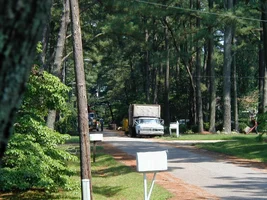
I work in southeastern Virginia, locally known as Hampton Roads. One competitive issue that we have here is bulk waste city trucks picking up the debris from a tree removal. It’s difficult to compete with a “tree service” that has no need to pay for trucks, brush chippers and their associated maintenance and operating costs, including disposal fees. Attached is a picture of a city-owned bulk waste truck working in conjunction with a tree service (a tree service with their own chip truck and chipper). Even after I spoke with the city driver about the tree service being in violation of local bulk waste pick up ordinances, the driver picked up the material anyway. If you look to the right in the photo, you can see a log being carted to the waiting city truck. I’m curious about how many other U.S. localities have this problem.