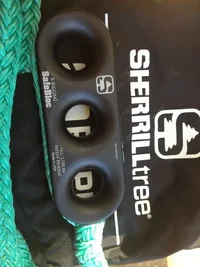
THT vs. Safebloc vs. Thundersling

I must say threading in this manner seems much more appropriate
84f7e37e05bb6c22743a1f3c7e2a8fdd.jpg
 
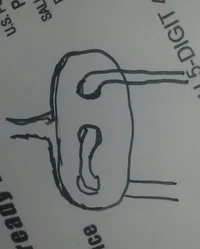
I'm still seeing a chance for rope on rope as well. Which with the man on the ground, he wouldn't see that and let it run. I did a quick sketch of a way to reduce that chance (keep in mind I am no expert and this may be a dumb idea) but is it possible to splice it this way to change the routing of the rope? This sketch would of course be after the piece has begin to be lowered...
 

Attachments

  • 20160913_180014-1.webp
    20160913_180014-1.webp
    60.1 KB · Views: 61
Not really. If the block was spliced in that direction the first time you used it the splice/sewn termination would ripe apart. Gravity always pulls down, the log you were catching would cause the block to rotate and either split the splice open or if not then the block would be as it used normally.
 
I must say threading in this manner seems much more appropriate
84f7e37e05bb6c22743a1f3c7e2a8fdd.jpg
please don't thread it like this. now the end of the rope that is holding the most weight and tension is pressing on or against the running parts. it is more likely to glaze. if you thread as originally intended (from the top down) the leg of line going from your LD to the top hole and the bit between the middle and last hole end up next to each other. i have been using/ field testing the device for over a year before it hit the market and that is how it ends up. is it possible for the two sections of rope to end up right on top of each other? sure, but it's very brief when stuff is swinging around or maybe when the piece is stopped and the groundies are shifting/ pulling things into place.

also i think i saw a comment of whether the friction it adds causes premature wear of the rope verses a block. i have not see this at all. if anything, you are much less likely to glazed a rope because the friction in the system is spread out between the Safebloc and the Porta-Wrap verse with a block and porta-wrap all the friction is on the porta-wrap so a really fast run with smoke your rope quick.
 
I've recently decided I'm purchasing one of these for my rigging kit instead of a POW. I'm sick of my "groundman 101" courses I do with people before I climb when I work with a newbie ground guy.
If someones experience under a climber is dragging stuff after it free falls or just holding a rope tight till they're told to start lowering, I'm already gunna be giving them a lot to take in. A figure 8 or a porti really jams people up.
 
A friend of mine just got the SafeBloc, he showed it to me for my opinion. I love the X rings, the larger Beast ring is just that. I was disappointed to see how shallow the channel for the sling is, with little effort I popped his sling off the block...certainly wouldn't want that to happen mid rig.
What is the sticky point with using a Porty? Doesn't get much more complex than calling out the amount of wraps you need, does it?
I used that abhorrent Aerial Friction Brake too, man, what awful quality and such a narrow window of use. There is no place for that in the type of work I'm doing right now.
I've gone back to blocks and I pair it up with a beautiful aluminium friction bollard from France, the Micro Cylinder from FTC, it's tiny, 1/2" max rope size but it's what we use mainly anyway and for drifting just use natural friction. Check it out, it's cool: http://ftc-tree.com/catalogue/files/assets/basic-html/page-11.html
 
Last edited:
What is the sticky point with using a Porty? Doesn't get much more complex than calling out the amount of wraps you need, does it?
ill give you the pre-climb lesson i give people the first time they see a port a wrap.
a bight of rope, or a loop, goes thru the bars from the front and under the barrel, then you take wraps on the front. don't try to use just a loop over the back of the barrel as a half wrap and don't take more then one wrap unless told otherwise. before taking wraps, look to see if all the slack is out. confirm with me if i need it tight or a little loose. i will let you know if you will need to feed the rope a little to get it to run or if you will need to brace yourself cause it will be a little on the heavy side. but do not take a second wrap unless i tell you too.

the first cut there is always a problem figuring out the bight and taking the rope off. then the next problem is remember to take slack out. depending on the guy running ropes, it take a little bit, sometimes a long bit to get used to it.
running just rings and taking pieces accordingly as made me not really use a basal friction device much, unless negative rigging.

i like that bollard you posted though.
 

New threads New posts

Back
Top Bottom