
Navigation
Install the app
How to install the app on iOS
Follow along with the video below to see how to install our site as a web app on your home screen.
Note: This feature may not be available in some browsers.
More options
You are using an out of date browser. It may not display this or other websites correctly.
You should upgrade or use an alternative browser.
You should upgrade or use an alternative browser.
This is the Akimbo
- Thread starter JMerritt
- Start date


Evo
Been here much more than a while
- Location
- My Island, WA
Do you have any details on the methods used for testing? Also what ever happens to the EU rating stamp?Lots of answers below, basically nailed it. Fly does not actually measure 11.1. In addition, it’s inclu on the approved rope list is based on actual testing and not on its stated diameter.

John@TreeXP
Branched out member
- Location
- Bainbridge Island
So what's the bottom line?
Options:
1. Buy an approved rope and you're good to go, based on either a 220lb or a 286lb weight-limit.
2. Rigorously test any other non-approved rope and take your chances.
Taking risks on any non-approved Rock Exotica/Akimbo recommended rope may obviously have unforeseen consequences, but if a rope is properly vetted, tested and used safely with appropriate Akimbo settings at a safe height, and it holds on a rope after being put through this intense regime of rigorous low & slow tests, than said risks may (emphasis on "MAY") thereby become significantly mitigated.
What's interesting is that we are now discovering and learning more about rope characteristics. As Moss illustrated, ropes take on different attributes as they get used more and more. In theory, if an old-rope or a non-approved rope holds onto the Akimbo and performs to the same high standards, as if it were being used on an approved rope, than it becomes a question of individual judgment being made on a case-by-case basis.
Perhaps it would be a good idea to illustrate or demonstrate how exactly to determine the qualify of a given rope for use with an Akimbo. Creating a step-by-step guide, illustrating a hand's-on approach, would be most helpful and practical. I know I would certainly appreciate this kind of information while trying to get things all dialed in.
Another important factor is how if a rope requires a maximum bollard setting on the Akimbo, this increases the probability of failure, since there are no higher settings than a maximum one. For that reason, I'd prefer a rope that works for me using mid-range bollard settings settings. Buddha describes the Noble Eightfold Path as the middle way.
Options:
1. Buy an approved rope and you're good to go, based on either a 220lb or a 286lb weight-limit.
2. Rigorously test any other non-approved rope and take your chances.
Taking risks on any non-approved Rock Exotica/Akimbo recommended rope may obviously have unforeseen consequences, but if a rope is properly vetted, tested and used safely with appropriate Akimbo settings at a safe height, and it holds on a rope after being put through this intense regime of rigorous low & slow tests, than said risks may (emphasis on "MAY") thereby become significantly mitigated.
What's interesting is that we are now discovering and learning more about rope characteristics. As Moss illustrated, ropes take on different attributes as they get used more and more. In theory, if an old-rope or a non-approved rope holds onto the Akimbo and performs to the same high standards, as if it were being used on an approved rope, than it becomes a question of individual judgment being made on a case-by-case basis.
Perhaps it would be a good idea to illustrate or demonstrate how exactly to determine the qualify of a given rope for use with an Akimbo. Creating a step-by-step guide, illustrating a hand's-on approach, would be most helpful and practical. I know I would certainly appreciate this kind of information while trying to get things all dialed in.
Another important factor is how if a rope requires a maximum bollard setting on the Akimbo, this increases the probability of failure, since there are no higher settings than a maximum one. For that reason, I'd prefer a rope that works for me using mid-range bollard settings settings. Buddha describes the Noble Eightfold Path as the middle way.
Last edited:
Just so we're clear...using an unapproved rope will not cause the Akimbo to self destruct, nor will it result in the Akimbo shredding the rope into confetti. At worst it will cause some creeping. So try new ropes and dial in what works for you. Case in point, I'm about 105 kg geared up and was playing around on some Voyager last night with no issues....despite that rope being on the 100 kg max WLL list.
As much as I love the Akimbo I really wish RE hadn't bothered to recommend ropes and do testing. I could be alone in that thinking, but I feel it's misleading to climbers and I'm not sure what the basis behind it was.
Sent from my LG-V533 using Tapatalk
As much as I love the Akimbo I really wish RE hadn't bothered to recommend ropes and do testing. I could be alone in that thinking, but I feel it's misleading to climbers and I'm not sure what the basis behind it was.
Sent from my LG-V533 using Tapatalk
John@TreeXP
Branched out member
- Location
- Bainbridge Island
The issue, as I see it it that the Akimbo favors 11.8 to 12.5 diameter ropes, and a good percentage of climbers use ropes in the 11mm to 11.5 range. For this reason, there are going to be a lot of climbers getting a rude awakening and unforeseen problems may occur when testing the integrity of their setups in a non-uniform manner. Many, as I have, will find they now need to use larger diameter ropes after discovering that their existing rope/s fail or are unsatisfactory, due to an Akimbo's brake potentially not engaging, even when using the maximum bollard setting.

moss
Been here much more than a while
- Location
- Carlisle, Massachusetts, U.S.
The issue, as I see it it that the Akimbo favors 11.8 to 12.5 diameter ropes, and a good percentage of climbers use ropes in the 11mm to 11.5 range. For this reason, there are going to be a lot of climbers getting a rude awakening and unforeseen problems may occur when testing the integrity of their setups in a non-uniform manner. Many, as I have, will find they now need to use larger diameter ropes after discovering that their existing rope/s fail or are unsatisfactory, due to an Akimbo's brake potentially not engaging, even when using the maximum bollard setting.
Interesting... I believe the worse case scenario for an 11mm (actual caliper) double-braid arborist rope before adjustments would be some creep and that's about it. Similar to climber experiences on Rope Runner and BDB before bird or bollard adjustments are made. I ran my BDB on 10mm (Hook line) and it performed excellently after top bollard adjustments, same with the Rope Runner.
The way I read the 11.5mm - 13mm rope diameter range is that it is the sweet spot, neither is an extreme. At least every other device that I've used that has a stated rope diameter range has wiggle room outside the stated range. I use that as guidance in considering this rope size issue.
Low and slow, adjust, climb and be happy.
Hey, someday even I may own an Akimbo, until then I'll watch the early adopters live on the bleeding edge ;-)
-AJ
moss
Been here much more than a while
- Location
- Carlisle, Massachusetts, U.S.
As much as I love the Akimbo I really wish RE hadn't bothered to recommend ropes and do testing. I could be alone in that thinking, but I feel it's misleading to climbers and I'm not sure what the basis behind it was.
Sent from my LG-V533 using Tapatalk
I think the testing and stated approved ropes and diameters had to happen, or it wouldn't have happened ;-) As you mentioned, smart usage by experienced climbers will not cause the Akimbo to explode. I know for sure a bunch of climbers who've been on the prototype for awhile have been using it on a wide variety of ropes and diameters. Think about the HH, if you don't adjust the hitch properly EVERY TIME YOU CLIMB, the hitch may not grab at all, and we know the HH is a great multicender.
To state the obvious, the Akimbo is the first top and bottom adjustable multicender, this opens up so many rope possibilities. The awesome Rope Runner really does have an unofficial "best ropes" list, I've been through all that. RE can only do so much testing for this initial Akimbo release. Especially with the chorus of whining GoFunders out there (yes I said it). I'm guessing the "approved rope" list will grow over time. Overheard in the future: "My Akimbo creeps on dental floss, what a piece of crap!"
-AJ
Last edited:
John@TreeXP
Branched out member
- Location
- Bainbridge Island
Just come creep.... still doesn't sit well, when instead of free falling, you are creep falling.
moss
Been here much more than a while
- Location
- Carlisle, Massachusetts, U.S.
Just come creep.... still doesn't sit well, when instead of free falling, you are creep falling.
I'm referring to creep during low and slow testing before adjustments. Funny thing is over the years I've seen more than a few experienced climbers go up to 60' or so and test first-time climbing on SRT devices or systems. A lot of lip service to low and slow, less follow through. I admit I did it on the Rope Runner (a prototype) and the HH, for the runner, significant creep, I was at about 50', it was a great lesson in why to try stuff low and slow first. For the HH, zero grab, I was closer to the ground, you can't go up if it doesn't grab ;-) Point being is that if you're at height and your device starts creeping it is very not bad, ie: manageable to deal with for an experienced climber.
-AJ
Evo
Been here much more than a while
- Location
- My Island, WA
It’s the wording. Recommend vrs approved which kinda sucks. Also what is the safety factor on the WLL? Does the device slip break if the unknown safety factor exceeded. I ASSUME the rope slips...Just so we're clear...using an unapproved rope will not cause the Akimbo to self destruct, nor will it result in the Akimbo shredding the rope into confetti. At worst it will cause some creeping. So try new ropes and dial in what works for you. Case in point, I'm about 105 kg geared up and was playing around on some Voyager last night with no issues....despite that rope being on the 100 kg max WLL list.
As much as I love the Akimbo I really wish RE hadn't bothered to recommend ropes and do testing. I could be alone in that thinking, but I feel it's misleading to climbers and I'm not sure what the basis behind it was.
Sent from my LG-V533 using Tapatalk

Nonsense. I've used mine on a lot of different ropes and I don't think any were over 11.7 mm. The biggest issue was either minor creep, or strangely, drag on ascent.The issue, as I see it it that the Akimbo favors 11.8 to 12.5 diameter ropes, and a good percentage of climbers use ropes in the 11mm to 11.5 range. For this reason, there are going to be a lot of climbers getting a rude awakening and unforeseen problems may occur when testing the integrity of their setups in a non-uniform manner. Many, as I have, will find they now need to use larger diameter ropes after discovering that their existing rope/s fail or are unsatisfactory, due to an Akimbo's brake potentially not engaging, even when using the maximum bollard setting.
moss
Been here much more than a while
- Location
- Carlisle, Massachusetts, U.S.
It’s the wording. Recommend vrs approved which kinda sucks. Also what is the safety factor on the WLL? Does the device slip break if the unknown safety factor exceeded. I ASSUME the rope slips...
Good point "Recommended" is perfect. "Approved" is the kind of wording that makes lawyers wake up in a cold sweat.
-AJ

chiselbit
Been here a while
Same here. I just tried all the ropes I had been using with the rope runner, bought a few others, a little creep or sometimes a lot of creep but it’s easily adjusted out. It’s not some big drastic event lurking in the darkness. I just got used to climbing up a few feet and descending and making minor adjustments any time I tried a new rope or switched to a different rope. After awhile I could remember which settings were good for which ropes and just start climbing. I’m sure the RE version will be similar.Nonsense. I've used mine on a lot of different ropes and I don't think any were over 11.7 mm. The biggest issue was either minor creep, or strangely, drag on ascent.
I hate to admit how lazy (or lucky) I am; lately I've been climbing on 3 or 4 ropes and never change the akimbo settings. Both bollards are set somewhere in the middle and it seems to work fine on each rope. I just throw it in the bag at the end of the day, and slap it on a new rope the next time and take off.

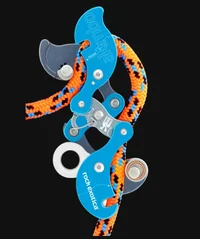

ßrit
New member
- Location
- North East
I'm still waiting on mine...anyone feel like posting some pics or sharing video of theirs?

Not sure, but i think it's pretty. "Mindcraft confetti" perhaps?Does anyone know what brand of rope in photo.
Thank you
Evo
Been here much more than a while
- Location
- My Island, WA
I just found part of the problem I was having. The upper cam was sticking. This could explain the jerky issue I was having.
The upper spring cam was so tight I’d have to push it with finger to get it to move either direction. Put a drop of oil on it and it makes all the difference. Yes I know I should have used graphite.
The upper spring cam was so tight I’d have to push it with finger to get it to move either direction. Put a drop of oil on it and it makes all the difference. Yes I know I should have used graphite.
Looks like Sterling Scion except for the blue.Does anyone know what brand of rope in photo.
Thank you

Tree-Taylor
Branched out member
- Location
- Canada
Looks like Sterling Scion except for the blue.
Ya I ran through the list and that's the only one that seemed similar. The offset pattern even matches the Scion like it does in this picture
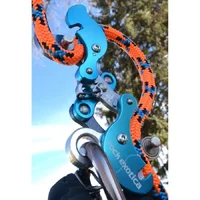
New threads New posts
-
test2
-
 KBNest -Midline Attachable SRS Canopy Anchor.
- Latest: Steve Connally
-
-

-
-
-


