suggestions for saving this cracked oak??

TreeCo---you may be right

Treespotter---more photos follow your post, and see my comments later in this post

Tom---how SEVERE ? also, see my comments later in this post

grover---sounds like you are suggesting leaving about a 30 - 40 foot pole, albeit with proper pruning cuts. I have seen that type of cutting done around here, although I don't recall that anything has come back from it. But, I do understand this from a safety point of view.

oldoakman---many good questions, which is one reason I posted so many photos. (What are 'deracho force winds'?)

The decay appears to comprise about 1/2 or more of the diameter at the base of the tree, although I have not done any drilling (I may before making a final recommendation). I am not sure how high the decay extends. Probably no chance of a sonar study. Only stationary target is the house. You may be right that the lower branches would slow down and support the tree if it did fail.

I should have mentioned--the initial seepage might have been associated with some large winds, but I am not sure.

The larger crack was definitely the result of some large winds that came through here about two days ago. The damage was odd--two trees down on my road, this big oak cracked, and a road about a half mile away had 50-70 foot diameter pockets of fairly severe damage (large trees and limbs down), with little or no damge around and between those small pockets.

We have also had very hot weather for the last ten days to two weeks (100* + every day) and I wonder if that had something to do with the crack. 'Summer branch drop' is a phenomenom that has been discussed here on TBzz

http://www.treebuzz.com/forum/showflat.p...;o=&fpart=1

and elsewhere.

Thanks again.
 
Seems like a significant reduction of the tree will bring the house out of range, if only a few feet of the tree will slap it, as is. Seem like the only chance short of Grover's idea.
Grover's idea seems pretty severe. I think I'd try for the middle ground.

Maybe bolt the trunk together.

What kind of conk is it?
 
Mark,

A deracho is straight line winds in excess of 85mph. Dr. Coder from U of Gerogia has a wind loading lecture that I am sure you can find online at UGA Warnell school bla bla bla. DSon't know the exact url. He talks about the difference between hurricaine, tornadic and deracho winds. Deracho winds are usually confined to the plains of the midwest. The one that happened last week was highly unusual and it seemed to get more intense as it moved east. The Weather Channel commentator actually called the storm a deracho on camera which is the first time I have ever heard the term used in the media. They showed a satelite enhanced radar of the US from the Missippippi to the Chesapeake and the rain bands were incredible. I still say go easy on reduction.
 
Southsoundtree---I believe it's Ganoderma.

You are the first to mention bracing. I had wondered about that. I installed 3 rods in a similar-sized white oak across the street about 15 years ago and the nuts (I used three 1" diameter threaded rods, each with nuts on each end) are now grown over with new wood. That tree, however, had a spiraling, hairline crack and, except for the crack, the trunk was solid. The trunk of this tree is hollow and I wonder if it would buckle.

oldoakman---thanks for the explanation.

I too am leery of heavy crown reduction. Right now I am leaning towards removing 5-7 of the biggest branches on the down side of the lean, and very slightly reducing some of the others. And maybe bracing. If the crack doesn't change, then total removal. Also, I need to see what the owner thinks when he sees it.

Still open to other comments and suggestions.
 
Underneath the lean hang a line and weight from a nail. Place a rock, brick or whatever under the weight. The higher you place the nail the more dramatic the measurements. Lower the weight to about a foot or so over the brick and tie off. Next time you come back measure the distance from weight to rock, or brick. This will help tell you how fast it's coming down, also it may aid in judging if crown/weight reduction has affected the lean of the tree.

Also you mentioned that the wound/crack is weeping. Is it wet wood? If so that may not be too bad since it out compeats other decay agents, and leave a fair amount of structure. Conk looks like ganoderma to me in your photo, can you draw on the underside? Crown reduction/retrenchment, props, and through bolts if it stays. (?)
 
I would take the tree down due to decay and obvious cracks. This is what happens in nature. Trees fall down! This tree is too far gone to attempt any type of preservation measures. IMO.
 
I have cabled, braced, trough bolted and guyed some very old veteran oaks with great success. you can guy the upper canopy to the upper canopy of the tree you have it guyed to now with the 3/4 pull line. we stood up a very large 3' dbh post oak after it up rooted slightly and got crotched up in another huge post oak with a 4' dbh. We used double whip tackle at 75' and our grcs to stand the tree back up, then we used one 5 ton static cable and two 8 ton cobra cables and a light canopy reduction to stabilize the tree. it worked like a charm. i do drive by on them about once a month and check them out. we stood that tree back up last year. i also have a cousin who had his trees through bolted a couple of years ago after a large wind storm put some long deep cracks in them. i pulled a willow oak back together with double whip tackle and the grcs, then put three bolts and three cables in it to stich it back together. i feel very confident that it will be just fine too. My mentor guyed a 130' tall tulip poplar at the dixon art gallery twenty years ago and it is still standing and doing well. if there are no real targets then save the tree and leave it with a nice crown. bolts and cables do their job well. Remember: No trees- No breathe.

i edited to help this message read better
grin.gif
 
You've got what I agree looks like Ganoderma inside the tree, this should be confirmed by an expert mycologist.

Then you've got some major nasty looking cracks that alone would justify removal of the tree.

But combine the two together, Ganoderma root rot, seriously nasty cracks, in a fairly massive tree, at a clients home?

I would hate to be in your shoes if something goes wrong and property or god forbid people are injured when it just falls out of the ground.

Your client's paying you, and therefore deserves priority consideration along with his family and friends.

Just my opinion of course. But if it were me that tree would get carefully removed ASAP.

jomoco
 
Triangulating cables to hold it up would be best, but the support trees don't look to be located in the right places for that....

Grover's solution, Cabled to the support trees, coupled with having the client sign a liability release..... if they're adamant about keeping it....


Otherwise... I'm w/ Jomoco on this one... those cracks are moving fast....


Suggest milling the wood and having a keepsake made from the tree..... Honor it by giving it a new life....

Tough call.. good luck.
I'd love to know what you decide.. keep us updated!
 
I'm with Grover...retrenchment pruning which might be the first step in a staged removal though. If the client is cooperative there is a chance that this solution could work.

Erk Brudi has shown how little crown reduction is needed to reduce the bending load on the trunk. Since there is a strength loss already more reduction is a solution. How much? Uh...I dunno ;)

Your observations of the trees in and out of the damaged areas will give you a good idea of the severity of the wind.

Liability is certainly a concern. There is also a place for current tree care practices. A lot of US arbos aren't familiar with the work that's been done with ancient trees in the UK. Very interesting stuff!
 
I think it's great your taking steps to look at how the tree may be saved. Most guys would immediately condemn that tree and have a crew there within the hour.

Crown reduction combined with crown thinning and bracing/rods in the trunk might be an option; especially if it significantly reduces the chance of hitting any targets. Do any kids or animals live in that house that may wander into the target zone? Or can it be quarantined for an extended time period?

jp
grin.gif
 
Say the homeowner signs the waiver and you crown reduce, cable and bolt etc. and the tree still fails injuring someone. If you think you are protected you are wrong. You are selling that homeowner snake oil.
 
I'm not sure I understand 'retrenchment'. From grover's post it seems the tree would be cut to a height of about 30-40 feet and all of the branches below that would be removed. Seems it would be just a 30-40 foot pole. Is that correct?

If crown reduction were done it seems that, because the tree is wider than it is tall, there would be a greater effect from performing most of the reduction on the sides rather than the top.
 
Lowering the top reduces the bending moment.

At the Tree Structures workshop one presenter had a very good illustration of how this works. He had a wooden dowel mounted on a stand. The dowel was pulled to the side and allowed to flick back and forth. The amplitude and frequency was noted. Then he slid a tennis ball onto the dowel. First he had the ball at the top of the dowel and pulled it over to the same place as no t-ball. Interesting to see how it changed the movement. By moving the t.ball up and down the dowel he showed how, in simple theory a tree might move by lowering the center of gravity.

After learning about tree statics and retrenchment pruning I started going out to look at trees during very windy days. What I saw was that there was a zone in the tree where the branches moved very little. From that line out the branches danced and whipped in the wind. This is the place where I would see most limbs broken in windstorms. My takeaway observation was that place was where I would aim my cut-backs to in an extraordinary situation...like with this tree.

Think of this zone that I observed to be very similar to what we see when a tree uproots. Tree root systems go from huge anchoring roots to the Zone of Rapid Taper. At the ZRT end the roots start to get very fine and don't provide much anchorage. That is where the rootplate fails in storms. Look for a similar sort of taper relationship in the limbs.

Doing aggressive reduction cuts at this time of year is still going to be stressful. The tree is putting on starches to replace the growth in the spring. Removing too much of the food factory good kill the tree. A tough balancing act!
 
A lot is going to depend on what your next door neighbor wants to do about the tree. Should anything go wrong with it, and you had a hand in it.. you, and your liability are definitely going to have a ringside seat.

If you're not certain you want to take on that liability, or of your own objectivity, as you might be conflicted, you might want to suggest an objective outside arborist to your neighbor.

Most tree liability issues arise when an arborist begins wearing more than one hat at a site.
 
[ QUOTE ]


cut it down already !!!!!!!!!! dont be foolish !!!!

[/ QUOTE ]

Every solution for a hammer is to hit a nail.

Trees like this have survived with professional attention and understanding.

Just a...take some time and read up on what arbos outside the US have been doing with ancient tree preservation. Its not uncommon to see trees that are hundreds of years old that have been under recorded care for the their whole lives. To us colonists a hundred year old tree is ancient when they're really second or even third growth sometimes.
 
A hundred year old oak tree has just past it's puberty.

Sometimes it looks like it's the Arborists that are the trees number one enemy.
On a property like that you don't take a tree like that down completely. Leaving that tree there with half the crown and eventually some dead leaders and lots of regrowth will be a beautiful asset in that garden/property. No problem free perfect tree can beat that.

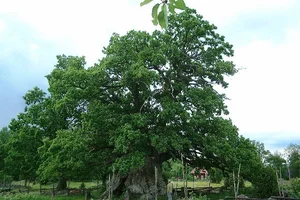
On the photo below, my favourite tree. Not tall, not wide but it got a chance during the last 600 years to develop into this 16 meters circumference trunk.

Mahk, trees like this on property's like that don't deserve an over eager tree cutter with a big saw.

329912-Rumskullaeken.jpg
 

Attachments

  • 329912-Rumskullaeken.webp
    329912-Rumskullaeken.webp
    174.5 KB · Views: 31
please dont get me wrong . i would not be against saving a tree in that condition . since it is in a high risk area that is why i believe it should be removed !!!!!!
 

New threads New posts

Back
Top Bottom