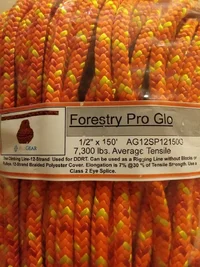
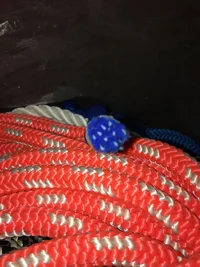
Yeah, since the strand count only refers to the cover, not the core, rope has gotten a lot more confusing. There really needs to be more specific terminology to clarify the construction. Technically, any rope with both a cover and a core is a kernmantle... but that terminology has become more specific to static ropes with a high cover strand count of smaller diameter strands very tightly woven around a core that provides most of the strength. 16-strand ropes are usually larger strands woven fairly tightly around parallel core strands, and the cover provides most of the strength. There are solid-braid, 16-strand ropes, but I haven't seen any marketed for aborist use. There are 12-strand ropes that are solid-braid (no core, but very small space in core area) and hollow-braid (large space in core area) and with a core (no specific terminology for them). Double-braid ropes have both a braided cover and core, of course... but the tightness of the cover weave varies a lot (rigging ropes usually quite loose, climbing lines tighter). Diamond-braid ropes have a very cheap construction of a loosely braided cover over parallel core, but are pretty much reserved to hardware/farm store products where cost of construction is the major consideration.
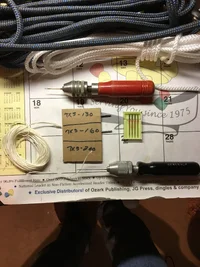
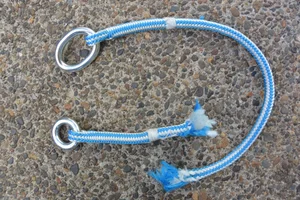
It's all so confusing. I have actually experimented with splicing diamond-braid ropes for haul lines, and it's not hard to do... but I wouldn't trust the splices for anything but pulling stuff up into the tree.
As
@Brocky said, the 12-strand ropes with a parallel core should be able to be spliced like a 16-strand climb line, but I haven't seen any specific instructions. These ropes are cover-dependant, like the 16-strand ones, so I think you'd probably only have to fiddle with the 16-strand splice a bit to make it work. Once you got something that looks and feels good, I'd be break testing a few of them before I'd ever consider climbing on them.
I think I'd just send the hanks off and have sewn eyes put on them, myself.