Pulling a leaner with multiple ropes

On co dominant stem trees I have used one rope tied to say both both leads with a running bowline. (One end tied to 1 lead one end tied to the other)then i would put a block in the belly of the rope attached pull line to block. Figured it would help to equalize the pull on both stems. Tried it once and have not had to since but i like the results.
 
We had a heavy backleaning 27” dying hemlock go sideways yesterday and the two rope option came up in the post-chat. They bend beautifully if straight up and down, pretty decent when dead too, but have had many break sideways when back leaning vs most all other species. We took a large top first and had ample, even/consistant pull, gap face was close to 50%, even hinge maybe 3”. Honestly don’t know if two ropes would have kept it to lay, but it was a calculated risk and ended up just fine for cleanup: I’d never trust a pull like this by a house/wires etc, but would appreciate feedback or things to attempt next time. Triple hinge given enough pull???

 
We had a heavy backleaning 27” dying hemlock go sideways yesterday and the two rope option came up in the post-chat. They bend beautifully if straight up and down, pretty decent when dead too, but have had many break sideways when back leaning vs most all other species. We took a large top first and had ample, even/consistant pull, gap face was close to 50%, even hinge maybe 3”. Honestly don’t know if two ropes would have kept it to lay, but it was a calculated risk and ended up just fine for cleanup: I’d never trust a pull like this by a house/wires etc, but would appreciate feedback or things to attempt next time. Triple hinge given enough pull???
I’m assuming you’re talking about having a hinge much thicker when you say ‘triple hinge’.
Around here the ones you really have to check yourself on is alder. If the tree has a back lean and any side weight you have to split the difference on your pull direction. Sometimes you can aim the face a little off to one side or the other from the pull direction.
Also this is where leaving more hinge wood on the opposite side of the weight can help.
Obviously a guy line can certainly help as long as it’s placed well. Meaning it needs to stay tight until the hinge breaks.

Doing a hard test pull unless the tree is super crispy is always preferred.

Say you want the tree to fall at 12, but it leans to 8 or 8:30. Setting your pull line to 1:30-2:30 can work
Or sometimes as extreme as 3-3:0 can be enough to get it over center.

Wedges and placement also help a wedge on the most compressed side to help lift, and one near center to initiate forward movement. Just don’t lift too much!
 
No.

Three vertical strips of hinge, often on the tension side of a leaner.

A solid, thick hinge will fail before three thinner hinges of the same volume of wood.

I'll use it on poor hinging leaners.17250596561338179541725042884.jpg
 
No.

Three vertical strips of hinge, often on the tension side of a leaner.

A solid, thick hinge will fail before three thinner hinges of the same volume of wood.

I'll use it on poor hinging leaners.View attachment 95116
Ahh so shark gills that don’t penetrate all the way, assuming a “tapered” hinge thinner on the compression side?
Would you use this in a critical situation? Or is it a low risk “I’d like the tree to go this direction, if it doesn’t I’ll have more cleanup” kinda thing?
 
@southsoundtree would you use a triple or shark gill for back leaning? @evo I’ve heard of some sketchy alder stuff, quick when it starts splitting/chairing and brittle? What kind of hinge placement (% depth) or relative thickness do you like with back leaning alder? We regularly use side lines, stays, guys etc for side leaners but haven’t utilized for 180deg pulls, this one may have been a candidate though!
 
Ahh so shark gills that don’t penetrate all the way, assuming a “tapered” hinge thinner on the compression side?
Would you use this in a critical situation? Or is it a low risk “I’d like the tree to go this direction, if it doesn’t I’ll have more cleanup” kinda thing?
Haven’t played with either that much, but was super impressed with a sharkgill on a heavy head leaner storm damage poplar. It came over crazy slowly and stayed attached at the stump. Sounded neat too.
 
@southsoundtree would you use a triple or shark gill for back leaning? @evo I’ve heard of some sketchy alder stuff, quick when it starts splitting/chairing and brittle? What kind of hinge placement (% depth) or relative thickness do you like with back leaning alder? We regularly use side lines, stays, guys etc for side leaners but haven’t utilized for 180deg pulls, this one may have been a candidate though!
It really depends on what I’m working with. GRCS, mini skid winch, hand pull, wedges, and/or MA. I typically go just about 1/3 more or less. Fairly wide conventional or open face. Thicker hinge and a fast saw, alder cuts like butter with a sharp chain.
Back leaners are as much of a barber chair concern as head leaning or just plain wonky ass phototropic noodles.
On extreme cases when we used the old yarder 4cyinder winch, we would cut our back cuts below the hinge. These were trees that there was a concern of shearing the hinge with the pull before the tree came over center. That machine was awesome and scary as shit.
Having twin drums a lever to engage each independently, and a brake foot petal on each drum. It was a like watching the boss getting swarmed by bee’s dancing on the machine. The tree however, would casually pull over going a little to the right or a little to the left as the puppeteer steered it into the lay.

The head rigs were about the same for mini highleads. Lots of bouncing and dancing on the controls while speed shifting the tranny.
 
Idk what the shark gill cut is about.

I don't trust a triple hinge to keep something off a house, alone. With a 90⁰ retainer line, 'belt and braces', I would.
 
I didn't read any of the responses so please forgive is this is redundant. There's a lot of varibales with pulling a backleaning co-dom. I always prefer to take codoms one at a time if possible.. depending on species and crotch ect, you gotta be careful about trusting the stem to hold together...

I always like to go with multiple pull lines on anything heavy and back. ANd multiple ground anchors/vehicles to so the pulling. There are lots of rigging configurations to equalize the pulling force, but that is likely not needed as long as both are adequate.

More details on size, species, placement and condition of the brnach union, alignment of stems to direction of fall etc.

Here's on example of equalizing the pull on both stems by using a looped system...

 
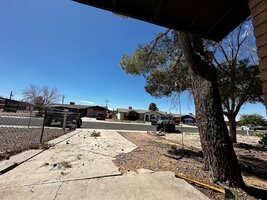
Recent two point pull drop. My buddy wanted to be sure. I always thought it would be interesting to run two ropes at approx 45° off a crispy non hinging tree to redirect pulleys and then around a common capstan winch. Would lose some force, but the tree would have no choice but to go down the center.

IMG_8078.jpeg

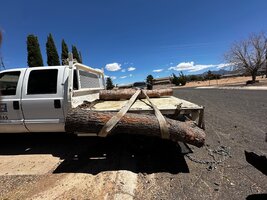
Also, parbuckling win
IMG_8081.jpeg

And these I accidentally “grabbed” and decided to leave in.

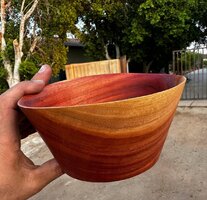
Eucalyptus bowl

IMG_8186.jpeg
IMG_8195.jpeg
 

New threads New posts

Back
Top Bottom