
Navigation
Install the app
How to install the app on iOS
Follow along with the video below to see how to install our site as a web app on your home screen.
Note: This feature may not be available in some browsers.
More options
You are using an out of date browser. It may not display this or other websites correctly.
You should upgrade or use an alternative browser.
You should upgrade or use an alternative browser.
Preferred method of Canopy Anchor
- Thread starter MattT
- Start date


macswan
Been here a while
- Location
- Champlain Valley, VT
If it were me I would want it spiked.
Looks like trying to tie an alpine butterfly after drinking too much Thunderbird.If it were me I would want it spiked.
macswan
Been here a while
- Location
- Champlain Valley, VT
My last post was intended for you, but there were other posts in the way. I would spike the farmers loop, for my piece of mind. I have heard anecdotally that it s been seen coming loose. I would think it would have to be mistied, but all the same...Would you guys trust the (farmers loop/circus bowline) butting up against the small ring of a friction saver for an SRT set up? I know how to tie it, but haven't really put it to use. Sometime the alpine butterfly can be a little prick.

- Location
- Northwest Ct
Butterfly and pinto all day every day.

- Location
- Perrysburg, Ohio, U.S.A.
Maybe the answer to this should be obvious to me, i dont know, but what is the advantage of the farmers loop over a tried and true alpine butterfly?
Seems like the same starter layout, just more steps in the farmers loop...
But i am intrigued none-the-less.
Seems like the same starter layout, just more steps in the farmers loop...
But i am intrigued none-the-less.

Treetopflyer
Been here much more than a while
- Location
- Coastal N.J
Easier on my hand to tie. Faster to tie for me. I'm more of a farmer than an alpine butterfly .. Just to name a few.Maybe the answer to this should be obvious to me, i dont know, but what is the advantage of the farmers loop over a tried and true alpine butterfly?
Seems like the same starter layout, just more steps in the farmers loop...
But i am intrigued none-the-less.
macswan
Been here a while
- Location
- Champlain Valley, VT
the farmers loop is much easier to tie

- Location
- California
Would you guys trust the (farmers loop/circus bowline) butting up against the small ring of a friction saver for an SRT set up? I know how to tie it, but haven't really put it to use. Sometime the alpine butterfly can be a little prick.
Alpine Butter fly is super easy, and takes 2-3 seconds to tie. Wrap 3 times around the hand, take the middle wrap pass it under the top wrap and then loop it around and through both. And it locks really well.
Just learn a butterfly, its not a hard knot. On limb synch you don't need a friction saver. Just the Climb line around the limb (isolated) with an alpine connected to down line via delta. Super simple.

livefreeordie
New member
- Location
- Contoocook, NH
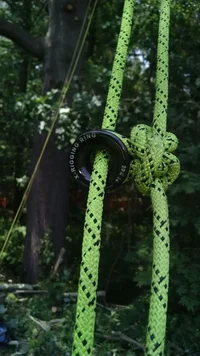
Alpine butterfly with a dmm ring or small x ring if I won't need to move my tie in or an alpine butterfly and delta link if I know I will be moving my tie in.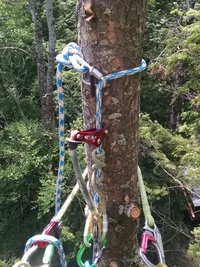
macswan
Been here a while
- Location
- Champlain Valley, VT
The farmers loop is still easier to tie, and the butterfly jams like a sonofabitch, and can be arduous to untie.Alpine Butter fly is super easy, and takes 2-3 seconds to tie. Wrap 3 times around the hand, take the middle wrap pass it under the top wrap and then loop it around and through both. And it locks really well.
Just learn a butterfly, its not a hard knot. On limb synch you don't need a friction saver. Just the Climb line around the limb (isolated) with an alpine connected to down line via delta. Super simple.
- Location
- California
The farmers loop is still easier to tie, and the butterfly jams like a sonofabitch, and can be arduous to untie.
Dosent jam on HTP or PMI But i guess I could see it jamming up more on a 24 strand. I even use it on my kernmaster and it doesn't jam. I also weight 145lbs. But with that said I haven't had one jam up on my velocity. It probably varies on wieght of climber and stretch of rope, with heavier people on stretchier ropes finding knots harder to untie?? Maybe?
- Location
- California
Alpine butterfly with a dmm ring or small x ring if I won't need to move my tie in or an alpine butterfly and delta link if I know I will be moving my tie in.View attachment 32645 View attachment 32646
Your x ring set up is interesting, the ultimate in safety, but it must take 180 feet of rope to climb 60 feet? instead of 120 feet of rope to climb 60 feet on a limb synch with a delta. liking the idea though of one less "link" in the setup.
livefreeordie
New member
- Location
- Contoocook, NH
Your x ring set up is interesting, the ultimate in safety, but it must take 180 feet of rope to climb 60 feet? instead of 120 feet of rope to climb 60 feet on a limb synch with a delta. liking the idea though of one less "link" in the setup.
Thanks I really like the simplicity of it and that it is totally bomb proof. I pretty much always climb with a 200 foot htp or escalator. Smaller trees I will pull out my double braids but it's usually the static lines that I prefer to use

Paul Hedderly
New member
Mac - Which side of the CBl do you climb on?

moss
Been here much more than a while
- Location
- Carlisle, Massachusetts, U.S.
The farmers loop is still easier to tie, and the butterfly jams like a sonofabitch, and can be arduous to untie.
Figure 8 on a bight tied midline is fast and comes apart easy after heavy loading. You can make the eye as small as you need it.
-AJ
TimBr
Official Well Known Greeter
- Location
- Northern Virginia
Figure 8 on a bight tied midline is fast and comes apart easy after heavy loading. You can make the eye as small as you need it.
-AJ
Thanks so much for that tip, Moss! I just tried it on a piece of practice rope I have hanging around. Easy to tie, too! Much appreciated!
Tim

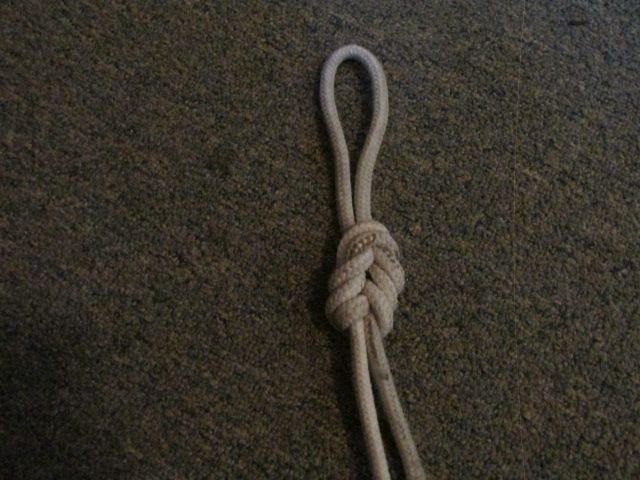
I have not tried this, but how about an alpine butterfly with two wraps around and through the loops instead of just one. That should make it easier to turn the last loop sideways in order to untie the knot, plus it makes a rather hansom tidy knot.

Crimsonking
Been here a while
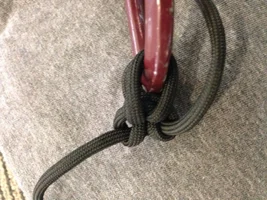
I will try that, Surveyor. Here is a method I've used for heavy loading on a butterfly. First, make sure you have a long loop. After pulling the loop through to finish, tuck it halfway back through the "neck" and dress the sides. This method requires a d link or biner to capture all three loops created by the tuck. 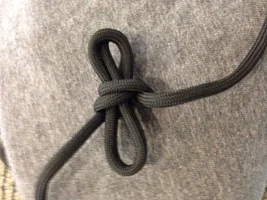
macswan
Been here a while
- Location
- Champlain Valley, VT
Huh? CBl?Mac - Which side of the CBl do you climb on?
New threads New posts
-
test
-

-
 Alternatives to standard asphalt around roots
- Started by southsoundtree
- Replies: 11
-
-

-

-


