I don't think my response sounded like a fanatic. IMO pole saws make climbers lazy. I'm not particularly concerned about making the perfect cut every time I just believe climbers tend to over use them and rely on them as a crutch. How many times have you seen a tree pruned where you can tell the climber stood in the center of the tree, reached everything he could with the pole saw and called it good. As far as how to make that cut in the picture w/o a pole saw, show me the whole tree then I will comment.

Navigation
Install the app
How to install the app on iOS
Follow along with the video below to see how to install our site as a web app on your home screen.
Note: This feature may not be available in some browsers.
More options
You are using an out of date browser. It may not display this or other websites correctly.
You should upgrade or use an alternative browser.
You should upgrade or use an alternative browser.
New tool design-please vote!
- Thread starter familytreeman
- Start date

guymayor
Branched out member
- Location
- East US, Earth
[ QUOTE ]
As far as how to make that cut in the picture w/o a pole saw, show me the whole tree then I will comment.
[/ QUOTE ]Yessir, right away, massahhh. The tree's 5 hours away, and 7 years later I am told that the hollow cracked leaning 200+ year old q alba does not need re-pruning (and I believe that), but yassa massa first chance I get...
My new avatar (got tired of that nasty euc) shows a corner of an ice-damaged tree that cannot be accessed by another TIP better than what you see. Now, without damage to interior laterals, how ya gonna get a zubat where that laser is working?
This is not about sitting in the middle and gutting/liontailing a tree. Good reduction pruning is obviously outside-in. If you can't access with a lift, pole use is required, even with Strasserian nimbleness and grace, or Chisholmian reach and technique. Simple.

As far as how to make that cut in the picture w/o a pole saw, show me the whole tree then I will comment.
[/ QUOTE ]Yessir, right away, massahhh. The tree's 5 hours away, and 7 years later I am told that the hollow cracked leaning 200+ year old q alba does not need re-pruning (and I believe that), but yassa massa first chance I get...
My new avatar (got tired of that nasty euc) shows a corner of an ice-damaged tree that cannot be accessed by another TIP better than what you see. Now, without damage to interior laterals, how ya gonna get a zubat where that laser is working?
This is not about sitting in the middle and gutting/liontailing a tree. Good reduction pruning is obviously outside-in. If you can't access with a lift, pole use is required, even with Strasserian nimbleness and grace, or Chisholmian reach and technique. Simple.


familytreeman
New member
- Location
- MN
Pole saw use is highly debatable!
You fellows are both correct in your comments-
We are discussing a different style of pruning work , just like the way we all do much of our work similar, yet different.
Also, an inexperienced climber may feel stuck in the middle of the tree and try working from there with or without a pole saw. When guys are new they dont want to let go of those middle trunks, and aren't walking around the outer canopy.
There are many different styles of tree work. If you are doing it safe and productively for you than thats what matters most. We all learn and change. I laugh thinking back of my climbing style 15 years ago...
Many guys don't use one because they've seen lazy work or feel that they are doing a better job without one-
Many guys use one because they can productively reach more of the tree from all over the canopy, not just the middle.
You fellows are both correct in your comments-
We are discussing a different style of pruning work , just like the way we all do much of our work similar, yet different.
Also, an inexperienced climber may feel stuck in the middle of the tree and try working from there with or without a pole saw. When guys are new they dont want to let go of those middle trunks, and aren't walking around the outer canopy.
There are many different styles of tree work. If you are doing it safe and productively for you than thats what matters most. We all learn and change. I laugh thinking back of my climbing style 15 years ago...
Many guys don't use one because they've seen lazy work or feel that they are doing a better job without one-
Many guys use one because they can productively reach more of the tree from all over the canopy, not just the middle.
familytreeman
New member
- Location
- MN
[ QUOTE ]
In answer to the OP... Not trying to be rude or a dick but I personally would never use this. It seems like something that sherril would sell though, good luck.
[/ QUOTE ]
I dont think you are rude or a D , Im glad you guys who wouldnt use it are saying so,, and also stating what you dont like about it as this is crucial to the design phase
I want the most critical critics possible, so I can better design-
I already met with Tobe and Alma over at Sherrill
They want to just bin it over to CHina and back.
Im looking for a US manufacturer for any products I make, whether it be the handle or not.
In answer to the OP... Not trying to be rude or a dick but I personally would never use this. It seems like something that sherril would sell though, good luck.
[/ QUOTE ]
I dont think you are rude or a D , Im glad you guys who wouldnt use it are saying so,, and also stating what you dont like about it as this is crucial to the design phase
I want the most critical critics possible, so I can better design-
I already met with Tobe and Alma over at Sherrill
They want to just bin it over to CHina and back.
Im looking for a US manufacturer for any products I make, whether it be the handle or not.

Tr33Climb3r
Participating member
- Location
- Wisconsin
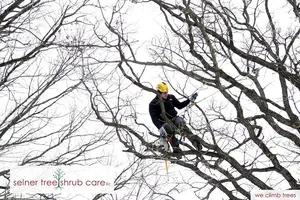
I have not completely read through all the responses but as far as safety and climbing with a pole saw I find this setup the most safe.
https://www.treestuff.com/store/catalog.asp?category_id=126&item=2172
Now I also say relying on a pole saw is no good and does develop lazy climbers.
But I have used the above handsaw in various oaks. I brought a 3' section with me and stowed the handsaw on my leg. Only pulled the handsaw out to get to those tips....it was .5" and smaller deadwood type of prune. I actually have a picture of it below/attached.

https://www.treestuff.com/store/catalog.asp?category_id=126&item=2172
Now I also say relying on a pole saw is no good and does develop lazy climbers.
But I have used the above handsaw in various oaks. I brought a 3' section with me and stowed the handsaw on my leg. Only pulled the handsaw out to get to those tips....it was .5" and smaller deadwood type of prune. I actually have a picture of it below/attached.
Attachments
familytreeman
New member
- Location
- MN
I agree that setup is safe in that you can stow that blade and have a pole when needed
I never said relying on the pole as I climb all throughout each tree using handsaws mainly and I will have a chainsaw sent up and back down if needed, or use chainsaw throughout if its a monster tree and large deadwood
I just said I use poles on each tree for at least a pick or a few that were harder to reach areas
I do agree that it would make climbers lazy if they were relying on pole use soley
We need and have an array of tools to choose from for all sorts of purposes, we do not rely on one tool to do our job
Thanks for adding another variation to pole use aloft.
I met with Luke Dunlevy over at Treestuff and he was helpful and gave me some good advice on tool development. When I first saw your tool I imagined it coming unclipped and having the handsaw drop in the snow.
Doesnt it ever come off during a cut? plus there is no hook tool for pulling / pushing like a traditional pole head
Also I figured there would be debate about clipping and unclipping the thing for use, but for someone who doesnt use it frequently I suppose
I never said relying on the pole as I climb all throughout each tree using handsaws mainly and I will have a chainsaw sent up and back down if needed, or use chainsaw throughout if its a monster tree and large deadwood
I just said I use poles on each tree for at least a pick or a few that were harder to reach areas
I do agree that it would make climbers lazy if they were relying on pole use soley
We need and have an array of tools to choose from for all sorts of purposes, we do not rely on one tool to do our job
Thanks for adding another variation to pole use aloft.
I met with Luke Dunlevy over at Treestuff and he was helpful and gave me some good advice on tool development. When I first saw your tool I imagined it coming unclipped and having the handsaw drop in the snow.
Doesnt it ever come off during a cut? plus there is no hook tool for pulling / pushing like a traditional pole head
Also I figured there would be debate about clipping and unclipping the thing for use, but for someone who doesnt use it frequently I suppose

jmcscrap
Participating member
- Location
- Woodbury, MN
It looks like the handle for ski poles used in slalom racing. The knuckle guard is good protection for that, but I have never found myself scraping or busting up my hands using a pole saw.
Mid-pole use, with a pistol grip that can be moved up or down, slide on or off the pole when needed - that would intrigue me......
Mid-pole use, with a pistol grip that can be moved up or down, slide on or off the pole when needed - that would intrigue me......
familytreeman
New member
- Location
- MN
Im sure banging the hand up is not the most common pole saw injury,
My hand has been pinched between the butt of pole and a limb-
the handle or a pommel at the end would have prevented that
There is also the fact that the pole can slide through the grasp, the handle could also stop that
My hand has been pinched between the butt of pole and a limb-
the handle or a pommel at the end would have prevented that
There is also the fact that the pole can slide through the grasp, the handle could also stop that

treehumper
Carpal tunnel level member
- Location
- Ridgefield, NJ
Look at what you're reading as the thoughts going through the mind of a potential purchaser standing in front of the display in the store or that of an online shopper. These are the objections your item will face without you there to overcome them. The design in and of itself will be the thing to tell the story and set the mind racing with the possibilities of how it will make the user better, faster, more comfortable, less fatigued or frustrated and, all that for the price of...
When I first started I used the square basswood poles. As I developed as a climber I used pole saws less but still have them as a tool to use where it's strengths outweigh its disadvantages. For the most part that application is in a wide open canopy not a tight one. That is how the use of any tool is assessed.
How you've shown the tool in use has raised objections. The idea of the tool itself isn't flawed but the features shown don't equate to an advantage and therefore no benefit. Feature, Advantage, Benefit. FAB = sale. If we add Disadvantage (D) it will equate to no sale.
An example:
F: ergonomic grip
A: positive hold less likely to lose one's grip, designed to fit the hand ergonomically
B: reduced fatigue, lower potential for accidental injuries.
Looking at the current design and how it's proposed to be used:
F: lanyard attachment
A: secure place to store the pole saw.
D: blade dangling well below and potentially out of sight. potential to snag climb line, pole saw hook catching on limbs while trying to retrieve the polesaw.
B: none as the the Disadvantages outweigh the advantages.
Simple exercise. Once you've gone through the different designs, mock them up and try them out. See which ones really do benefit the user and overcome some of the shortcomings identified. No tool is absolute but some have become so fundamental to our jobs as to leave us wondering at how we got along without it. Others have ended up filed as curiosities.
When I first started I used the square basswood poles. As I developed as a climber I used pole saws less but still have them as a tool to use where it's strengths outweigh its disadvantages. For the most part that application is in a wide open canopy not a tight one. That is how the use of any tool is assessed.
How you've shown the tool in use has raised objections. The idea of the tool itself isn't flawed but the features shown don't equate to an advantage and therefore no benefit. Feature, Advantage, Benefit. FAB = sale. If we add Disadvantage (D) it will equate to no sale.
An example:
F: ergonomic grip
A: positive hold less likely to lose one's grip, designed to fit the hand ergonomically
B: reduced fatigue, lower potential for accidental injuries.
Looking at the current design and how it's proposed to be used:
F: lanyard attachment
A: secure place to store the pole saw.
D: blade dangling well below and potentially out of sight. potential to snag climb line, pole saw hook catching on limbs while trying to retrieve the polesaw.
B: none as the the Disadvantages outweigh the advantages.
Simple exercise. Once you've gone through the different designs, mock them up and try them out. See which ones really do benefit the user and overcome some of the shortcomings identified. No tool is absolute but some have become so fundamental to our jobs as to leave us wondering at how we got along without it. Others have ended up filed as curiosities.
familytreeman
New member
- Location
- MN
Thanks for your great input-
I appreciate your FAB process
As for the mentioned disadvantages, my photo doesnt show a wide open enough angle AND too long of a pole. Ill try to make a better representation photo.
If you are in a wide open tree, there may wide open area for you to pull pole up and place back
remember this is for the wide open canopy where there are not branches everywhere accessible to hang the pole
Its all in how you look at it. If you see a disadvantage for use in a tighter tree, it was not designed for that. But in a spacious crown, you may find it beneficial to limb walk out and have hands free because you did not need to advance the pole
I appreciate your FAB process
As for the mentioned disadvantages, my photo doesnt show a wide open enough angle AND too long of a pole. Ill try to make a better representation photo.
If you are in a wide open tree, there may wide open area for you to pull pole up and place back
remember this is for the wide open canopy where there are not branches everywhere accessible to hang the pole
Its all in how you look at it. If you see a disadvantage for use in a tighter tree, it was not designed for that. But in a spacious crown, you may find it beneficial to limb walk out and have hands free because you did not need to advance the pole
treehumper
Carpal tunnel level member
- Location
- Ridgefield, NJ
It's the fact that the saw head is hanging down where there is less control than if the lanyard is girthed just below the head and within immediate view and easy control. I've tried the dangling it inverted in an open crown (Big red oak with tons of room) but found that it wasn't a workable solution.
You've got several designs there now, why not try to rework it with the feedback so far. See what you come up with.
You've got several designs there now, why not try to rework it with the feedback so far. See what you come up with.
familytreeman
New member
- Location
- MN
What about the use from the ground?
Ill admit there have not been many times yet Ive needed to invert and hang the pole tool. I just made the first one recently.
But the few long limb walks where there was no place to hang the pole saw to advance it, it was great to have it come along on its own, even if it was inverted
The handle adds a lot of force/torque/power, however you want to describe it, to the pole saw
Ill admit there have not been many times yet Ive needed to invert and hang the pole tool. I just made the first one recently.
But the few long limb walks where there was no place to hang the pole saw to advance it, it was great to have it come along on its own, even if it was inverted
The handle adds a lot of force/torque/power, however you want to describe it, to the pole saw
treehumper
Carpal tunnel level member
- Location
- Ridgefield, NJ
Yes, bringing it along is good. To pay for a tool to allow me to do that then I will analyze the cost benefit of it. Buy a sling or lanyard girthed to head vs. handle with lanyard hanging inverted. I'll go for the better solution ie., the one with the most benefits.
adds force... we were just discussing this on the GRCS storage thread. By adding length to the pole saw we increase the lever that will in turn increase the force. Length is directly proportional to force in this equation. How much will be based on the relative increase in length. There is the flexibility factor that absorbs much of the added force so, what you could be adding in force is only more stress on the poles themselves vs. increased pressure at the cut. Basically its the law of diminishing returns.
You've picked a tough problem to solve for your first go round!
adds force... we were just discussing this on the GRCS storage thread. By adding length to the pole saw we increase the lever that will in turn increase the force. Length is directly proportional to force in this equation. How much will be based on the relative increase in length. There is the flexibility factor that absorbs much of the added force so, what you could be adding in force is only more stress on the poles themselves vs. increased pressure at the cut. Basically its the law of diminishing returns.
You've picked a tough problem to solve for your first go round!
Merle Nelson
Been here much more than a while
- Location
- SF Bay Area, CA
Another question to ask is what is your desired outcome for this tool? If you want it to make money that is different from if you just believe in it and want it out there and to see how many arborists have adopted its use 20 years later.
I think Walt Disney used to say that if he could find 10 people to disagree with one of his ideas he would begin plans on it immediately. (He got something like 305 no’s from banks before the first one said yes.)
I think Walt Disney used to say that if he could find 10 people to disagree with one of his ideas he would begin plans on it immediately. (He got something like 305 no’s from banks before the first one said yes.)
familytreeman
New member
- Location
- MN
My plan is to give a batch out to some Arborist / Line guys for testing.
About the force and length, I didnt just mean its adding force because of the length----
You can decrease your pole length , then add the handle...
The 'guard' whether it be a full or half guard, adds the force because each pull and pushing motion now has the upper and lower part of your hand involved , not just your grip.. this helps relax the forearm muscles since you dont have to squeeze so much.
This adds safety in that the pole cannot slip through the grip out of your hand OR back at you . ( see photo )

I appreciate your noting the difficulty of this topic, and I thank everyone for the discussion. This has been a work in progress.
About the force and length, I didnt just mean its adding force because of the length----
You can decrease your pole length , then add the handle...
The 'guard' whether it be a full or half guard, adds the force because each pull and pushing motion now has the upper and lower part of your hand involved , not just your grip.. this helps relax the forearm muscles since you dont have to squeeze so much.
This adds safety in that the pole cannot slip through the grip out of your hand OR back at you . ( see photo )
I appreciate your noting the difficulty of this topic, and I thank everyone for the discussion. This has been a work in progress.
Attachments
familytreeman
New member
- Location
- MN
Well my primary goal is to create the tools for safety...
Just like my Arboriculture career is to promote the health of trees and safety of people,
the monetary benefit of these acts is a great byproduct but not my only reason of doing them.
There are plenty of other things I could be doing to earn money, but I chose this industry because I enjoy it
Now having children and employees, Im looking for ways to increase safety further
If I can help decrease Arborist injury and death ( a stat that has not gone down, even with all our focus on safety ) with a co. that can also create jobs, I'd say thats an overall good thing
Good one with Disney- seatbelts also took some 40 yrs before the 'go ahead'
Just like my Arboriculture career is to promote the health of trees and safety of people,
the monetary benefit of these acts is a great byproduct but not my only reason of doing them.
There are plenty of other things I could be doing to earn money, but I chose this industry because I enjoy it
Now having children and employees, Im looking for ways to increase safety further
If I can help decrease Arborist injury and death ( a stat that has not gone down, even with all our focus on safety ) with a co. that can also create jobs, I'd say thats an overall good thing
Good one with Disney- seatbelts also took some 40 yrs before the 'go ahead'
familytreeman
New member
- Location
- MN
If a 3-4' pole extension has one female ferrule and one male + fiberglass piece and costs 30-40$
then..
I estimate the handle would range a bit less since it has the female ferrule only and plastic insert. maybe 20-25$
I would think this cheap enough for guys to try out and even if it only helps a few scenarios here and there , its just like some tools that only get taken out every now and then but are very useful.
It may even become used on the ground regularly and requested aerially occasionally.
then..
I estimate the handle would range a bit less since it has the female ferrule only and plastic insert. maybe 20-25$
I would think this cheap enough for guys to try out and even if it only helps a few scenarios here and there , its just like some tools that only get taken out every now and then but are very useful.
It may even become used on the ground regularly and requested aerially occasionally.
[ QUOTE ]
[ QUOTE ]
As far as how to make that cut in the picture w/o a pole saw, show me the whole tree then I will comment.
[/ QUOTE ]Yessir, right away, massahhh. The tree's 5 hours away, and 7 years later I am told that the hollow cracked leaning 200+ year old q alba does not need re-pruning (and I believe that), but yassa massa first chance I get...
My new avatar (got tired of that nasty euc) shows a corner of an ice-damaged tree that cannot be accessed by another TIP better than what you see. Now, without damage to interior laterals, how ya gonna get a zubat where that laser is working?
This is not about sitting in the middle and gutting/liontailing a tree. Good reduction pruning is obviously outside-in. If you can't access with a lift, pole use is required, even with Strasserian nimbleness and grace, or Chisholmian reach and technique. Simple.
[/ QUOTE ]
You need to relax, I just asked for a picture of the whole tree if you had it. I've never said pole saws should not be used, I just said they make you lazy.
Sorry for the derail.
[ QUOTE ]
As far as how to make that cut in the picture w/o a pole saw, show me the whole tree then I will comment.
[/ QUOTE ]Yessir, right away, massahhh. The tree's 5 hours away, and 7 years later I am told that the hollow cracked leaning 200+ year old q alba does not need re-pruning (and I believe that), but yassa massa first chance I get...
My new avatar (got tired of that nasty euc) shows a corner of an ice-damaged tree that cannot be accessed by another TIP better than what you see. Now, without damage to interior laterals, how ya gonna get a zubat where that laser is working?
This is not about sitting in the middle and gutting/liontailing a tree. Good reduction pruning is obviously outside-in. If you can't access with a lift, pole use is required, even with Strasserian nimbleness and grace, or Chisholmian reach and technique. Simple.
[/ QUOTE ]
You need to relax, I just asked for a picture of the whole tree if you had it. I've never said pole saws should not be used, I just said they make you lazy.
Sorry for the derail.
New threads New posts
-
test
-

-
 How much is your Climber/ Lift Op vs. Groundworker lowering brush and wood?
- Started by southsoundtree
- Replies: 5
-
 'Urban Forestry Today' Webcasts @ Noon (Eastern) continue - Oct 22 & Nov 12
- Started by UFT
- Replies: 0
-

-
-
-
test2
-

-
-
-
Root Collar Excavation/ Stem-girdling Root Pruning thread
- Latest: peoriatreeremovalco
-
-