
multi stem trees

... Maybe we have a different definition of a multi leader tree...

Clearly, we are talking in circles. I do not agree that the current models for the betterment of trees; i.e. strong central leader, take into account the evidence presented by individual tree species.

Googled images:
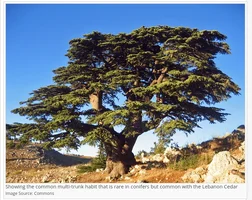
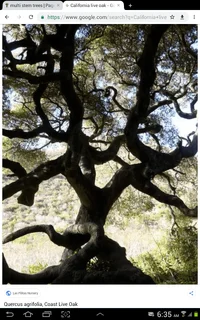
Screenshot_2020-03-10-05-55-39-1.pngScreenshot_2020-03-10-06-05-11-1.pngScreenshot_2020-03-10-06-35-04.png
 
Clearly, we are talking in circles. I do not agree that the current models for the betterment of trees; i.e. strong central leader, take into account the evidence presented by individual tree species.

Googled images:
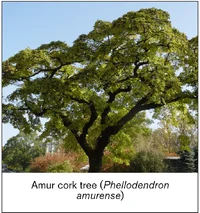
View attachment 66021View attachment 66022View attachment 66023
Totally correct about going in circles.
With that being said, if these trees In photos were pruned to a single leader while they were young, I strongly believe they would still be there as well. So who is correct? They both work.
Until someone comes along and starts pruning same species of trees, in the same growing conditions and brings in a wind tunnel to test the results of reactions in high winds, only then could we see where failures are occurring and which methods are "most" effective...... Anyone?.....Gilman?....
 
... if these trees In photos were pruned to a single leader while they were young, I strongly believe they would still be there as well. So who is correct? They both work...

Wow!

I specifically chose images that represented the typical genetic coding of each. The fact that, as an arborist, your mind can disregard specific genetic signatures in favor of a current trend, shows how entrenched this mind set has become.
 
Wow!

I specifically chose images that represented the typical genetic coding of each. The fact that, as an arborist, your mind can disregard specific genetic signatures in favor of a current trend, shows how entrenched this mind set has become.
No disregard to genetic signatures at all. The species you posted could have very well benefited from leader dominant pruning (when they were younger obviously). If your point was to represent typical genetic coding, trees such as Samenea samen, Albizia richadiana, or Delonix regia would have better proved your point (which I do agree with to a point). I could also say that you talking about my disregard of specific genetic signatures could be flipped to your mind being stuck in an "old dog/new tricks" mind set.
I know there is definitely some truth to what you are trying to prove and you have been a massive wealth of knowledge on this site so you obviously know a thing or two, or three, or.....
 
I think it’s apple and oranges, if you are pruning multi stem trees in a landscape in front of building with wires windows architectural features, sidewalks etc, then standards we currently have in place work pretty well to achieve customer satisfaction in canopy reduction and clearances without total mutation. Also getting over extended laterals or codoms under control and keeping a somewhat manicured appearance. The current standards help achieve these goals while preserving integrity of tree. Trees picture above are a different ballgame.
 
No disregard to genetic signatures at all. The species you posted could have very well benefited from leader dominant pruning ...

So, neither words nor pictures will enable you to recognize the flux within those two sentences.

Benefited how? Would they have lived longer, provide more benefits, been more beautiful?
 
When it comes to removing or subordinating competing leads, one should be looking at angle of attachment, presence or lack of included bark, as well as considering the species ability to successfully grow to old age with codoms or not. For example, I've found zelkova and lacebark elm to be strong in youth but tend to split with greater age. In other words, when the fail, they fail big.
 
Apply these opposing viewpoints to Acer Saccharinum. I'm reading this thread to learn, not because I have a dog in the fight. I do know that Acer Saccharinum tend to outgrow their ability to support themselves so they appear to benefit from a more symmetrical structure with a single dominant leader. This is not how they usually tend to grow when left to their own devices however and what looks nice in some cases is also what may help the tree live longer. Looking forward to your replies.
 
Something to consider about silver maple is it’s brittle wood even out of well formed unions tose stems often grow at shallow angles and very long with little in the way of smaller branches prune back to, if let go often you end up being forced to make heading cuts where the limb doesn’t survive. Now you’re forced to make a coller cut bigger than you want,now enters decay in main trunk.Regular pruning intervals with the idea of removing tips to promote growth closer to the trunk so you have something to prune back to in future. Thats been my stategy . I’m also eager to hear other people’s thoughts on this!
 
Apply these opposing viewpoints to Acer Saccharinum. I'm reading this thread to learn, not because I have a dog in the fight. I do know that Acer Saccharinum tend to outgrow their ability to support themselves so they appear to benefit from a more symmetrical structure with a single dominant leader. This is not how they usually tend to grow when left to their own devices however and what looks nice in some cases is also what may help the tree live longer. Looking forward to your replies.
They regularly grow a strong central leader in the woods.

I know the comment was made earlier that "woods" trees don't do well when we clear around them, but there is a whole lot more there than form. A single stem open grown maple will be much stronger than a multi-stem tree or a single stem forest-grown tree.

Posting pictures of open grown trees and calling that the "genetic signature" seems to discount the evolutionary history. Where was the species "defined" throughout history - in the open or in the forest?

I do agree 100% that not all species are best with a single stem...but I do think that the BETTER starting point is assuming that a strong rule of thumb is to aim for a strong central leader with subordinate branches - then make appropriate exceptions. Starting with assuming multi-leader trees is the "norm" is setting up the urban forest for failure.
 
Ok so what’s the issue with the terminology of “thinning cuts”? I know it can lead to some poor arboricultural practices but today it had me thinking. I was on my normal drive home I saw the same cherries, apples and pears that have just become dense balls of small branches; just absolute messes to a point they need to be “thinned out”.
 
  • Like
Reactions: ATH
I disagree. Regardless of the intentions of the OP, there is a strong industry-wide bias that single trunk trees are stronger and should be the models for correct pruning.

The structure produced in a forest is for light gathering, not strength. Forest trees are very co-dependent and tend to fail without the support of the forest.


"Structural pruning in the landscape aims to develop the strong tree structure we see in the forest. Structural pruning selectively favors a single, dominant leader by suppressing competing leaders using reduction cuts."

Open grown trees naturally multi-stem, forest grown trees tend not to unless they’re broken by big storms. Majority of open grown trees will never get structural pruning, ideals are great but unrealistic. Nevertheless the strong structural pruner can do some good work when the opportunity presents itself.
-AJ
 
Last edited:
Clearly, we are talking in circles. I do not agree that the current models for the betterment of trees; i.e. strong central leader, take into account the evidence presented by individual tree species.

Googled images:
View attachment 66021View attachment 66022View attachment 66023
Fair enough, not trying to talk in circles or be argumentative, just trying understand what you are saying, can be tough through the keyboard. Anyhow i believe i understand your point of view. Thanks for the thoughtful discussion.
 

New threads New posts

Back
Top Bottom