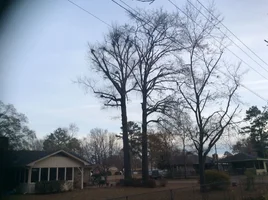
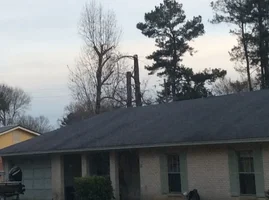
Insurance company tells homeowner to have limbs cut.

"She told me State Farm corp. was setting these rules." This is not Moses on Mt. Sinai, this is some office jockey who needs help with reasonable guidelines for tree care, like th described doing.

Removing the entire lower limb would increase the risk to the house. Look at the fork above it!!

Nearsightedness is the biggest barrier we face.

I disagree Guy or maybe agree with caveat- in many situations for me the barrier is time. These folks can just sign a piece of paper and we’d make the tree/limbs go away. Quick and easy, for them. If they (the H.O.) were to play Lorax; their insurance would get dropped, the bank carrying the mortgage would demand a policy (probably costing more), all of this illustrates time spent by them. And let’s all face it- to most people trees are insignificant compared to their home or their bank getting upset at them (AKA their credit) or just having more time to play.
 
Reed2119 - she might be retired and so have the time?

Is State Farm the only insurance carrier she's dealt with and has she considered other carrier options and do they all have the same requirements in this particular situation?

It would appear the homeowner had zero concern for this tree until it was made an issue by her agent and/or company.
 
That is often the case. Insurers do an inspection and send the order to the client. This is the first they have even thought of the tree. So it broadsides them. The last job I did like this the client sent pics to the insurer to verify the work was satisfactory. They were and so was the client. I reduced the limbs over directly over the house to the height they wanted without having to remove the whole limb. Fortunately there were laterals on the limb I could bring it back to.
 
"If they (the H.O.) were to play Lorax; their insurance would get dropped, the bank carrying the mortgage would demand a policy (probably costing more)"
Reed, what in the world is this nightmare fantasy based on? In 30 years of consulting I have never heard of such an event. It may be possible, but far from likely. It almost sounds like scare tactics to sell needless removals for a quick buck.
"Quick and easy for them" how easy is it to write a big check to the urban loggers, plus lose the benefits of the tree?
But if the trunk is owned by the neighbor, they're the ones who should have their feet to the fire. Swedish lady could just fwd the letter and fuggetaboutit.
 
if the trunk is owned by the neighbor, they're the ones who should have their feet to the fire. Swedish lady could just fwd the letter and fuggetaboutit.
When they don't wanna pay for the scope and depth of the work for you did you ever have to fuggetaboutit?
 
Insurance people determining tree strength and natural elements' probability is unreal.

Three what-if wind damage scenarios can be used since the pics I mentioned in msg #73, uploaded.

Here's a simple conjecture of probability and damage. I'm not a risk-assessor.

All things equal, three homes with encroaching trees are to be hit with Category 2, 96-110 mph hurricane winds:

1.) Winds are uni-directional, not cross-winded like an x-y axis. Winds MAY be
rotational like a spin off tornado but still traveling in a straight or near
straight direction
2.) Trees are windward and homes leeward of the felling force meaning, trees
are to logically fall (#3 home is an exception) onto the homes.


First Home. Bottom lateral might puncture roof. Otherwise upper laterals bend and fracture as they collapse upward towards the trunk. As this occurs a cross-webbing effect mostly lays the tree across the home's roof, rafters and exterior walls; secondary support is offered by the ceiling joists and interior walls. While part of the home is smashed at areas of tree's highest weight much of the roof and structure remain intact with occupants having a favorable chance of survival and dryness, fair protection of home's contents is afforded, as is shielding from additional wind damage.
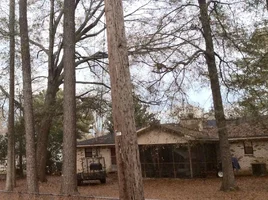
image.webp
Second Home. No support from laterals. Instead, full weight of trunk with stubs of limbs pentrate and impail the structure and pose unfavorable risk to occupants. Roof, rafters, joists and even supporting walls smashed as home is potentially opened up its length and exposed to wind fores. Extensive water damage throughout.
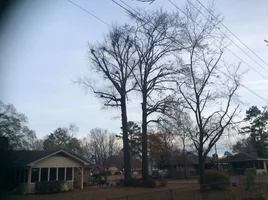
image.webp
Third Home: Trees with absent canopoy highly unlikey to enter a falling scenario. Instead, entire roof of the structure must endure the winds' tendency to lift and blow away any given amount of the roof or, maybe the entire roof. Highest probability of all contents destroyed, occupants at greatest risk, water damage throughout.
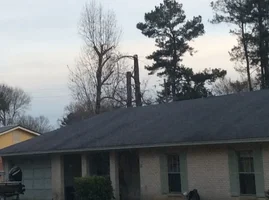
image.webp
 

Attachments

  • image.webp
    image.webp
    224.7 KB · Views: 3
  • image.webp
    image.webp
    59.4 KB · Views: 4
Last edited:
"If they (the H.O.) were to play Lorax; their insurance would get dropped, the bank carrying the mortgage would demand a policy (probably costing more)"
Reed, what in the world is this nightmare fantasy based on? In 30 years of consulting I have never heard of such an event. It may be possible, but far from likely. It almost sounds like scare tactics to sell needless removals for a quick buck.
"Quick and easy for them" how easy is it to write a big check to the urban loggers, plus lose the benefits of the tree?
But if the trunk is owned by the neighbor, they're the ones who should have their feet to the fire. Swedish lady could just fwd the letter and fuggetaboutit.

I wish it was a fantasy Guy. Some people around here have lost their insurance if they don't clear out the forest to 100' away from the structure. When these big insurers lose 900+ homes in a single fire season (in 2013 two fires near Fort Collins and Colorado Springs had a combined structure loss of 900+) they start to mitigate risk. Some insurers simply don't offer insurance to certain areas, usually when the home is 10+ miles from a fire station.
 
Reed2119 - she might be retired and so have the time?

Is State Farm the only insurance carrier she's dealt with and has she considered other carrier options and do they all have the same requirements in this particular situation?

It would appear the homeowner had zero concern for this tree until it was made an issue by her agent and/or company.

I'm sure she could have but didn't want to. The tree was looming over the home and the "crack" sealed its fate. The fear of this tree failing coupled with its potential fire danger to the structure was enough for them to lose the tree. All carriers are adopting these standards; when a tree is in zone one (from structure out to 15'-30' dependant on slope and access) it is recommended for removal. Now some have allowances for the tree to be considered part of the structure, then its dripline is the beginning of zone one. Most will only entertain this allowance when the house is within a 7 miles from a fire station and the rest of the property has been mitigated.
See: http://www.firewise.org/wildfire-preparedness/be-firewise/home-and-landscape/defensible-space.aspx or http://csfs.colostate.edu/pages/defensible-space.html

Now Guy is right- lots of the urban loggers cutting trees.

The tragedy is that we’d done probably $2500 of care for that tree over a 10 year span. They loved it. The home was built around the tree and a focal point of the landscape. I get frustrated because many of these old p-pine have fire scars from 150 years ago, so they've survived the last event. Why now do they get the axe because there's a house there? Those of us with ethics are struggling to keep these trees and thin the doghair thick stands around them. It's an uphill battle- sometimes literally.
 
Well dam fire is a wild card!

Hysteria about cracks stems from our literature--Gilman et al have a no-compromise, killemall attitude on cracks, which trees can often adapt to very well. CYA and ignorance, not necessarily in that order.

Same mindset as "If 50% of the crown is gone, = Remove".
 

New threads New posts

Back
Top Bottom