Insect & Disease ID Trivia

Re: What Did This?

can we post the pictures if they are pictures out of a study book, say made for you in class, i do not have any of my own yet, but i have others.. i just do not want to cheat....let me know
 
Re: What Did This?

post any picture you like I would think, just as long as you know what it really is.

or this thread will surely die.

I've got tons of pictures, but not really notivated enough at the moment.
 
Re: What Did This?

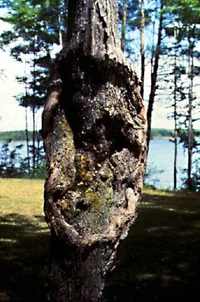
Okay here is one, this picture is a collection i had to do for a school/college course so it is not mine but one i had found and needed. tell us what this is? and the type.
 

Attachments

  • 255866-e.c..webp
    255866-e.c..webp
    45.3 KB · Views: 78
Re: What Did This?

KT you are right and maple is usually the host, sorry i should have posted that... okay KT you seem to have a very interesting job give us one we really have to rack our brain for. thanks guys
 
Re: What Did This?

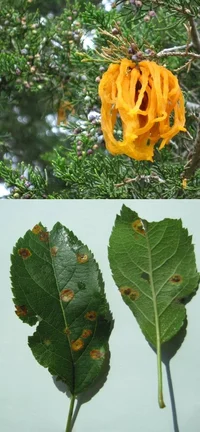
Yes I do have a very interesting job, but I usually go after the simple and obvious diseases. Like this one! Giving the host will give it away.
 

Attachments

  • 256756-KTSID1.webp
    256756-KTSID1.webp
    113.5 KB · Views: 55
Re: What Did This?

I can say that I took the two photos during the same growing season, but separated in time. And yes, those are two distinctly different hosts. As a disease of crop trees, most folks seem concerned about one of the hosts more than the other! But the "important" host depends on who you talk to!
 
Re: What Did This?

Nice way of putting it but very true, what do you do KT? is it part of forestry? anyway question on this either host can get this, i know different stages even if they are not that close to each other correct? i am thinking the same city block maybe? (using this as a refence to space) maybe i should say urban block?
 
Re: What Did This?

I lead a research project for the US Forest Service (http://www.nrs.fs.fed.us/units/foresthealth/) and a little of my own work is linked here (http://www.nrs.fs.fed.us/people/ktsmith).
I do a fair amount of teaching sessions for arborists as well "pure" research...not to mention the leadership stuff for my outfit.

As for your question about spread, the various spore stages of the disease can spread for a pretty good fraction of a mile. Numbers vary, but certainly a few blocks is no trouble at all. The orange telial gall (there's a clue)I photgraphed on the way down the highway in Connecticut this past May, on my way to a lecture at the Connecticut Ag Experiment Station and a workshop for the CT Tree Protection Association.
 

New threads New posts

Back
Top Bottom