"With respect to: most
of the early adventitious growth does not seem to involve bud formation; the order is, shoot-leaves-buds, I'm not sure what is meant by "early" or to what the "order" refers."
Chronological order, in general terms.
"Indeed much adventitious sprouting does not involve bud formation." Yes thanks that was my main point; no bud scales present. Which really limits the occurrence, and relevance, of adventitious buds.
I'm also not comfortable at all with restricting nodes to the bud traces of accessory buds at the bud scale scar. Who would suggest such a thing? Not me!

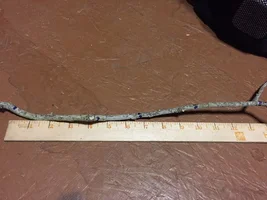
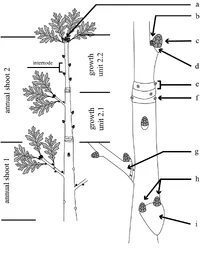
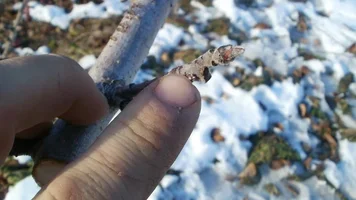
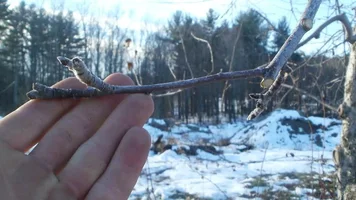
All growth points are nodes. When we see traces of the terminal bud collar or scar, or other positive signs, it may be logical and useful to call that point a 'terminal node'. There is a need here for these words (or another, more apt phrase?) to define a more narrow or specialized meaning than in common or academic parlance. It's technical jargon, if you will. Do you think the botany texts would shy away from including this differentiation? Are you sure it's not mentioned in any? The concept of these basic structures probably applies to more than pruning.
I agree that the vigor/vitality or capacity/ability dichotomies don't work, because they lack a qualifier. 'Genetic vigor" is similar to 'terminal node'; carrying the necessary meaning, without changing the root word.
Unless a newly minted arborist is within earshot and is primed to correct grammar, I'm comfy saying 'Vigorous' to a client, instead of 'in high vitality', without worrying about confusion with genetics. But yes we can get too semantic at times; a lexicon must be flexible.
Kevin i hope this crystallizes the clarity on usage of 'terminal node', and gets us back to 99.999% agreement! Does this distinction make sense to everyone else?
Ryan yes i agree that 'terminal' may be synonymous with 'apical', meaning 'the tip of a branch, (where at the end of the growing season a terminal bud will be set).' And yes the biggest cuts are the first to plan, as Henry Davis prescribed (May 2003 TCI):
●● Objectives: safety, survival, aesthetics
●● Inspect structure
closely, and at a distance. Consider
supplemental support systems
●● Locate dominant leaders, and an ‘inner
crown’ to be left intact
●● Choose 4-10 large branches that could
be reduced or removed
●● Start pruning from the top down,
heaviest side first,
tips last





 I might be able to execute the pole tool strategy with some help from you on that...


