DRT

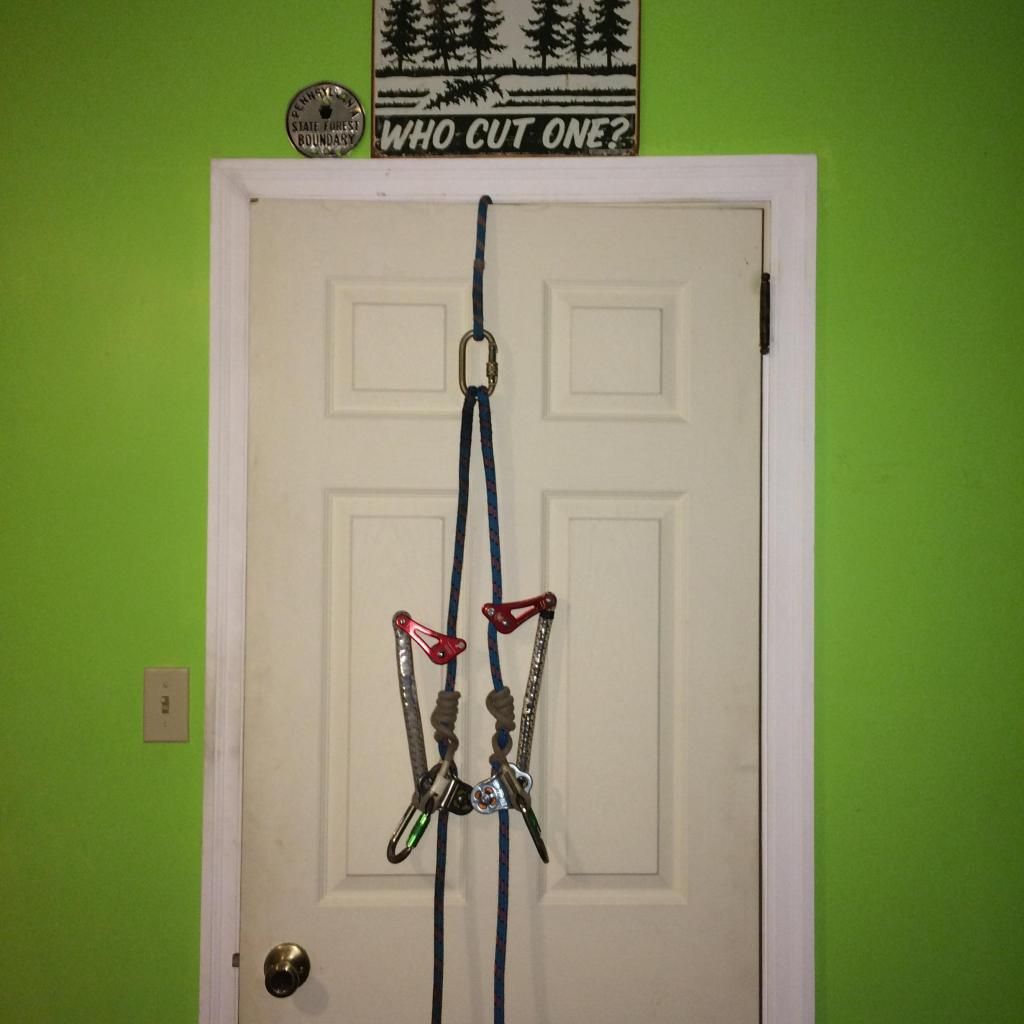
Has anybody else made there own triple threat?
image_zpse413eb57.jpg
 
I think a delta link would work fine, then you can just build it as you need it and not have several climb lines only used for this. Anybody sees reason for this not to work? I haven't ran it in the field yet but will at first chance
X2...as opposed to being spliced to a ring. Better than a biner too as no cross load potential.
 
I have the petzl acsentree. Its been collecting dust since I went to stationary climbing .I'm gonna bust it out to tend the bone and wrench on longer ascents DRT . See how it goes.
 
In reality if I want 2 anywhere near close to each other here is my preferred use...throwline attached to both lines and drag them both over tip. Tie separate base anchors. I did do a 4 line version of this product once, same concept except daul safety on down line. A lot of rope and work but doable. Keep in mind that I rarely climb trees higher than 50 ft.
 
Yeah, I was thinking there are more cons then pros to having the triple threat a permanent "single" tool. It would be kind of awkward to stow and would mean that 3 climbing lines are all tied up in that use. The link makes the most sense to me... I like options, and the triple threat is too devotedly specialized. I like keeping things separate :ciclope: ...
 
Yeah, I was thinking there are more cons then pros to having the triple threat a permanent "single" tool. It would be kind of awkward to stow and would mean that 3 climbing lines are all tied up in that use. The link makes the most sense to me... I like options, and the triple threat is too devotedly specialized. I like keeping things separate :ciclope: ...
Lol like that cyclops ..well said kays.
 
I just don't see much advantage of perminancy , when its easy enough to connect ropes safely ..let alone stroring a tangled mess . I'm sure there's a way ,just show me the light.
 
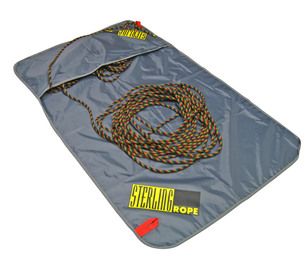
the triple threat is easy to stowe in one of these.
t307_5a289b851a8a751abd418de14656609d_zpsc4266377.jpg
Yeah I know, but it's still 300' of rope all in one bag. Besides, would you make 3 separate coils or what? AND by the way, I love the innovation...I just was pondering the fixed state of it! There has to be a reason they went with a solid ring. The fact is, I am not sold on it, but there may be plenty of climbers that would love to have this secure permanent connection and that would be reason enough to offer the product as is. Yes, we all can create one with 3 spliced ropes and a link, but can or would we spend the time to make one with a ring... I guess I am talking myself through this and now see why it is offered as a "single" product. This way the 3 of them will have something in common. :ciclope::pirata::sir:
 
I see what your saying. kevin bingham helped come up with the triple threat, but i see him climbing with two separate ropes with base anchors instead. I have yet to climb with the triple threat because I can't wrap my mind around how i am going to retrieve it with two legs going through redirects, pulling on the third leg. A biner connecting them doesn't help. Im probably going to come to the solution of sticking with two independent lines with two separate anchors. For now at work, my SRT system is the most practical and consistent for production. My co-workers look at me as if i have rockets strapped to my back when i try to explain this stuff.
 
I like the idea of letting one hang free ( not DRT), and then as long as your TIP is solid, you have a rescue line in place.
I just don't almost ever have a rescue line otherwise, no matter how useful it may be
 
I tried to write a reply to Tyler's post earlier, and I thought it posted, but now I see it didn't. There's a LOT that you can do with a carabiner on the standing end that connects to two other lines. The consideration with having a 'Y' is that you can come into "stacking" issues when trying to remove and redirect one of the two lines.

So, let's say you've accessed your Primary Suspension Point, and you set up the system where your connector is on the standing side of the PSP. Now, you want to open that connector to remove one of the lines and advance it, followed by reconnecting. The first issue is that you shouldn't be opening a carabiner that you're hanging from. The second is that you may have to remove both if you want to advance the line that was put into the biner first (because it has to come out second). There are other issues, like the bulk of the connector, and whether it will pass over/through unions and redirects in a lowering scenario.

A great solution (or at least a place to start), may be to use two small profile oval screw links as connectors. Both links would be in the eye of the standing (anchor) line, and each one would be dedicated to one of the working lines. This way, each one could be opened independently of the other, and in a lowering situation, you'd have a better chance of the connector passing unions.

One of the advantages of the multi connector system, is very quick advancement of a redirect or PSP much in the way a DdRT system does. Open the link, feed enough slack into the system to throw it over the desired TIP and reconnect to the anchor line. Remove slack, done. then you can go ahead and do that with the second line without ever taking your weight off the system. This isn't possible with a single carabiner.

You also have to be aware that a 'Y' system may actually limit the ability to lower if you thread asymmetrical redirects. What will happen is the connector will get to a point where it hits the diversion of the two working lines and a lowering is impossible. This isn't really as much of a problem if the connector is set up at the base anchor, as the DSRT video shows...as long as the climber can be fully lowered before the connector gets to a diversion.

This gets to the point that you'd ideally have two separate anchor systems. Now you'd need the ability to operate each one with a single hand, which leads me back to why I like the hitch method. If each anchor system is a hitch, a single hand can operate each one, and each hitch will see 1/2 the load, unless controlled otherwise, the climber could actually be steered through the crown by the groundsman if so required, and it would pass the whistle test...all with gear that most of us probably already have and all regardless of what redirects were passed.

Huhhhhhhh. Sorry about the novel. It's just stuff I've been thinking a lot about lately, especially while currently going through SPRAT training myself this week.
 
Oceans good stuff, well-thought out, some things I hadn't considered
So, there's a bit more that may sound more practical. The multiple lines can be good when you intend not to lower, but to use as access.

Imagine you have a base anchor loaded with the standing line (good for a 2 person load), and that runs up to and over a single union and back down to the ground. Now, if a separate working line is attached to the anchor line on the standing side just below the union (let's say Alpine Butterfly/carabiner), you can now climb on the working line over multiple unions as you see fit, and the free side of the anchor line is still hanging where it was and ready for use as an access line without influencing the tension on the working line.

If that connection point is above is ABOVE the union that the access line will be climbed from, then you're just climbing in counter-balance with the other climber, which could be a problem.
 

New threads New posts

Back
Top Bottom
