- Location
- Retired in Minneapolis
Several years ago, when the original ISA forum was the only on-line arbo discussion, I met Glen Riggs. A variation on the "False crotch hitches" thread was going on. Glen described to me, in an email, how to tie a really useful anchoring hitch.
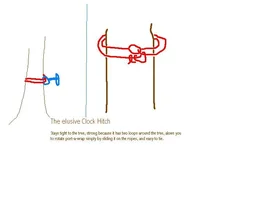
One of the best attributes of the Clock Hitch is that the description is simple enough to learn without a diagram. Glen told me that he has told groundies how to tie the hitch while he's in the tree even if the groundie has no knot tieing experience.
Her's how to tie it:
Start with the eye of the rope at a place on the tree opposite from where you plan on attaching your anchor. Wrap the rope around the tree and thread the tail through the eye. Move the rope up the tree into position and take up the slack before taking the tail back around in the opposite direction. Pull the rope tight as you wrap. When you get back to the eye, thread the rope through the eye again. Pull the rope snug and tie off with your favorite hitch. I generally make a slipped half hitch with the tail, back onto itself. Then I drop a half hitch over the bight formed by the slipped anchor. For more security, drop another half hitch over the bight.
Since most of the load is taken by the friction on the wraps, little is actually on the tucks through the eye. If I had any concern, it would be the secound tuck through the eye. This puts a load on the eye splice that is "odd". When I've had enough rope, I've made a third wrap to snug up the whole works. This lessens the load on the eye even more.
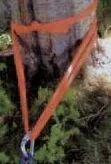
This works really well for anchoring pulleys. The biner/shackle can be mounted anywhere around the tree.Be sure to anchor around both wraps of the Clock Hitch. If the rigging point changes all you have to do is slip the biner/shackle around. Another plue is that multiple anchor points can be clipped onto the ropes.
Here is a discussion point. When using a block, would there be a concern about having the double wrap on the pin instead of an eye? I've only anchored a block like this a few times. When I have done that, the loads have been low. It seems like this would be acceptable but the practice does deserve time under the microscope.
Glen had been using the Clock Hitch for years in severe loading. If there were a security issue, Glen would have pushed this tie off by now. When I asked him where the name came from he said, with his best isn't-it-obvious "Philly attitude", "Well, it goes round and round like a clock!"
Tom
One of the best attributes of the Clock Hitch is that the description is simple enough to learn without a diagram. Glen told me that he has told groundies how to tie the hitch while he's in the tree even if the groundie has no knot tieing experience.
Her's how to tie it:
Start with the eye of the rope at a place on the tree opposite from where you plan on attaching your anchor. Wrap the rope around the tree and thread the tail through the eye. Move the rope up the tree into position and take up the slack before taking the tail back around in the opposite direction. Pull the rope tight as you wrap. When you get back to the eye, thread the rope through the eye again. Pull the rope snug and tie off with your favorite hitch. I generally make a slipped half hitch with the tail, back onto itself. Then I drop a half hitch over the bight formed by the slipped anchor. For more security, drop another half hitch over the bight.
Since most of the load is taken by the friction on the wraps, little is actually on the tucks through the eye. If I had any concern, it would be the secound tuck through the eye. This puts a load on the eye splice that is "odd". When I've had enough rope, I've made a third wrap to snug up the whole works. This lessens the load on the eye even more.
This works really well for anchoring pulleys. The biner/shackle can be mounted anywhere around the tree.Be sure to anchor around both wraps of the Clock Hitch. If the rigging point changes all you have to do is slip the biner/shackle around. Another plue is that multiple anchor points can be clipped onto the ropes.
Here is a discussion point. When using a block, would there be a concern about having the double wrap on the pin instead of an eye? I've only anchored a block like this a few times. When I have done that, the loads have been low. It seems like this would be acceptable but the practice does deserve time under the microscope.
Glen had been using the Clock Hitch for years in severe loading. If there were a security issue, Glen would have pushed this tie off by now. When I asked him where the name came from he said, with his best isn't-it-obvious "Philly attitude", "Well, it goes round and round like a clock!"
Tom