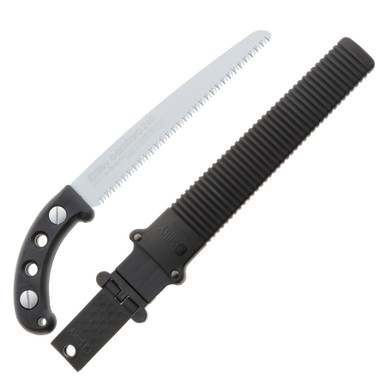
...so hard to imagine how a silky, or any manual/unpowered blade, could out-perform a powered blade though...
That's the problem. People often think of a saw and only consider one of multiple variables involved with designing a saw, its blade, its power... for a specific task or range of tasks.
A reciprocating saw is a purpose built tool originally designed for the construction industry to solve a number of problems that other tools just aren't very good at. It can cut through wood, metal, composites... nails, screws and all. It's reasonably light compared to some options, heavier than others. The design is simple, rugged and reliable. The blade can get into places a circular saw or jig saw can't, and in many situations it can get right up against obstructions that other tools can't. The blades can be designed for different materials, within reason, with adequate performance.
However, it has a very short stroke, eats through blades quickly and generates a lot of heat both in the drive train and the blade. The vibration is a serious issue. For demolition work, especially, the tool shines... because the alternatives are either more expensive or a lot more dangerous.
Tooth design, ability to clear waste material, and blade stroke are important for cutting green wood... get those right, and a handsaw can outperform the reciprocating saw with ease. Throw some nails in those branches, and the story changes.
Take a good pruning handsaw (like a Silky) and force yourself to cut at a slow rate, then try it on the same branch at twice that rate. The saw cuts a little faster, but not twice as fast. With the handsaw, the tooth design, material clearance and length of stroke are the important concerns, not the strokes per minute rate. With any power saw, that tends to start becoming the more important thing, but it really depends on the intended application.
Cut a 4"x4" post with a reciprocating saw, then use a 12" miter saw. You'll see real quickly how fast the miter saw proves itself to be the superior tool for that job. But, if the post is actually in the ground, nobody is going to try to hold a miter saw and cut it.
I'm going to guess that reciprocating saws will never replace either the handsaw or chainsaw in tree work. That doesn't mean they aren't handy for certain jobs, just that there are better choices most of the time.


 )
)