SRT Setup

Anybody use a pantin and a haas? If so, where are you clipping your haas bungee to? I clipped it to my hitch climber pulley, but it was not taught enough. Anyone got a higher spot? I don't have a hand ascender, but I imagine that would be a good spot.
AND... This may sound silly, but you DO infact ascend srt sometimes when doing removals, yes? Then switch over to DdRT. Well, how are y'all getting your gaffs and pantin on? Without having them there fancy new Edelrid Talons.
 
There are ascenders made for many of the climbers on the market that bolt on between the gaff and the shank. Some also offer (or come with) an attachment point for the HAAS or other knee ascender, that attaches the same as the ascender. Another option is to ascend without the climbers on, and put them on in the tree. You can carry them up with you or pull them up with a haul line. If you are only ascending a short distance, you can easily scoot up with just the foot ascender. You can do work positioning with SRT, so you aren't obligated to switch to DdRT for that. I usually use a combination of the two... ascend on SRT and work off of that line, but I'll pull up a DdRT line when I want to work off of two lines. That gives you amazing work positioning options.

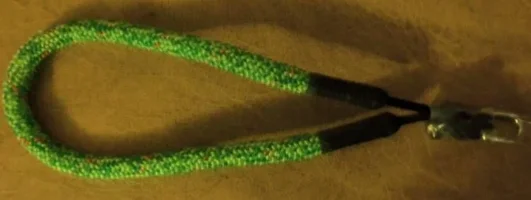
I use a neck bungee cord to advance the multicender going up. They're very easy to make.

NeckTether-Hedera-GRN.webp

I just pull the core out of a short length of climbing line and run the bungee cord through it. I use this with the Rope Wrench, Akimbo, ZigZag, Hitch Climber setups.. it works with all of them. Some people prefer to use a chest harness, lanyard over the shoulder, suspenders, etc. to advance their climbing system on ascent.
 
Went up srt today. Tried coming down on the prusik and a munter hitch. Then the prusik and an 8. Both seized up quick. Is it just too damn tight without a rope wrench? Or maybe my combo. I was on the 12.7mm vortex. With a 10mm epicord distal hitch.
 
Get a rope wrench.... do not waste any more time in frustration...HAAS bungee can connect to the HC but a neck/chest harness must advance system....many many ways to skin this cat...once you start SRT so many options open up to do treework...incorporating both is such a great thing when you know which situations need each or both....have fun...
 
When using a Munter or figure eight, you need to collapse the hitch almost completely and let the device or carabiner take the friction. Your brake hand and slight use of the hitch regulates your speed.
 
Rope wrench or hitch hiker? Personal opinions? Pros/cons?
Would be appreciated.
The main reason I am looking into srt is the dagnab fir trees. The moving rope just gets hammered by sap. Frustrating.
 
Just put in the order for a RW, chest box, and hand ascender. Thinking this will be a nice new climbing experience.
Now, with the chest box advancing the hitch, is the hand ascender even necessary? Maybe for a better grip and limb walking, but no need to tether it to the hitch climber, correct?
I have been reading and watching on all the different basil anchors. There are a few lowerable ones I dig. Mainly the simple hard locked figure 8 on a base sling. But seeing as I don't yet have a static 200' line, lowerable may not always be aplicable. So I was thinking the Yosemite bowline with a butterfly above it to hook up a seperate line in the event of an emergency. But is the only way to utilize that seperate line by CUTTING the original line below the butterfly? Because you would not be able to untie the bowline under tension. Or am I mistaken?
 
Hey, all, I know this is an old thread but didn't want to post up another SRT beginner thread.

Would like to try SRT, but want to use the 17/32" (13.4mm) rope I use for DdRT.
I guess that fat rope rules out a lot of ascenders (and I'm not really in a position to buy another hank of rope, let alone more hardware) but I was wondering whether I could do this:

- Get my 120' rope in tree.
- About 40' from one end of rope, tie alpine loop and pull one end of rope through that loop up into tree on cinch.
- Tie "loose" end of rope to bottom of tree in case I accidentally weight it somehow, and leave about 80' of rope at bottom in case I need rescue.

For climbing (after I'm confident my TIP is secure):
- Bee Line Distel hitch to carabiner with micro-pulley to tend (this is what I use now on DdRT), to suspension ring on my saddle.
- Another piece of Bee Line (or whatever) as friction hitch on line with micropulley tender and carabiner to chicken loop on right foot.

Step up on chicken loop, advance upper Distel hitch up rope as high as possible, then sit to unweight chicken loop, then slide that friction hitch up as high as my bent knee will allow.
Repeat.

Does this kind of system work?

Does the friction hitch on the chicken footloop jam so that you can't slide it?

Is there a particular friction hitch and/or material that resists jamming better in this application?

To get back down:
Carefully loosen/release the distel hitch to saddle, while holding rope by hip with right hand.
Should I tie overhand slip knots behind myself as I ascend, then take them out as I descend?

Does this sound like a reasonably safe/sane plan for me to try this in a low and slow manner?

Thanks in advance for any advice.

Jeff
 
If the Distel is working for you for your main hitch, use it for the footloop also.
The sit- stand method of ascending does work, but it takes more work than other systems.
Some bungee cord, or retracting reel attached to the footloop and your harness would bring the hitch up as you raise your foot.
It's hard, sometimes impossible to descend on a hitch alone on srt.
The slip knots are a good idea.
Good luck!
 
Last edited:
There is going to be all kinds of advice on this one! You can spend zillions of dollars on gear and have fun learning how to make it work. In truth you can do SRT with prusic cord and 2 loops of webbing, slow but it works.
The combo that works for me now, is a unicender connected by biner to bridge and attached to chest via harness strap for tending, a mini saka ( absolute must have if you want to be efficient) and a foot ascender. I just hand over hand on the rope and up you go.
But here’s the thing... you may want to meet some folks at a climbing competition? They don’t allow some hybrid devices so my advice would be to make a bunch of money so you can learn on a few different set ups.
Honestly, I seldom use rope ascension anyways cause I mostly poke holes up the trees I climb. On occasion I have super large trees that require a few days to take apart so I’ll fix a rope. Then it helps.
 
Using multiple friction hitches to acsend single line is possible, but you will likely need something else to descend on because a distel, even with a brake hand, will seize and bind up on the rope. Consider adding a munter hitch on a biner somewhere to put more friction to control your descent with the distel.
Another possible strategy wiuld be to ascend as you described on a simple running bowline anchor, straight up to your TIP, then switch to doubled rope to descend/work.
 
Thanks for the replies, guys. I guess it's something I'll just have to try to see how it works for me. Mainly wanted to make sure I wasn't overlooking anything important regarding safety.

I kind of like this advice, too:

Another possible strategy wiuld be to ascend as you described on a simple running bowline anchor, straight up to your TIP, then switch to doubled rope to descend/work.

I appreciate the help.

Jeff
 
Thanks for the replies, guys. I guess it's something I'll just have to try to see how it works for me. Mainly wanted to make sure I wasn't overlooking anything important regarding safety.

I kind of like this advice, too:


I appreciate the help.

Jeff
You can also carry a figure eight and rap down on that but whatever you decide, make sure it works with weight on before you leave the ground.
 
Thanks, Stephen. I don't have a lot of experience w/ Figure 8, but I have a couple of them (conventional and with ears) and will do as you say. Until I know more, I guess maybe I should keep one with me on saddle, "just in case."

Read about a cool way to make sure you don't drop Figure 8: Clip it to saddle thru big hole, then when preparing to use it, put bight of line thru big hole and around small hole, then transfer carabiner to small hole...
 
Thanks, Stephen. I don't have a lot of experience w/ Figure 8, but I have a couple of them (conventional and with ears) and will do as you say. Until I know more, I guess maybe I should keep one with me on saddle, "just in case."

Read about a cool way to make sure you don't drop Figure 8: Clip it to saddle thru big hole, then when preparing to use it, put bight of line thru big hole and around small hole, then transfer carabiner to small hole...
Be advised! If you are climbing on a prusic or some other device that can or will bind or not release under load you will not be able to unweight to insert a belay device ! This can be really bad! A seized and weighted hitch will not go in either direction when weighted. This is why it’s super important to idiot proof your gear before you go up.
Keep this mantra in mind at all times- do not climb up what you can’t get down from. If a climber is alone and gets bound up on a rope and is unable to move, it won’t be long before you are in medical distress. A good thing to do is a hang test. Get your harness set up nice and comfy and near ground level hang in it with a timer running, take note of how long you can hang in your saddle until it starts to get uncomfortable, then hang a bit longer and see what happens. Then you get an idea of what would be the longest you can safely hang suspended in the event of an emergency. This may sound extreme, but remember, many climbers are the only people on scene capable of getting where they are and help may be a while so .... do not take the hang test lightly and have enough gear on your person to self rescue.
 
Be advised! If you are climbing on a prusic or some other device that can or will bind or not release under load you will not be able to unweight to insert a belay device ! This can be really bad! A seized and weighted hitch will not go in either direction when weighted. This is why it’s super important to idiot proof your gear before you go up.
Keep this mantra in mind at all times- do not climb up what you can’t get down from. If a climber is alone and gets bound up on a rope and is unable to move, it won’t be long before you are in medical distress. A good thing to do is a hang test. Get your harness set up nice and comfy and near ground level hang in it with a timer running, take note of how long you can hang in your saddle until it starts to get uncomfortable, then hang a bit longer and see what happens. Then you get an idea of what would be the longest you can safely hang suspended in the event of an emergency. This may sound extreme, but remember, many climbers are the only people on scene capable of getting where they are and help may be a while so .... do not take the hang test lightly and have enough gear on your person to self rescue.
I really advocate proper training, if I had to start all over again I would go that route. Today, there is an explosion of gear, it’s bewildering the combinations that a climber can come up with. But the basic, easiest setups that are tried and tested need to be learned before you re invent the wheel.
 

New threads New posts

Back
Top Bottom