Srt descent issue Michoacan

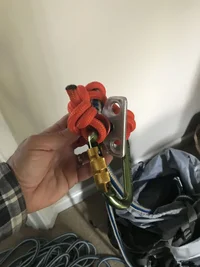
I just thought of a question about this tethered 8 setup. Is the biner held in hand and manipulated to alter the tension on the rope passing through it? Would you advance it by hand as you climb if installed pre ascent? This occurred to me because of your comment about it being the origin of the Rope Walker.

I think history and experience tell us that this just a do'able but not great option for your described original scenario for descending. You shouldn't need to hold the biner, just let the tether drag it down with you. See how you go, low and slow. If you want to swap ascent/descent, just get a rope wrench.

BTW, I recall you asked earlier about the HC pulley. They are great and have a place with the RW. Lots use a split tether with them. Pretty sure moss does. Since you had a pulley and were keeping costs down, I am suggest putting money into a rope wrench before the HC so you can go full SRT.

If you want the split tether and want to add/remove the RW at will or just like that style of setup, then get a RW and HC together.
 
At this point I guess I'd describe that as a change over to Ddrt. Semantics I suppose?

The semantic would be whether you’re resetting a canopy anchor each reposition or reattaching to yourself on a DdRT system every time.

To answer an earlier question:
The HC is a great complement to the RW. The HC also works wonders in DdRT.
If however you’re on a limited budget, get the rope wrench first and use a more primitive slack tending pulley.

The longer you climb SRT without a rope wrench, the harder you’ll kick yourself in the butt when you get one.
 
Last edited:
Or LOTS, lanyard over the shoulder.

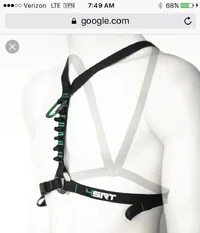
For a chest harness you can cheaply get started with a bike tube in a figure 8 with a cheap biner at the front. I would recommend a proper chest harness as you can.
I've been doing LOTS a while. My lanyard's on a micro so I like the adjustability. I'm not crazy about the bulky steel 2-way safety snap riding in front or the stiff 3 strand riding my neck but I like those lanyard features in the tree. At least it's on a splice.
I have a self made harness from 1" webbing like the bike tube I imagine you suggested. Not stretchy like tubing but easily tightened by twisting the cheap biner and recapturing the material. I haven't given it a fair shake maybe due to the small added effort of figuring out how to get it on each time.
I do sew a bit and have a heavy duty machine. I should make one like a nice one I saw on Sherrill recently with a half dozen loops to choose from down the front. Or I could just buy the damn thing as you suggest!
I tend to want to try things a few climbs before buying and I do like to fabricate, when non-life support!
 
The semantic would be whether you’re resetting a canopy anchor each reposition or reattaching to yourself on a DdRT system every time.

To answer an earlier question:
The HC is a great complement to the RW. The HC also works wonders in DdRT.
If however you’re on a limited budget, get the rope wrench first and use a more primitive slack tending pulley.

"The longer you climb SRT without a rope wrench, the harder you’ll kick yourself in the butt when you get one.
The longer you climb SRT without a rope wrench, the harder you’ll kick yourself in
The semantic would be whether you’re resetting a canopy anchor each reposition or reattaching to yourself on a DdRT system every time.

To answer an earlier question:
The HC is a great complement to the RW. The HC also works wonders in DdRT.
If however you’re on a limited budget, get the rope wrench first and use a more primitive slack tending pulley.

The longer you climb SRT without a rope wrench, the harder you’ll kick yourself in the butt when you get one.
"The longer you climb SRT without a rope wrench, the harder you’ll kick yourself in the butt when you get one."
I believe you've summed this up quite well!
There is a list of reasons why I'm Srt hesitant. One by one I'm checking them off. The RW purchase is likely the definitive check mark.
 
I think history and experience tell us that this just a do'able but not great option for your described original scenario for descending. You shouldn't need to hold the biner, just let the tether drag it down with you. See how you go, low and slow. If you want to swap ascent/descent, just get a rope wrench.

BTW, I recall you asked earlier about the HC pulley. They are great and have a place with the RW. Lots use a split tether with them. Pretty sure moss does. Since you had a pulley and were keeping costs down, I am suggest putting money into a rope wrench before the HC so you can go full SRT.

If you want the split tether and want to add/remove the RW at will or just like that style of setup, then get a RW and HC together.
Great reply. I understand thoroughly and interpreted your original reply as such, and I have a confession. One theme has been misinterpreted throughout my thread. It isn't about the money. Price is what you pay: Value's what you get. I can afford the HC and the RW, and I suspect they have great value.
For me, this is about commitment; risk, change of direction, learning, understanding, inventing, sharing, exhilaration, exercise, beauty - lots of things, and none of them money. I place reducing risk near the top of the list as I'd like to continue with all of the aspects of climbing I enjoy. The purchase of a Rope Walker would be a no brainer if this was about the money.
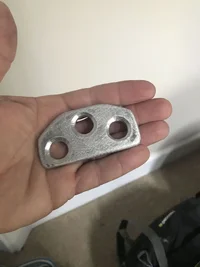
Couldn't I make and insert a strip of aluminum with 3 holes in the center of my hitch tending pulley and mimic/replicate an HC pulley? See what I mean?
 
Wouldn't it exert as much resistance going up as coming down, fighting the ascent? In the video it looked like Kevin was gaffing up an inclined tree and slack tending as he went. I'll give it a run and find out.
I learned during practice, as you mention, to loosen the hitch set a bit, before descending. They really want to bite that single rope.

I stand corrected, Kevin had the tether on the revolver, not the figure 8. Here's a better video showing this technique. It's a long one, but he talks about the revolver/8 at 14:15

If your wanting a low cost experiment here is the link for the $15 wrench that was mentioned earlier , it actually works quite well.

http://www.treebuzz.com/forum/threads/rope-wrench-for-15.27504/#post-579695
 
Great video and very creative wrench. Thanks!

I re-watched the video, it had been awhile since I first saw it, and it does look like that figure 8 and wrench needs to be taken off for ascent.
If your liking the SRT up and MRS working the tree, the HH2 would be a good option. That is what I use, it can switch back and forth from both climbing styles without any changes to the device.
 
I fabricated this today from a piece of aluminum stock. I'm calling it the HC mimicus. I used it today and it did improve my hitch tending and the functioning of my self made Haas on SR.. Also, after watching the above video, I was comfortable descending on just the Michoacán hitch which I was able to run easily, perhaps because I weigh only 150#'s.
Growing more fond of Srt by the session.
 

Attachments

  • IMG_1907.webp
    IMG_1907.webp
    197 KB · Views: 27
  • IMG_1908.webp
    IMG_1908.webp
    177.9 KB · Views: 26
I fabricated this today from a piece of aluminum stock. I'm calling it the HC mimicus. I used it today and it did improve my hitch tending and the functioning of my self made Haas on SR.. Also, after watching the above video, I was comfortable descending on just the Michoacán hitch which I was able to run easily, perhaps because I weigh only 150#'s.
Growing more fond of Srt by the session.

Just a heads up, recommend lengthening the tails on your hitch cord noose knots, that's way too short for comfort.

To clarify are you descending SRT just on the hitch or have you added a second friction point? Body weight was no effect on whether a "hitch only" setup binds SRT, it's all about load ratios, if 100% of your weight is on a hitch SRT it's going to bind. The bend in the line that the Rope Wrench creates redistributes load 50% to the hitch, 50% to the tether, as a result the hitch performs like butter.
-AJ
 
Just a heads up, recommend lengthening the tails on your hitch cord noose knots, that's way too short for comfort.

To clarify are you descending SRT just on the hitch or have you added a second friction point? Body weight was no effect on whether a "hitch only" setup binds SRT, it's all about load ratios, if 100% of your weight is on a hitch SRT it's going to bind. The bend in the line that the Rope Wrench creates redistributes load 50% to the hitch, 50% to the tether, as a result the hitch performs like butter.
-AJ
I can lengthen them a bit, thanks.
Yes, I was on just the hitch, and while it wasn't binding, I wasn't putting on the brakes abruptly, just a couple 15' ascents to try out the "HC mimicus". I can imagine how nice the RW must be.
I do not understand your "weight doesn't matter" point. If I drop a 5lb weight and a 20lb weight on the same knot, the 20's going to get a whole lot tighter no?
 
I do not understand your "weight doesn't matter" point. If I drop a 5lb weight and a 20lb weight on the same knot, the 20's going to get a whole lot tighter no?

Yes but the test you describe isn't the same as a climber on a hitch. I weigh nearly nothing, 135 lbs, probably 145+ when I'm fully loaded up for work climbing. Hitches progressively tighten, a 145 lb. weight will still progressively tighten a hitch until it binds SRT. It may be that a climber who weighs 225 lbs. fully geared up may cause the hitch to bind quicker but it still ends up the same, light climber, heavy climber, seized up hitch. As mentioned it's the load ratios that make the hitch function the way we want it to. For example if I hang a Stihl 261 (11 lb. powerhead) the hitch performance on my Rope Wrench setup doesn't change or at least it doesn't change performance enough that I notice it. I'm not a physicist so I can't explain why but my experience is that it's all about ratios not weight.
-AJ
 
I've been doing LOTS a while. My lanyard's on a micro so I like the adjustability. I'm not crazy about the bulky steel 2-way safety snap riding in front or the stiff 3 strand riding my neck but I like those lanyard features in the tree. At least it's on a splice.
I have a self made harness from 1" webbing like the bike tube I imagine you suggested. Not stretchy like tubing but easily tightened by twisting the cheap biner and recapturing the material. I haven't given it a fair shake maybe due to the small added effort of figuring out how to get it on each time.
I do sew a bit and have a heavy duty machine. I should make one like a nice one I saw on Sherrill recently with a half dozen loops to choose from down the front. Or I could just buy the damn thing as you suggest!
I tend to want to try things a few climbs before buying and I do like to fabricate, when non-life support!
I like a little diy too.

I made mine sewing 1" webbing. For a bit of stretch, I joined my loop at the back with bike tube. Added some backpack hardware to make it adjustable. Works fine.
 
Yes but the test you describe isn't the same as a climber on a hitch. I weigh nearly nothing, 135 lbs, probably 145+ when I'm fully loaded up for work climbing. Hitches progressively tighten, a 145 lb. weight will still progressively tighten a hitch until it binds SRT. It may be that a climber who weighs 225 lbs. fully geared up may cause the hitch to bind quicker but it still ends up the same, light climber, heavy climber, seized up hitch. As mentioned it's the load ratios that make the hitch function the way we want it to. For example if I hang a Stihl 261 (11 lb. powerhead) the hitch performance on my Rope Wrench setup doesn't change or at least it doesn't change performance enough that I notice it. I'm not a physicist so I can't explain why but my experience is that it's all about ratios not weight.
-AJ
I understand what you mean now, when the time variable for weight is introduced. Thanks...and the Rope Walker wins again.
I like a little diy too.

I made mine sewing 1" webbing. For a bit of stretch, I joined my loop at the back with bike tube. Added some backpack hardware to make it adjustable. Works fine.
I'd like to see a photo as well.
Mine's just a continuous loop where I do the wrists twist "guess-which-pieces-to-grab and pull over your head" routine. I've got webbing and a box of "backpack hardware".
I like a little diy too.

I made mine sewing 1" webbing. For a bit of stretch, I joined my loop at the back with bike tube. Added some backpack hardware to make it adjustable. Works fine.
I'd like to see a photo as well.
Mine's just a continuous loop where I do the wrists twist "guess-which-pieces-to-grab and pull over your head" routine. I've got webbing and a box of "backpack hardware". A picture of yours might get me to make a real one.
Here's one I saw a Sherrill I thought was interesting:
 

Attachments

  • IMG_1911.webp
    IMG_1911.webp
    30.5 KB · Views: 5
Just a heads up, recommend lengthening the tails on your hitch cord noose knots, that's way too short for comfort.

To clarify are you descending SRT just on the hitch or have you added a second friction point? Body weight was no effect on whether a "hitch only" setup binds SRT, it's all about load ratios, if 100% of your weight is on a hitch SRT it's going to bind. The bend in the line that the Rope Wrench creates redistributes load 50% to the hitch, 50% to the tether, as a result the hitch performs like butter.
-AJ
Moss - one last question about progessively tightening hitch on SR. Given a straight line non-stop slow descent by the same climber, would you expect a descent off 100' to result in a more bound hitch than a descent of 40' upon reaching ground? Or is it progressive stops on the hitch which cause the progressive binding?
 
Moss - one last question about progessively tightening hitch on SR. Given a straight line non-stop slow descent by the same climber, would you expect a descent off 100' to result in a more bound hitch than a descent of 40' upon reaching ground? Or is it progressive stops on the hitch which cause the progressive binding?

I think the hitch will bind up to too tight within a few feet of starting descent. That’s assuming minimal foot contact with the tree, open hang. As Kevin Bingham mentioned in the video above when he worked on a hitch-only SRS setup in the Texas “Big Thicket” because of the dense tangled crowns he had so many opportunities to get his feet on the tree, this allowed a hitch only setup to be somewhat workable.

I implement my positioning lanyard SRS “hitch only” much more than doubled mode, if I load it heavily i’ll have to take weight of of it to loosen the hitch.
-AJ
 
I think the hitch will bind up to too tight within a few feet of starting descent. That’s assuming minimal foot contact with the tree, open hang. As Kevin Bingham mentioned in the video above when he worked on a hitch-only SRS setup in the Texas “Big Thicket” because of the dense tangled crowns he had so many opportunities to get his feet on the tree, this allowed a hitch only setup to be somewhat workable.

I implement my positioning lanyard SRS “hitch only” much more than doubled mode, if I load it heavily i’ll have to take weight of of it to loosen the hitch.
-AJ
Thanks. I did watch the whole video.
Running the lanyard off your bridge I gather?
 
Back
Top Bottom