- Location
- Lakeside

Navigation
Install the app
How to install the app on iOS
Follow along with the video below to see how to install our site as a web app on your home screen.
Note: This feature may not be available in some browsers.
More options
You are using an out of date browser. It may not display this or other websites correctly.
You should upgrade or use an alternative browser.
You should upgrade or use an alternative browser.
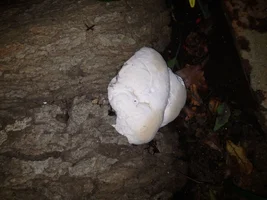
Something is wrong with my tree please identify this growth
- Thread starter Monika Anderson
- Start date

KTSmith
Branched out member
- Location
- Maine, New Hampshire
Hi Monika, I see they look "puffy", but I bet they don't feel too puffy, maybe firm with a velvety surface? Those are young "conks" or reproductive structures of a wood decay fungus. The specific fungus is hard to determine, but probably in the genera Gandoderma, Fomitopsis, or a related one. Although the specific fungus can be important, the photo clearly indicates a pocket or column of decay in the wood of the lower trunk and perhaps in the large woody buttress roots. Fungi that cause that decay are introduced by mechanical wounding of the lower stem or woody root system. That injury would have occurred from several years to several decades ago. The best method of control is prevention, which is not very encouraging to you at this point.
The most important part of my response is this: The presence of wood decay, in and of itself, does not mean that the tree poses a high risk and must be removed. Other factors such as tree structure, cracks, etc. can contribute to risk much more than decay as such. Sounds to me like you need an on-site consultation with an experienced arborist in your area!
The most important part of my response is this: The presence of wood decay, in and of itself, does not mean that the tree poses a high risk and must be removed. Other factors such as tree structure, cracks, etc. can contribute to risk much more than decay as such. Sounds to me like you need an on-site consultation with an experienced arborist in your area!
TimBr
Official Well Known Greeter
- Location
- Northern Virginia
Hi Monika, I see they look "puffy", but I bet they don't feel too puffy, maybe firm with a velvety surface? Those are young "conks" or reproductive structures of a wood decay fungus. The specific fungus is hard to determine, but probably in the genera Gandoderma, Fomitopsis, or a related one. Although the specific fungus can be important, the photo clearly indicates a pocket or column of decay in the wood of the lower trunk and perhaps in the large woody buttress roots. Fungi that cause that decay are introduced by mechanical wounding of the lower stem or woody root system. That injury would have occurred from several years to several decades ago. The best method of control is prevention, which is not very encouraging to you at this point.
The most important part of my response is this: The presence of wood decay, in and of itself, does not mean that the tree poses a high risk and must be removed. Other factors such as tree structure, cracks, etc. can contribute to risk much more than decay as such. Sounds to me like you need an on-site consultation with an experienced arborist in your area!
That was an amazing demonstration of knowledge and kindness, KTSmith! Nice!
Tim
- Location
- Lakeside
Thank you Tim, I called my landlord and told her we need to get someone out to look at these trees right away. Thanks so much
- Location
- Lakeside
an experienced tree arborist thanks again
TimBr
Official Well Known Greeter
- Location
- Northern Virginia
Thank you Tim, I called my landlord and told her we need to get someone out to look at these trees right away. Thanks so much
Hey, Monika! I'm just an innocent bystander surfing on the TreeBuzz forum and posting an idle comment.
The brilliant son of a gun, who appears to be a published scientist who does original research, is the man who answered your original post, who goes by the name KTSmith on this forum.
Credit where credit is due.
Tim
P.S. Good luck with the tree.
- Location
- Lakeside
Yes and I appreciate Mr. Smith giving me a heads up that a tree arborist needs to physically look at the tree. I told my landlord and hope to get someone to my house asap. thanks again

monkeylove
Been here much more than a while
- Location
- Roslyn, Pa.
I think KT has probably forgotten more than I will ever know about trees.

JeffGu
Been here much more than a while
- Location
- Osceola, Nebraska
When you find those growing inside your shoes, you have a real problem...
KTSmith
Branched out member
- Location
- Maine, New Hampshire
True enough, thanks for the love! Yes, my work web page is linked to my Treebuzz profile. No, I'm not very anonymous am I? And to show that I can indeed be a jackass, that's Dr. Smith or Prof. Smith, if you please.
monkeylove
Been here much more than a while
- Location
- Roslyn, Pa.
Damn now we will have to treat you better.
KTSmith
Branched out member
- Location
- Maine, New Hampshire
Well, I'm happy to go by "Kevin" or "hey you". I do sort of object to "Mister", although it happens all the time.
monkeylove
Been here much more than a while
- Location
- Roslyn, Pa.
My dad is Mr, I'm not real fond of that one either. Yes Sir or No Sir works fine, lol.

TreeLogic
Branched out member
- Location
- Coastal SC
OK, another jackass here  Hopefully this isn't seen like that, but here goes anyway. The term "tree arborist" is redundant, Monika. The proper term is "arborist", the root of which is "arbor", which means "tree". Anyway, semantics I guess. Hopefully you find a good certified arborist to diagnose the severity of decay in the tree. Good luck.
Hopefully this isn't seen like that, but here goes anyway. The term "tree arborist" is redundant, Monika. The proper term is "arborist", the root of which is "arbor", which means "tree". Anyway, semantics I guess. Hopefully you find a good certified arborist to diagnose the severity of decay in the tree. Good luck.- Location
- Lakeside
Thank you Kevin and I told my landlord who is usually good at responding to any issue but seems to be not treating this as an emergency these conks appeared two weeks ago and are growing. I will keep you posted. Thanks again
- Location
- Lakeside
I appreciate you responding. I was wondering if I infected myself with something I tried to remove one of them and noticed a powder in the air and I feel some shortness of breath and skin itch. It may be unrelated. Thanks also would I do the trees harm if I tried to remove all the conks myself. My grand daughters 1 year birthday is this Saturday and there will be small children playing in the front area. Thanks so much
KTSmith
Branched out member
- Location
- Maine, New Hampshire
Excellent questions, Monika.
Although some forest fungi do produce spores to which some folks are allergic, I have not heard that happening with this particular group of fungi. Now, there are some forest / suburban insect pests that do release fragments to which many more folks are allergic. Rather than giving you an incomplete list of what it might be, your local arborist should know. I'd check out my state university extension website or educator for even-handed information.
Now remember from the above, those conks are reproductive structures. The great bulk of the body or thallus of the fungus is in the decaying wood inside the tree. Although removing the conks may provide some psychological benefit to you, it won't affect the progress of decay on the inside. The conks, even perennial ones, usually have a pretty short service life anyway (less than one to a few years), while the decay process plays the long game (decades and beyond). Removing them would likely not further damage the tree, but I've seen folks take big hammers or mallets to them, and that can aggravate the tree damage.
I'd be a great fool to recommend what you should do based on the single photo above. I am not doing that now. I can say that an individual tree can contain extensive decay caused by that group of fungi for longer than I've been alive with sudden structural failure. That's not much help perhaps, but that is the story as I understand it. Happy birthday to you granddaughter!
Although some forest fungi do produce spores to which some folks are allergic, I have not heard that happening with this particular group of fungi. Now, there are some forest / suburban insect pests that do release fragments to which many more folks are allergic. Rather than giving you an incomplete list of what it might be, your local arborist should know. I'd check out my state university extension website or educator for even-handed information.
Now remember from the above, those conks are reproductive structures. The great bulk of the body or thallus of the fungus is in the decaying wood inside the tree. Although removing the conks may provide some psychological benefit to you, it won't affect the progress of decay on the inside. The conks, even perennial ones, usually have a pretty short service life anyway (less than one to a few years), while the decay process plays the long game (decades and beyond). Removing them would likely not further damage the tree, but I've seen folks take big hammers or mallets to them, and that can aggravate the tree damage.
I'd be a great fool to recommend what you should do based on the single photo above. I am not doing that now. I can say that an individual tree can contain extensive decay caused by that group of fungi for longer than I've been alive with sudden structural failure. That's not much help perhaps, but that is the story as I understand it. Happy birthday to you granddaughter!
JeffGu
Been here much more than a while
- Location
- Osceola, Nebraska
Kevin, I would think she could paint them with any latex house paint they have laying around, to alleviate the concerns about the kids touching them, no?
KTSmith
Branched out member
- Location
- Maine, New Hampshire
That might draw attention to them. If child contact is the concern, I expect they could be broken/snapped off gently, without damage to the tree. That group of fungi is pretty non-toxic. Now for the Amanita out around the dripline, that's another story!
New threads New posts
-
test
-
-
-

-
 Do you ever have the occasional customer service experience like this?
- Started by climbingmonkey24
- Replies: 21
-

-


