Renesting a fallen Great Horned Owl

I have no idea if Great Horned Owls will prey on domestic cats, but I know of one that certainly does... and not occasionally, either. I used to build enclosures for Raptor Rescue and a state wildlife rescue center, and knew that Turkey Vultures do not wait around for something to die. They are very capable hunters, with only one major handicap. They have a huge wingspan for their body size, so can't get into tight quarters like other birds of prey. They are built for high altitude gliding and riding thermoclines, not hunting in heavy cover like a Sharpshinned Hawk.

I spent most of a summer, on and off, working on an acreage in Saline County that involved dozens of removals, and would spend a lot of time with the elderly owner sitting on the deck, drinking beer at the end of the day. We watched the vultures hunting two things... pigeons and house cats. He only had one of his own cats left, an old female that would never cross open ground during daylight hours. He used to have 26 cats by his count. We watched as two feral cats from adjoining ag land bit the dust when they tried to cross the acreage in the open. I was stunned. They not only had an easy time killing them, they could easily carry them up to the top of an old grain silo on the property, where they would eat them.

Back at home, the wife and I got a good chuckle out of this... because we have a neighbor across the road from our Stromsburg garden property that swore vultures were killing her cats. We had laughed it off as her being a loony and figured it was probably dogs or getting run over that was decreasing the cat population. But, there are lots of vultures around the area because there's a lot of creeks, railroad land, and ag land.

I think the nutty neighbor was actually right about where the cats were going.
 
I'm guessing Arlo has many stories on this, if so looking forward to hearing them. My owl expert friend has taped great horned owl nests with infrared cameras. He reports a variety of prey captured by the parent owls. In addition to the usual suspects: skunks, rabbits, various nocturnal rodents etc., he's documented domestic cats and small dogs, like toy poddles etc. brought to the nest. He has found pet collars at nest sites.
-AJ

Although great-horns do occasionally feed on small cats or dogs, it is often hard to tell if those are healthy animals or are scavenged road kill. I once necropsied a dead red tailed hawk that was hit by a car when feeding on a dead cat in the highway. The hawk had a big white cat's foot in its stomach. Owls will do the same thing on occasion.
 
Although great-horns do occasionally feed on small cats or dogs, it is often hard to tell if those are healthy animals or are scavenged road kill. I once necropsied a dead red tailed hawk that was hit by a car when feeding on a dead cat in the highway. The hawk had a big white cat's foot in its stomach. Owls will do the same thing on occasion.

Interesting forensics, killed by a vehicle or the raptor? I once saw a red-shouldered hawk working on roadkill. Everything eats everything ;-)
-AJ
 
I have recently been involved in wildlife conservation, but I already have so much respect for people for their efforts to help and preserve nature as it is.
 
Last edited by a moderator:
As a wildlife biologist I think that wildlife rehabilitation is really just a drop in the bucket compared to all of the mortality that occurs in wildlife populations. BUT I also know that efforts to rehabilitate wild animals makes people feel like they are at least trying to make up for all of the crappy things that we humans are doing to the environment. It gives people hope that they can, in their own small way, make a difference. So, I say Kudos to all those who do their part to take care of our fellow travelers in this life!
 
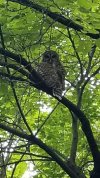
Saw this guy under an area I store wood. Middle of the day at that. Guessing a juvenile looking for a new residence. kudos to those making the efforts to save the owls.
ps. Wanted to possibly install owl boxes on property...is that something recommended? pros/cons? Thanks for any info
 

Attachments

  • BarredOwl.jpg
    BarredOwl.jpg
    171.5 KB · Views: 3
Saw this guy under an area I store wood. Middle of the day at that. Guessing a juvenile looking for a new residence. kudos to those making the efforts to save the owls.
ps. Wanted to possibly install owl boxes on property...is that something recommended? pros/cons? Thanks for any info
Owl boxes can make a difference, especially in areas where natural cavities are rare. For example, in much of Finland the majority of Ural owls nest in boxes and there is a small army of citizen climbers who maintain the boxes every year. Check out this link of barred owls using a box.

 
As a wildlife biologist I think that wildlife rehabilitation is really just a drop in the bucket compared to all of the mortality that occurs in wildlife populations. BUT I also know that efforts to rehabilitate wild animals makes people feel like they are at least trying to make up for all of the crappy things that we humans are doing to the environment. It gives people hope that they can, in their own small way, make a difference. So, I say Kudos to all those who do their part to take care of our fellow travelers in this life!

Another aspect of this is not so much what the overall effect on wildlife populations is. It is basic human responsibility, when we come across an animal truly in trouble (not part of some natural predation or life cycle) we try to help.
-AJ
 
Back
Top Bottom