[ QUOTE ]
So what I saw was an old hollow linden fully exposed in an open field, I would say the tree was extremely prone to failure. Not having laid eyes on this tree in person I'm only assuming that the failure point would be the butress or lower trunk. By putting a bunch of cables in the tree the canopy would have no way of dampening the forces exerted upon it and put more stress on the assumed weak area. Severe reduction over total loss of a veteran tree? Reduction seems like a great option to me. Cheers Mat!
[/ QUOTE ]
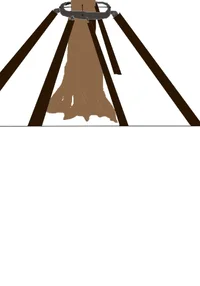
That's about the size of it. Last year I looked inside the tree and there was light showing between the buttresses on all side, as if the tree was stood on tip toes. The guy managing the tree felt the collapse was imminent.
For several years the park managers have been trying to prevent access beneath the tree during the festival with fencing but every year efforts failed due to achieve this successfully because of pressures for space from the festival organisers. The tree is in the center of the site in front of the main stage. Tree managers have been using qtra to assess the level of risk and a decision was made to do the works.
I'm not trying to convince you here Daniel here, i can see thats not very likely, just trying to paint a picture of the context of the job.
Thats the problem when you make an assumption on a job without understanding all the issues behind the job. I already told you the tip pruning was not an option because this has already been carried out and repeated as decay progresses. That management started nearly 20 years ago. Cabling would have been a waste if time at best at worst would have increase the likely hood of it failing. Do nothing and the tree falls and dies, do what we did and we get to retain an important habitat and who knows, the tree may still live another couple hundred years. As long as it doesn't fall over a lime can live for much longer than 300 years. England's oldest trees are very often these feild pollards.
So what I saw was an old hollow linden fully exposed in an open field, I would say the tree was extremely prone to failure. Not having laid eyes on this tree in person I'm only assuming that the failure point would be the butress or lower trunk. By putting a bunch of cables in the tree the canopy would have no way of dampening the forces exerted upon it and put more stress on the assumed weak area. Severe reduction over total loss of a veteran tree? Reduction seems like a great option to me. Cheers Mat!
[/ QUOTE ]
That's about the size of it. Last year I looked inside the tree and there was light showing between the buttresses on all side, as if the tree was stood on tip toes. The guy managing the tree felt the collapse was imminent.
For several years the park managers have been trying to prevent access beneath the tree during the festival with fencing but every year efforts failed due to achieve this successfully because of pressures for space from the festival organisers. The tree is in the center of the site in front of the main stage. Tree managers have been using qtra to assess the level of risk and a decision was made to do the works.
I'm not trying to convince you here Daniel here, i can see thats not very likely, just trying to paint a picture of the context of the job.
Thats the problem when you make an assumption on a job without understanding all the issues behind the job. I already told you the tip pruning was not an option because this has already been carried out and repeated as decay progresses. That management started nearly 20 years ago. Cabling would have been a waste if time at best at worst would have increase the likely hood of it failing. Do nothing and the tree falls and dies, do what we did and we get to retain an important habitat and who knows, the tree may still live another couple hundred years. As long as it doesn't fall over a lime can live for much longer than 300 years. England's oldest trees are very often these feild pollards.