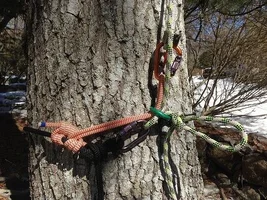
Photos of base anchors, let's see'em.

The problem with tree wraps for me is many times I cannot damage delicate bark, attached ivy, birdhouses, those stupid face things w/ accompanying screws, etc.

My other hesitation is the same reason we don't use them for rigging, not consistent enough.

Because I tend to use them for more than just emergencies, this is a real concern.

Tony
Tony when and why do you tend to use a base anchor for more than just an emergency?
 
Tony when and why do you tend to use a base anchor for more than just an emergency?


We will often add or sometimes subtract rope from a system during a climb. For instance if a climber is 1:1 work Positioning and decides to transfer to an adjacent tree. He will need more rope.

At times I have ascended 1:1 then used the base anchored line as a 2:1 work positioning tie in. (Usually I put a DMM hub on the end in the tree.) To get a good friction free angle I can have the ground crew put some rope in the system to drop the hub (my T.I.P.) to avoid branch conflict, but still maintain the high Basal anchored line high angle.

A 1:1 work positioning climber may start of with just enough rope to do one side or section of a tree that will require a lot of rope management. When needed the ground crew will add rope to system saves excessive slack tending and gets 200' for of line out of the way for a 30 foot tree!

Make sense.

Tony
 
We will often add or sometimes subtract rope from a system during a climb. For instance if a climber is 1:1 work Positioning and decides to transfer to an adjacent tree. He will need more rope.

At times I have ascended 1:1 then used the base anchored line as a 2:1 work positioning tie in. (Usually I put a DMM hub on the end in the tree.) To get a good friction free angle I can have the ground crew put some rope in the system to drop the hub (my T.I.P.) to avoid branch conflict, but still maintain the high Basal anchored line high angle.

A 1:1 work positioning climber may start of with just enough rope to do one side or section of a tree that will require a lot of rope management. When needed the ground crew will add rope to system saves excessive slack tending and gets 200' for of line out of the way for a 30 foot tree!

Make sense.

Tony
Perfectly , thanks!
 
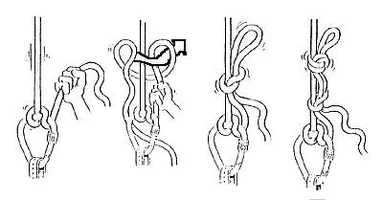
For cave rescue SRT ascending/rappel training, we use a very simple releasable, lowerable base anchor using a munter friction hitch with a quick-release mule knot (half hitch on the bight), backed up by an overhand on the bight.

The only hardware required is a locking HMS (pear-shaped) 'biner, and the munter provides more friction than any kind of figure-8 device.

Simple and effective (KISS).Munter Mule with backup.webp
 
For cave rescue SRT ascending/rappel training, we use a very simple releasable, lowerable base anchor using a munter friction hitch with a quick-release mule knot (half hitch on the bight), backed up by an overhand on the bight.

The only hardware required is a locking HMS (pear-shaped) 'biner, and the munter provides more friction than any kind of figure-8 device.

Simple and effective (KISS).View attachment 29162
Having not actually climbed SRT (yet), I hesitated to write, but I was wondering if anyone did this. When I was an Outward Bound instructor we would have our student rappel lines top anchored this way. Students, who were backed up with a separate line belayed by an instructor, controlled their own speed of descent with a figure eight. If they locked up or got hair or T-shirt caught in the f8 (unlikely with monitoring but students could do some crazy things) we could still lower them on the rap line with the munter. I have used a munter-mule with prussic back up for myself when blocking down a spar. Munter is a low tech, low equipment solution for many situations. I've also used a munter for belaying heavily loaded dog sleds down steep, tight portages...
 
For cave rescue SRT ascending/rappel training, we use a very simple releasable, lowerable base anchor using a munter friction hitch with a quick-release mule knot (half hitch on the bight), backed up by an overhand on the bight.

The only hardware required is a locking HMS (pear-shaped) 'biner, and the munter provides more friction than any kind of figure-8 device.

Simple and effective (KISS).View attachment 29162

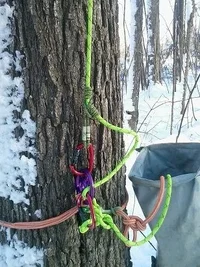
This has been my base anchor for the past few months, works fantastic, quick and easy set up, I use it in conjunction with a snake anchor-soon to be modified custom snake anchor that I'm having made by treestuff. This set up is sweet for keeping the tail short and being able to have more line fed to you if need be. (And possible rescue in a perfect storm)
 
I've also used a munter for belaying heavily loaded dog sleds down steep, tight portages...

I first learned the mule knot at Voyageur Outward Bound (1990) as a tie off for a sled with a team of over-eager sled dogs just rarin' to go. The driver gets on the rails and releases the mule knot tied around a tree - and off you go!
 
View attachment 29192

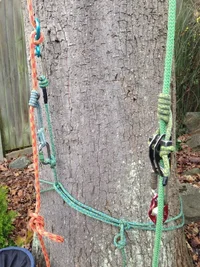
This is what I've been using for a year , eye sling with a hitch cord dmm ring on it , and the DMM hub to create friction with 2 carabiners. 300' of rope to lower the climber if anything happen. easy to set up and use by the groundman.
This is similar to a method I use. I have been meaning to post, but haven't gotten a chance.

Tony t also uses a hub in his base anchor system. It's a great use for it.
 
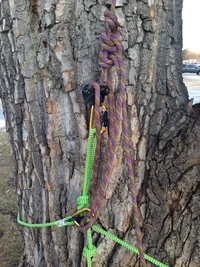
This has been my system for the last six months or so. I like using the grigri 2 because most of the tree guys in my area are also rock climbers so it works well.
I added in a couple of half hitches for redundancy. This system is straight forward and easy to lower out the climber if necessary. Also, I use a 300' line so I can leave enough rope in a bag on the ground to be lowered out.
 

Attachments

  • basal anchor.webp
    basal anchor.webp
    158.9 KB · Views: 156
This has been my system for the last six months or so. I like using the grigri 2 because most of the tree guys in my area are also rock climbers so it works well.
I added in a couple of half hitches for redundancy. This system is straight forward and easy to lower out the climber if necessary. Also, I use a 300' line so I can leave enough rope in a bag on the ground to be lowered out.


I used a system very similar in the past. Today Petzl frowns on the use of the grigri in this configuration. Anchoring it to a structure, such as the base of a tree, may case it to see forces it cannot handle. I agree and disagree with Petzl at the same time. The grigri is primarily designed as a belay device. The handle is undersized for structure based lowering as well in my judgement. However, I think what you are using is safe in most instances and better than nothing in an emergency. Having used similar though, I think the I'D or rig is a better choice for a base anchor when choosing Petzl products. Not tying to bust you down, just giving some info.

Also you may want to consider girth hitching the connecting link holding the grigri to the sling. These base anchor after slack then retighten, especially in 1:1 work positioning.

Tony
 
Tony, thank you for the suggestions. I am glad to get some feedback on the system. Girth hitching the carabiner would make it safer and I'll look into the petzl rig. Cheers.
 
I really dig my new base anchor. It was originally inspired by DSRT climbing, but it works fine for SRT as well.

The Escalator has an eye connected to the eye of my Tachyon with a carabiner. The connection is up just below the first PSP. Static anchor side, energy absorption on the working side.

image.webp
 

New threads New posts

Back
Top Bottom