
Navigation
Install the app
How to install the app on iOS
Follow along with the video below to see how to install our site as a web app on your home screen.
Note: This feature may not be available in some browsers.
More options
You are using an out of date browser. It may not display this or other websites correctly.
You should upgrade or use an alternative browser.
You should upgrade or use an alternative browser.
One Handing a Top Handle Chain Saw? Yes or No
- Thread starter RopeShield
- Start date

RopeShield
Carpal tunnel level member
- Location
- Ontario, Canada
Recipro saw just makes them limb reiprocate aas an example
aas an example 
ATH
Been here much more than a while
- Location
- Findlay, Ohio
I haven't tried one in the tree. But in most cases for pruning, I'm not sure it is a better option than a good handsaw. You get a much longer stroke with a handsaw (even when not using the full blade, 8-10" per stroke compared to 1" with a reciprocating saw) so I'd guess they are about the same speed. In my opinion, I also think the sawzall leads to more fatigue than a handsaw because of the vibration.Just a thought I had while reading this thread: Has anyone tried using a battery-powered reciprocating saw ("Sawzall") with an aggressive blade as a tool in between a chainsaw and a handsaw in both safety and speed? There are some "pruning" blades available (for example https://www.homedepot.com/p/Diablo-...rocating-Saw-Blade-5-Pack-DS0905FG5/203464786), cheaper than a handsaw blade. I've used them for cutting up fallen branches, not as fast as a chainsaw but lower risk profile and faster overall if you're only dealing with smaller quantities of smaller wood. On the whole one-hand debate, I'd imagine a reciprocating saw could be used one-handed more safely than a chainsaw -- it's not going to kick back, and the saw teeth are only on one side of the blade.
I'm not saying it is a bad idea or that they have no place. Like Tom said...a great tool in tight spots. In fact, I bought a Milwaukee Hackzall just for cutting girldling roots. They are packed in there tight. It is also most often impossible to take advantage of long strokes on the saw so that advantage is lost. I have used the Diablo blades and they make a nice cut. For root work, I bought some pruning blades at Harbor Freight...not my normal source for any tool I want to make life more efficient...but putting them in the ground chews through any blade pretty quick, so might well make it a cheap one. I'd use the Diablo blades above ground!
Good question and curious to hear if anybody else is using one in a tree. Might be a good option for 4-6" diameter limbs that put you in a tough position where one handed saw work is preferred, but there are too many for handsaw use.

I will use my 2 fully modded 201s thank you....both beasts....got no time for sawzallingit.....work got to get done...there are times when one handing makes sense...I will never limit myself...folks do what pleases you and what you feel comfortable doing...let's not get in a box together....

- Location
- Retired in Minneapolis
This debate is stalemate honestly.....to me at least
This topic has gone on for years! The discussion is always the same.

Santiago Casanova
Branched out member
- Location
- Sink Hole
Just a thought I had while reading this thread: Has anyone tried using a battery-powered reciprocating saw ("Sawzall") with an aggressive blade as a tool in between a chainsaw and a handsaw in both safety and speed? There are some "pruning" blades available (for example https://www.homedepot.com/p/Diablo-...rocating-Saw-Blade-5-Pack-DS0905FG5/203464786), cheaper than a handsaw blade. I've used them for cutting up fallen branches, not as fast as a chainsaw but lower risk profile and faster overall if you're only dealing with smaller quantities of smaller wood. On the whole one-hand debate, I'd imagine a reciprocating saw could be used one-handed more safely than a chainsaw -- it's not going to kick back, and the saw teeth are only on one side of the blade.
I do this because it is so easy to one hand. My ryobi with a 4ah battery will do just fine for small stuff. Any crosscut blade will work well. I will use it to make 3" or less cuts, beyond that it is a waste of time. I still prefer a chainsaw but it is nice to have the blade stop when you take your finger off the trigger.

TreeCo
Carpal tunnel level member
This topic has gone on for years! The discussion is always the same.
I wonder how many here have used a circular saw one handed?
They are just about as dangerous and seem designed for one handed use. I've made thousands of cuts one handed with circular saws.
- Location
- Retired in Minneapolis
@TreeCo
That's A silly comparison
The cutting characteristics is completely different.
Circle saws can kickback too
That's A silly comparison
The cutting characteristics is completely different.
Circle saws can kickback too
Ha ha ha..... I am dying with laughter sitting in my AC cooling down....funny shiteA battery powered sawz-all in a tree? Have you no shame?
Santiago Casanova
Branched out member
- Location
- Sink Hole
A battery powered sawz-all in a tree? Have you no shame?
Shame is for the shameful. I take pride in a healthy tree and a job well done. Just to be clear, I will always prefer my 355T over anything electric. I was just so tempted by how light weight the sawzall is I had to give it a try. It actually worked well and can store on the saddle very easily.

AshWilliams
New member
- Location
- West Coast
Just did a job involving limbwalking way out on big swooping western red cedar limbs on a typical rainy PNW day and they were slippery as a mf. I had to make cuts where 2 handing literally would have equated to sketchy and unergonomical work positioning at best. Times like that I love my perfectly balanced and one-handable white and orange cube of cutting power.
TreeCo
Carpal tunnel level member
Just did a job involving limbwalking way out on big swooping western red cedar limbs on a typical rainy PNW day and they were slippery as a mf. I had to make cuts where 2 handing literally would have equated to sketchy and unergonomical work positioning at best. Times like that I love my perfectly balanced and one-handable white and orange cube of cutting power.
A perfect example and one that can come up many time in just one tree.
- Location
- Retired in Minneapolis
@AshWilliams
The situation that you described is one example of the reason that there is still an 'out' written into the ANSI standard.
I think I shared this earlier in the thread and it bears repeating.
At a workshop someone shared the protocol that their company uses for one-handed use. When a climber looks at the situation and thinks that one-hadning is what they're going to use a shout goes out to other climbers and groundies. The climber states what they are going to do. The setupis assessed. If the rest of the crew green lights it then the climber roceeds with the attention of the crew ready to rescue in case something goes pear shaped. Most of the time another solution that is safer is used. pole saw...reposition...etc. But...having the support and attention of the rest of the crew is so import
The situation that you described is one example of the reason that there is still an 'out' written into the ANSI standard.
I think I shared this earlier in the thread and it bears repeating.
At a workshop someone shared the protocol that their company uses for one-handed use. When a climber looks at the situation and thinks that one-hadning is what they're going to use a shout goes out to other climbers and groundies. The climber states what they are going to do. The setupis assessed. If the rest of the crew green lights it then the climber roceeds with the attention of the crew ready to rescue in case something goes pear shaped. Most of the time another solution that is safer is used. pole saw...reposition...etc. But...having the support and attention of the rest of the crew is so import


I haven't purchased the new ANSI standards manual yet for arboriculture operations, but it says you shall not one hand a chainsaw, unless your EMPLOYER can demonstrate that it is necessary and safer to do so. In my 15 years of tree climbing, I have made maybe 20 cuts single-handed... very rare, but very necessary- especially in certain rigging operations. Always use two hands if you are able to.
SAFETY trumps production- ALL DAY LONG!
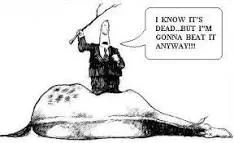
For reviving this thread

AshWilliams
New member
- Location
- West Coast
Good communication amongst the crew is always something I can get behind, no matter what. I do like the logic to the protocol you mentioned.

Evo
Been here much more than a while
- Location
- My Island, WA
Personally I one hand a skill saw in a tree exclusively
Personally I one hand a skill saw in a tree exclusively
New threads New posts
-
test
-

-
 Alternatives to standard asphalt around roots
- Started by southsoundtree
- Replies: 11
-
-

-

-


