One dead, Biltmore Estate, Asheville

I don’t mean changing the occupancy rate. I was thinking more along the lines of using TRAQ language to show a low occupancy rate and low risk rating post failure without an actual report as defense for the estate.

I definitely think they would be better off if they have a level 1 limited visual assessment on file prior to the event (which does not rate risk with the matrices) but if they don't it still seems very difficult to distract from the low target occupancy. If the target occupancy was low and they did a level 2 assessment to establish a risk rating, I'd question why - it would look suspicious.
 
Interesting point in a risk assessment bringing in suspicion. I think it would have to be widespread assessments on the property to avoid that.
 
I definitely think they would be better off if they have a level 1 limited visual assessment on file prior to the event (which does not rate risk with the matrices) but if they don't it still seems very difficult to distract from the low target occupancy. If the target occupancy was low and they did a level 2 assessment to establish a risk rating, I'd question why - it would look suspicious.
If you are doing a Level 1 and you see a cable, doesn't that pretty much guarantee that you need to do at least a Level 2, if not even a 3 on that tree?
 
Interesting point in a risk assessment bringing in suspicion. I think it would have to be widespread assessments on the property to avoid that.
Yes...that is what they "should" be doing. Ideally any entity open to the public would do a Level 1 on a regular schedule.

But agree if they do that for a single tree after a fatality it looks odd. But they certainly could say "the occupancy rate would have resulted in a risk rating of Low."
 
I definitely think they would be better off if they have a level 1 limited visual assessment on file prior to the event (which does not rate risk with the matrices) but if they don't it still seems very difficult to distract from the low target occupancy. If the target occupancy was low and they did a level 2 assessment to establish a risk rating, I'd question why - it would look suspicious.
But since there were cable(s) in the tree, on that limb, a closer "inspection" was kind of done by an "arborist", more so than just from the ground (level 1). I understand the cable probably wasn't installed by traq certified person, or maybe not even a certified arborist or someone with a lot a lot of experience in the field. But the normal person doesn't see it that way...it is our field so we should know. Also mitigation steps were taken, which according to the plaintiff wasn't enough...which is her complaint.

The whole situation is tricky. Your diving through the woods in a high wind/storm event so you yourself have to assume some risk and responsibility. There is also the responsibly of Biltmore to protect their visitors and people driving past their property, but being that Biltmore is the first USA forestry school etc, their focus is going to be on tree preservation. Would people want no trees to be within striking distance of the road? Would it be any different is the tree was on state game lands or a federal land, or in a hiking situation vs car? From my understanding most government land (state/federal) can't be held responsible in a injury due to a falling tree.

I don't recall seeing, or hearing, did the cable break or the anchors pull out? I would love to see the other side of the cable. To me that would be a lack of cable inspection issue, which may open the door some for penalties...though often one can't visually see decay in anchor points.

The only way this would have been completely caught and known about is a level 3 with it being done aerially at the v crotch area.
 
Last edited:
...... The video shows two cars in ~.5 seconds, so maybe there are lots of cars? It has to be a veritable parking lot to get high occupancy though. Again, off the cuff, two cars in .5 seconds is a 10% occupancy rate? If there are fewer than that, the occupancy rate quickly attains an asymptote of 0%... ...
Are you saying if a 120 cars per minute/every minute they are open (+/-) pass under the tree? And that is only a 10% occupancy rate? I'd consider that near constant occupancy.
 
Are you saying if a 120 cars per minute/every minute they are open (+/-) pass under the tree? And that is only a 10% occupancy rate? I'd consider that near constant occupancy.
The issue is the cars are moving, so the occupancy is not constant as it is a flow in and out of the target zone. Then add to that weekend and other times when traffic may be slower or non existent. Also moving cars are not permanent non moveable targets. Most roadways are considered low targets in traq assessments according to the traq class
 
...Would it be any different is the tree was on state game lands or a federal land, or in a hiking situation vs car? From my understanding most government land (state/federal) can't be held responsible in a injury due to falling tree.
...
That will be variable by State.
My understanding in Ohio, the public entirely has a duty of care to look for, identify, and mitigate hazards.
 
The issue is the cars are moving, so the occupancy is not constant as it is a flow in and out of the target zone. Then add to that weekend and other times when traffic may be slower or non existent. Also moving cars are not permanent non moveable targets. Most roadways are considered low targets in traq assessments according to the traq class

A single/specific vehicle has a low probably of being impacted, the the likelihood of impacting "any vehicle" is much higher.

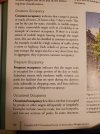
Page 40 of the second edition:
20220723_093346.jpg
 
That will be variable by State.
My understanding in Ohio, the public entirely has a duty of care to look for, identify, and mitigate hazards.
Here is a interesting article I found, while looking for more information .


Appeals court: Cincinnati can't be sued over Mt. Airy Forest tree branch that fell on U-Haul

Kevin Grasha
Cincinnati Enquirer


A state appeals court has ruled that a woman who said she was injured when a large tree branch fell on her truck as she drove along Mt. Airy Forest can’t sue the city, despite an allegation that negligence by city employees caused it to happen.
In an opinion released this month, the 1st District Court of Appeals said the City of Cincinnati was immune from being sued because Cileta Fry, who was 61 at the time, was not injured on park property.
Fry’s U-Haul truck was, in fact, on Colerain Avenue, adjacent to the park when it was struck by the branch. The tree was in the park.
State law says the city is entitled to immunity under most circumstances. There are a few exceptions, but according to the appeals court’s opinion, Fry had to show that her injuries happened “within or on the grounds of” the park.


Seems weird that you have to be on the property, and doesn't matter the tree came from their property. I wonder is this could play into the Biltmore case.
 
A single/specific vehicle has a low probably of being impacted, the the likelihood of impacting "any vehicle" is much higher.

Page 40 of the second edition:
View attachment 82944
I knew I should have pull my book out for a refresher, lol. Would a traffic study have to be done to determine the amount of which category it falls into (in a court case situation). Since it doesn't appear to be a highway, Id tend to put the Biltmore road in the frequent to Occasional spots...sure sometimes are busier than others
 
  • Like
Reactions: ATH
Here is a interesting article I found, while looking for more information .


Appeals court: Cincinnati can't be sued over Mt. Airy Forest tree branch that fell on U-Haul

Kevin Grasha
Cincinnati Enquirer


A state appeals court has ruled that a woman who said she was injured when a large tree branch fell on her truck as she drove along Mt. Airy Forest can’t sue the city, despite an allegation that negligence by city employees caused it to happen.
In an opinion released this month, the 1st District Court of Appeals said the City of Cincinnati was immune from being sued because Cileta Fry, who was 61 at the time, was not injured on park property.
Fry’s U-Haul truck was, in fact, on Colerain Avenue, adjacent to the park when it was struck by the branch. The tree was in the park.
State law says the city is entitled to immunity under most circumstances. There are a few exceptions, but according to the appeals court’s opinion, Fry had to show that her injuries happened “within or on the grounds of” the park.


Seems weird that you have to be on the property, and doesn't matter the tree came from their property. I wonder is this could play into the Biltmore case.
That is really weird.

I'm assuming it is a City owned park based on the wording there. Wonder if it also a city owned street?

Here is a case where ODOT had to pay out. I was working for the State Division of Forestry when that hit. We had to go do risk assessments at all of the State Parks after that because it opened some eyes...

Edit to add link: https://www.dispatch.com/story/news/crime/2013/05/23/odot-must-pay-family-nearly/23509049007/
 
Last edited:
That is really weird.

I'm assuming it is a City owned park based on the wording there. Wonder if it also a city owned street?

Here is a case where ODOT had to pay out. I was working for the State Division of Forestry when that hit. We had to go do risk assessments at all of the State Parks after that because it opened some eyes...
There was also a "landmark" case that went to Ohio Supreme Court. In Toledo a treelawn tree failed and killed most of a family. City was held liable. Their argument was that it was fault of adjacent owner who cut roots to install sidewalk. City was told it is on them to look for and mitigate such hazards. I think it was early 80's or so? I can't find it right now...
 
I think TRAQ and risk assessment are good, but I just don't see how they would really hold up in court because they are very subjective. In a storm even a healthy tree can fail, so there is no way to prevent all failures unless you want to clear cut roadways and properties.
 
The issue is the cars are moving, so the occupancy is not constant as it is a flow in and out of the target zone. Then add to that weekend and other times when traffic may be slower or non existent. Also moving cars are not permanent non moveable targets. Most roadways are considered low targets in traq assessments according to the traq class
Cars move slowly and thickly slong that drive During open hours, FWIW. Not sure how it would be classified but it seems like a high occupancy target rate. You’d have to be a Jedi to stop or swerve to avoid a limb like that.
Would people want no trees to be within striking distance of the road?
I don’t think that’s the argument. This was a tree with known defects that could be seen with a level 1 assessment, and it had some arborist attention in the past. It also had a numbered pin on it.
I don't recall seeing, or hearing, did the cable break or the anchors pull out?
I’m curious about that too.
 
Cars move slowly and thickly slong that drive During open hours, FWIW. Not sure how it would be classified but it seems like a high occupancy target rate. You’d have to be a Jedi to stop or swerve to avoid a limb like that.

I don’t think that’s the argument. This was a tree with known defects that could be seen with a level 1 assessment, and it had some arborist attention in the past. It also had a numbered pin on it.

I’m curious about that too.
Good info on the number of cars/rate. I was hoping you would give input on that.

The clear cut question was mostly rhetorical. As to known tree defects seen with a level 1...that would be probably a 1/3 of the trees to some extent (v crotches, over extended, dead wood, decay, etc). My point was mostly where does one stop.

So because it was part of the Arboretum, or a past tree tagging, (pinned) it should be held to a higher standard? We have a local community, an old church camp grove in the trees. every tree was tagged and added to a book in the mid 1990's, and nothing been done to them since...as far as an official study. I used to do level 1 to them, before I was traq, but have since stopped working for them.
 
Last edited:
I think TRAQ and risk assessment are good, but I just don't see how they would really hold up in court because they are very subjective. In a storm even a healthy tree can fail, so there is no way to prevent all failures unless you want to clear cut roadways and properties.
I was planning on doing the traq training, but a case like this gives me pause. I’d love to hear from folks who have used traq for a while and whether it is the best approach to managing risks or just really subjective.
 
  • Like
Reactions: evo
I was planning on doing the traq training, but a case like this gives me pause. I’d love to hear from folks who have used traq for a while and whether it is the best approach to managing risks or just really subjective.
I didn't take the class for a long time because it seemed subjective to me. Now that I took the class, I am gladI did and will probably keep the certification current. This is mostly because I feel I was already doing it as a certified arborist, and this just gives more backing to that. I should so though, I have not done any official traq work since getting certified. When we ask people if the want to pay for a traq, or get a free estimate for work they want, for some reason they always say free estimate lol. Plus, I don't really want to do a traq, and then bid on the work...I rather do one or the other.

I too would be curious on someone's opinion on this that does a lot of traq reports, or even court cases.
 
I think TRAQ and risk assessment are good, but I just don't see how they would really hold up in court because they are very subjective. In a storm even a healthy tree can fail, so there is no way to prevent all failures unless you want to clear cut roadways and properties.
The idea is reducing risk. There are risks in every facet of life. TRAQ was designed to line up with the language and procedures used in the legal and insurance industries.

We recognize there is risk, but how much risk? There is certainly some subjectivity to it, but as a risk assessor, my job is to provide information that would stand up in court.

So on this tree, that might look like "Yes, the tree that failed had an identified defect. However, a cable was installed and inspected according to ANSI A300 Standards in order to mitigate that defect. Once that cable was in place, the likelihood of failure was reduced to improbable , making the tree in question a low risk tree despite the fact that we recognize a Frequent occupancy rate."

(Now, if the cable didn't meet ANSI standards, there is a lot more trouble there...)

Or for a tree that had been identified as "Improbable" failure with no visible defects, it might be:
*The weather event that caused this failure was an abnormal event.
*The defect that lead to failure was not detectable with a visual inspection and there was no indication that a more thorough inspection was warranted.

 

New threads New posts

Back
Top Bottom