New Lowering device!

[ QUOTE ]

The left side barrel also has a pre-tensioning option.
The tensioner works a little like an anvil in its means to grip the rope. It also has an adjustment screw on it so to accommodate ropes of different diameters.


[/ QUOTE ]

Hey nice idea. How does the pre-tensioner grab the rope? When you say 'anvil', do you mean like a Haven's grip?

20287.jpg
 
[ QUOTE ]
What ya got on the back to keep it from moving? How much have you loaded it with and not see it move? What about shock loading it, did it want to move up the tree? I like this idea, wonder what it would look like with say 2 13mm boat winches instead of the fixed tubes?

[/ QUOTE ]

There are 3 ribs at the back of the device, nothing fancy. You can cut in to the tree if you want but I don’t think its necessary. Also, because the base plate is flat and not curved like a tree, tightening the strap presses the device harder against the tree than what would be otherwise. It has tilted a few times but only when the strap has not been tight enough….not that this is of critical concern with the choker backing up the strap.

Yes it’s already endured it’s share of unplanned shock-loading, much to my frustration. A full stress analysis will be undertaken before the device hits the market.

Parallel Boat winches would be something, glad I have it covered on the Patent…..but consider that I wasn’t asked to make the best lowering device that I could envisage, only the best that would fall within a certain price bracket!

[ QUOTE ]
Hey nice idea. How does the pre-tensioner grab the rope? When you say 'anvil', do you mean like a Haven's grip?

[/ QUOTE ]

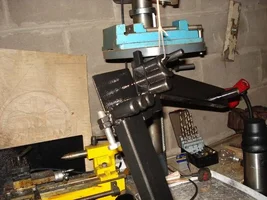
Hey Frans, I did try get some pictures of the jaws in action but managed to obstruct the camera somehow. Here is one from the workshop though. Thanks
161597-jaw004.jpg
 

Attachments

  • 161597-jaw004.webp
    161597-jaw004.webp
    52.1 KB · Views: 128
Hummm, maybe install a socket at the end of the pre=tensioning arm which would accept a truckers bar. that way the operator could extend the length of the pre-tensioning bar and increase the leverage?
 
...and increase the leverage...until someone adds too long an extender and breaks the attachment at the other end. Like a rigging system we want the weakest link to be the at the output end, the rope.

Even without an extender someone is going to slip a pipe into or over the handle. Then they'll bend something or crush/cut the rope. then what??? Go after the manufacturer and claim that it is a bad design. Grrrr...I hope not!
 
[ QUOTE ]
Hummm, maybe install a socket at the end of the pre=tensioning arm which would accept a truckers bar. that way the operator could extend the length of the pre-tensioning bar and increase the leverage?

[/ QUOTE ]

I had thought along similar lines, perhaps even making the lever telescopic but as Tom points out….

[ QUOTE ]
...and increase the leverage...until someone adds too long an extender and breaks the attachment at the other end. Like a rigging system we want the weakest link to be the at the output end, the rope.

Even without an extender someone is going to slip a pipe into or over the handle. Then they'll bend something or crush/cut the rope. then what??? Go after the manufacturer and claim that it is a bad design. Grrrr...I hope not!


[/ QUOTE ]

The clamp comprises of 6 cylindrical members which grip the rope, they are off-set from each other so the bite is not direct. It also has a screw adjustment so it can be tempered whereby the bite is minimal.
However, one has to assume that the adjustment screw will be ignored by at least some people….and while we found no evidence of rope crushing damage with up to 3 guys hanging off the lever, there is always the chance that somehow someone will find a way to get into trouble.
So with this in mind, a further more basic tensioning option is available above the right-hand barrel which produces a greater MA if so desired.

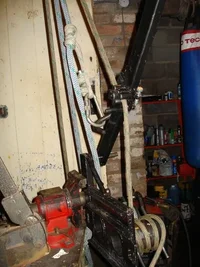
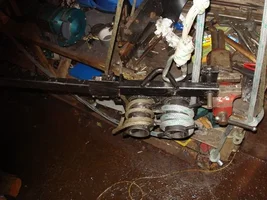
The photos (2) are a little hard to make out with all the junk lying round. The video will give a much clearer idea of the tools all-round effectiveness. Thanks again for the interest.
161772-LD3001.jpg
 

Attachments

  • 161772-LD3001.webp
    161772-LD3001.webp
    55.1 KB · Views: 115
Geez Tom, put a damper on the parade, huh?

I figured out how to get more leverage! Simply put a come-a-long on the arm and force the handle down :)

-just kidding


Thank you for the invention! It looks good, and I hope you are successful with it.
Thanks for sharing on the Buzz
 
[ QUOTE ]
Nice device! What if the tree flares out just above the device? Will that impede the function or movement of the tensioning lever?

[/ QUOTE ] We've had that happen , but just repositioned the device. Well spotted tophopper, but its fine honestly!
 
I guess I'm not getting the advantage. I'll wait for further details to emerge so as to get a better understanding of the concept and practical application. The pictures are just not doing it for me at this point.
 
[ QUOTE ]
I guess I'm not getting the advantage. I'll wait for further details to emerge so as to get a better understanding of the concept and practical application. The pictures are just not doing it for me at this point.

[/ QUOTE ]

To summarize, you get a relatively lightweight , comparatively cheap and convenient means to safely raise and lower tree-cuttings while having the option of working 2 ropes at the same time.

Tell me which of those incentives you don’t agree with and I’ll do my best to justify them you right here.
 
You mention that you can safely raise tree cuttings. Can you lift fairly sizeable logs or is it mostly for pre-tensioning lines? By "sizeable", I dont mean 2,000lbs logs, but maybe 500 or 600lbs?
 
[ QUOTE ]
You mention that you can safely raise tree cuttings. Can you lift fairly sizeable logs or is it mostly for pre-tensioning lines? By "sizeable", I dont mean 2,000lbs logs, but maybe 500 or 600lbs?

[/ QUOTE ]

Seems fairly obvious to me.

The device has an arm with jaws attached. The jaws grab the rope and the arm supplies leverage to be able to pull the rope down under load. The capstan then holds the slack line which the jaws feed to it.

The amount of pull strength depends on how hard you pull down on the arm.
I would imagine that the amount of weight or pull you could exert on the load line would not be that much. Perhaps enough to pre-tension a 5/8" bull rope pretty good, but not enough to easily raise say a 500 lb. limb.

Here is a way to compare: Go out to the wood pile and using a truckers bar (prob. the same length as the devices arm), jam the end of it under a big log and lift. How far you can lift the log is prob. the same as the amount of pull you can supply to the device's arm.
However, in a rigging situation, you also have a bull rope, friction from the load point, and also the limb you are removing.
So I would guess you could exert about 2-3 hundred pounds of force on the load line using this device in ideal situations.

Incorporating a ratcheting capstan would increase the amount of pull alot.

Seeing as how the device was made to be a less expensive alternative to other higher priced models, I guess it does the job.


So lets do a quick very very inexact general price breakdown starting with the higher priced models and going down:

GRCS: +/- 2500 $
HOBBS: +/-1800 $

I am sure their are other devices out on the market, but these listed are the two main ones used in the States.
I think Kong made a fixed capstan which you strapped onto the tree, and also there was one device which could take two lines.

Say this new device had a price of 500 hundred dollars. For 500 bucks you would get a device which is essentially a port-a-wrap with a few added features.

Or, for slightly more money you could buy one of two devices (GRCS or HOBBS) which provide you with so much more in terms of durability, ease of use, longevity, and lifting and lowering capabilities.

I guess it depends on how you want to spend your money.

For me, I would rather buy a port-a-wrap then buy a larger heavier device such as Reg's new device. The port-a-wrap provides exactly the same features as his, but in order to lift a limb you need to install a come-a-long or block and tackle to provide pulling power.

Block and tackle or a come-a-long are real handy and can be used in a variety of different ways so the purchase of one of these is always a good buy for a tree service. Same with a port-a-wrap as it is so light and easy to pack into remote areas or use in smaller jobs where a heavy lowering device is not needed.


-These comments are just my opinion
 
I like the goal Reg is shooting for here, but would humbly suggest rethinking his binding force being applied on such a small area of rope, actually damaging/wearing the rope.

3-4 wraps of bull line on a hobbs applies the grabbing force over 3-4 feet of rope. It is no coincidence that more wraps allow you to lift more weight.

If you market your device in it's present configuration, I think you'll expose yourself to liabilities and limitations a better ratcheting design would not have.

Think about putting a smaller ratcheting capstan on the lever arm itself to feed to a larger stationary weight bearing capstan(s).

Prototyping is hard, but persistence and logic are your best friends once you get started.

Keep up the good work Reg, you can do it!

jomoco
 
Seems to me that Reg's lifting mechanism would be a lot more convenient to use than adding blocks above a portawrap---which I used to do till obtaining our Hobbs and GRCS.....

And, with two bollards available gives added flexibility, though there's really few applications where two lines are needed.

That said, Reg, it looks as though the mechanical advantage of your lever arm is about 2-1, given its apparant length and positioning of the cams? If so, that's not much. Still plenty to pretensioning a line, though.
 
So far in this thread I have made a conscious effort not to submit any negative comments or comparisons at/with past or present Lowering devices that made it to the market….I can only hope that other contributing members will respectfully do the same.

Giving people a choice can only be a good thing i.e. budget-restraints, application, frequency of use, lifespan, maintenance…..consider how these values would differ in priority for Arborist’s throughout the industry….then I think it’s not unreasonable to suggest that a variety of such Lowering Devices can co-exist.

What’s more, it’s a sad day when one party begrudges and tries to undermine another’s attempt in making its product available. I say let the workers decide which best suits their needs!

No amount of fancy equipment is going to make a good climber….but we can certainly make life easier by giving them options. If the availability of those options were further subtly imposed in a way that would prioritize and influence strategically safe and efficient work ethic, then all the better. Within a budget, that’s what I’ve tried to do here….although for those lacking in experience or imagination perhaps, I’ll put a video together!

Jomoco , I know your concerns are sincere, thankyou for bringing this matter to light. I would never put a fellow worker at risk, the tensioner does not damage the rope

I have answered Frans’ points in Bold.


Seems fairly obvious to me.

The device has an arm with jaws attached. The jaws grab the rope and the arm supplies leverage to be able to pull the rope down under load. The capstan then holds the slack line which the jaws feed to it.

The amount of pull strength depends on how hard you pull down on the arm.
I would imagine that the amount of weight or pull you could exert on the load line would not be that much. Perhaps enough to pre-tension a 5/8" bull rope pretty good, but not enough to easily raise say a 500 lb. limb. The RH attachment on the lever ought to lift 500lb easy enough Frans, if you had reason to do so that is?

Here is a way to compare: Go out to the wood pile and using a truckers bar (prob. the same length as the devices arm), jam the end of it under a big log and lift. How far you can lift the log is prob. the same as the amount of pull you can supply to the device's arm.
However, in a rigging situation, you also have a bull rope, friction from the load point, and also the limb you are removing.
So I would guess you could exert about 2-3 hundred pounds of force on the load line using this device in ideal situations.

Incorporating a ratcheting capstan would increase the amount of pull alot.

Seeing as how the device was made to be a less expensive alternative to other higher priced models, I guess it does the job. Does a superb job, or so I’m told.

So lets do a quick very very inexact general price breakdown starting with the higher priced models and going down:

GRCS: +/- 2500 $
HOBBS: +/-1800 $

I am sure their are other devices out on the market, but these listed are the two main ones used in the States.
I think Kong made a fixed capstan which you strapped onto the tree, and also there was one device which could take two lines.

Say this new device had a price of 500 hundred dollars. For 500 bucks you would get a device which is essentially a port-a-wrap with a few added features. The portowrap 3 is a great device, everyone ought to have one….but wrapping a rope around one of this devices barrels is where the comparison ends, otherwise the Hobbs and GRCSs are also essentially portowraps with a few added features.

Or, for slightly more money Slightly??? you could buy one of two devices (GRCS or HOBBS) which provide you with so much more in terms of durability, ease of use, longevity, based on what evidence? and lifting (I’ll agree with that) and lowering capabilities. Wrong!

I guess it depends on how you want to spend your money.
Or how much you can afford to spend and whether or not it can be justified against other essentials

For me, I would rather buy a port-a-wrap then buy a larger heavier device such as Reg's new device. The port-a-wrap provides exactly the same features as his, but in order to lift a limb you need to install a come-a-long or block and tackle to provide pulling power. There’s a lot I could add to that paragraph but shall have to resist!

Block and tackle or a come-a-long are real handy and can be used in a variety of different ways so the purchase of one of these is always a good buy for a tree service. Same with a port-a-wrap as it is so light and easy to pack into remote areas or use in smaller jobs where a heavy lowering device is not needed. Frans, on several occasion’s you have publicly referred to the portowrap as the portocrap. And the Hobbs = boat anchor…. Why the sudden change of heart?

-These comments are just my opinion

And of course they are most welcome Frans….I was expecting them. In fact, I have looked through some of the L.D archives on various forums and where ever a device is mentioned, you are there e.g http://www.treebuzz.com/forum/showflat.php?Cat=0&Number=51998&an=0&page=12#51998 ….why such an interest? My incentive is quite obvious!

 

New threads New posts

Back
Top Bottom