
Navigation
Install the app
How to install the app on iOS
Follow along with the video below to see how to install our site as a web app on your home screen.
Note: This feature may not be available in some browsers.
More options
You are using an out of date browser. It may not display this or other websites correctly.
You should upgrade or use an alternative browser.
You should upgrade or use an alternative browser.
New Line setter tool
- Thread starter DSMc
- Start date


Burrapeg
Been here a while
- Location
- Puget Sound
True, the top crossbar has to be pulled back down to you after it is around the stem. I wonder if the 90 degree elbow was actually a pivot, with maybe a spring detent to hold it in each position. After you pulled it sideways around the stem, you would then jerk it straight down to you and the head assembly would snap back straight? One issue is if there was nothing on the stem to keep the rope loop from dropping down. There is no cinching action with the rope til you get the rope end and crossbar back to you and send the end of the rope back up with a sewn eye or an alpine butterfly and quickie or something like that to make it cinch around the stem. Basically, I think this idea would be limited to using it around a stem that had a stub or limb right below the point where you wanted to grab the stem.Worth playing around with for sure but remember that it is not just the rope that needs to come back through a rope guide but the entire crossbar assembly. There is nothing but force vectors holding everything together. Unless of coarse you can do it with just one guide.

Burrapeg
Been here a while
- Location
- Puget Sound
That is an interesting idea. When I was first learning to use this thing, I did drop the crossbar a few times. Once I was a bit more practiced, however, I found that at certain times you need to keep a slight tension on the rope and this holds the crossbar firmly in position, both when first deploying it around a limb and also when retrieving it. The point at which you release rope tension briefly is when you pull the rope over the limb and you don't want any extra force needed to pull it over and start it down to you. Once you get the hang of it, there is not much tendency for the crossbar to come adrift. But if magnets could be easily incorporated, they would make it absolutely foolproof I think. Just not sure how they could be added. It would not be trivial to cast them in the aluminium, but I may experiment with that.Do you think that a magnet at the return end of the crossbar would be worthwhile?
Burrapeg
Been here a while
- Location
- Puget Sound
Another thought was to incorporate spring-loaded ball detents on both hooks that hold the crossbar, so it is held in place fairly well until there is a tug on it. Of course, stuff like this significantly increases the machining and ultimate cost.
Regarding magnets, you might be able to just drill a recess and bond a small rare earth magnet on each end. I actually think both would work well and be an improvement. Considering how well it works as is though, I'm not sure most people would need that particular improvement.
Burrapeg
Been here a while
- Location
- Puget Sound
If I modify the foundry pattern, to add a bit of bulk where the holes need to be for small super magnets, that is a mod that might not cost very much extra at all. The crossbar pins would need to be steel, to be attractive to the magnets. I have made them brass with SS screws so far, but steel would work OK other than maybe getting a bit of rust eventually.
theatertech87
Branched out member
- Location
- Rochester
I was thinking a piece of bungee and some magnets on the rope side to hold tension while you're installing it. Something like the breakaway neck tether or lanyard magnet thing. But I want to try it as is first before modifying it

Greg_L
Participating member
- Location
- Bloomington, IN
That is SO cool. Brilliant device that I could see a lot of use in backyard prunes/trees under 30 ft when getting a quick and dirty DdRT system in is a huge speed advantage.
Burrapeg
Been here a while
- Location
- Puget Sound
The weight of the rope itself tends to hold the top piece in place and you can have the rope in your hand as well, when pushing the tool up, so you can add a bit of extra tension that way too. But you want to release the tension as soon as you pull the rope over the limb. Once you do it a few times, it becomes quite automatic. The cross piece really has little tendency to come adrift, other than when the tool is not in use and just laying in the back of the truck or whatever.I was thinking a piece of bungee and some magnets on the rope side to hold tension while you're installing it. Something like the breakaway neck tether or lanyard magnet thing. But I want to try it as is first before modifying it
SumoClimber
New member
- Location
- Fox Cities, WI
That is an interesting idea. When I was first learning to use this thing, I did drop the crossbar a few times. Once I was a bit more practiced, however, I found that at certain times you need to keep a slight tension on the rope and this holds the crossbar firmly in position, both when first deploying it around a limb and also when retrieving it. The point at which you release rope tension briefly is when you pull the rope over the limb and you don't want any extra force needed to pull it over and start it down to you. Once you get the hang of it, there is not much tendency for the crossbar to come adrift. But if magnets could be easily incorporated, they would make it absolutely foolproof I think. Just not sure how they could be added. It would not be trivial to cast them in the aluminium, but I may experiment with that.
If you're going to attach magnets, I would definitely suggest casting or drilling the cavity and epoxying in the magnet. You might run into some issues with the magnets if you try and cast them in the aluminium. Science experiment in HS, most common magnets will demagnetize after prolonged exposure above 175 F or even momentary exposure to a more severe temperature. Just looked it up, Neodymium magnets will fully lose their magnetism at 608F.
That is SO cool. Brilliant device that I could see a lot of use in backyard prunes/trees under 30 ft when getting a quick and dirty DdRT system in is a huge speed advantage.
Backyard trees, street trees, trees next to windows or wires, all those modest sized trees where you would normally drag a ladder to, can now be efficiently and safely done with a rope.
This Line setter is fast!
ghostice
Been here a while
- Location
- Way west of Lake ONTARIO
Two part epoxy will stick to aluminum like skunk. One idea if you want a shape is to make a paper or cardboard mold that you can fill with epoxy (and magnet) and tape to the metal part. Edge tape to stop any leaks and let set - we've done this with small fixes and later removed the paper or cardboard with small sandblaster/ shot peening setup and voila - a "cast" epoxy part. If the two part you're using flows too much, the epoxy can be mixed with fine hardwood sawdust into the consistency of putty so it doesn't flow around all over. We've done some neat work with architectural moldings over the years using epoxy paste fillers. It can also be sculpted with a dremmel once it sets. Cool products for this kinda work is the Rot Doctor on the west coast.If you're going to attach magnets, I would definitely suggest casting or drilling the cavity and epoxying in the magnet. You might run into some issues with the magnets if you try and cast them in the aluminium. Science experiment in HS, most common magnets will demagnetize after prolonged exposure above 175 F or even momentary exposure to a more severe temperature. Just looked it up, Neodymium magnets will fully lose their magnetism at 608F.

flushcut
Been here much more than a while
- Location
- Delavan, WI
There are magnetic grades of SS.If I modify the foundry pattern, to add a bit of bulk where the holes need to be for small super magnets, that is a mod that might not cost very much extra at all. The crossbar pins would need to be steel, to be attractive to the magnets. I have made them brass with SS screws so far, but steel would work OK other than maybe getting a bit of rust eventually.
Chaplain242
Branched out member
If you make the cross bar extendable your should also be able to make a variable width yoke so can get around different sized limbs somewhat choked by other limbs...
Last edited:
theatertech87
Branched out member
- Location
- Rochester
Having gotten a chance to use the one @Burrapeg briefly this morning. I don't think there is a need for a magnet, rope weight is sufficient to keep the bar in place.
It's also quite phenomenal and I'm waiting on a chance to do more than hook onto stop signs/streetlights and the bucket truck with it
It's also quite phenomenal and I'm waiting on a chance to do more than hook onto stop signs/streetlights and the bucket truck with it
Lol, that is my take on it also. It is easy to imagine all kinds of ways to improve or expand on what this tool can do, but the reality is it works very well as is.
It will never replace a throw bag and line but it can do some things better and faster. I'm glad I have one.
It will never replace a throw bag and line but it can do some things better and faster. I'm glad I have one.

Barc Buster
Branched out member
- Location
- The land shaped like a hand
Got mine in the mail today. First impression is this is a high quality well made tool. Thanks again Stew for making these! I cant wait to get it mounted to a pole and put it to work.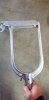
Burrapeg
Been here a while
- Location
- Puget Sound
Hi, you have the cross piece upside down. Turn it over so that the curved teardrop for the biner curves away from the hook, not towards it. You get more clearance that way for a slightly larger diameter limb. anyway, enjoy and stay safe,
- Stew
- Stew
New threads New posts
-
test
-
 Alternatives to standard asphalt around roots
- Started by southsoundtree
- Replies: 4
-
-

-

-
 For Sale: 2018 Vermeer BC1000XL Chipper | 918 Run Hours | Deutz Diesel
- Started by Blue Ribbon Tree
- Replies: 2
-

