
Navigation
Install the app
How to install the app on iOS
Follow along with the video below to see how to install our site as a web app on your home screen.
Note: This feature may not be available in some browsers.
More options
You are using an out of date browser. It may not display this or other websites correctly.
You should upgrade or use an alternative browser.
You should upgrade or use an alternative browser.
Kmiii max sewn eye
- Thread starter Z'sTrees
- Start date


moss
Been here much more than a while
- Location
- Carlisle, Massachusetts, U.S.
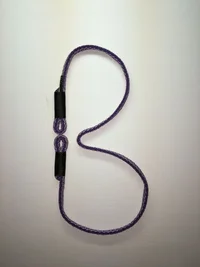
Mr. @Worthaug, do you happen to know how the slaice is made? Instead of having webbing in the eye, I've done a Bizzaro slaice by putting a core in the eye of tubular webbing.
View attachment 48453
Speaking of which, Beal has a rated rope eye that comes as an option with their 11.5mm Biloba arborist line, appears to have a "no core" eye with a piece of webbing inside the cover, very difficult to find further info beyond a few photos...

Here's another version with a chafe guard over the eye, I believe the construction under the chafe guard is the same as the above image:

Last edited:
moss
Been here much more than a while
- Location
- Carlisle, Massachusetts, U.S.
Mr. @Worthaug, do you happen to know how the slaice is made? Instead of having webbing in the eye, I've done a Bizzaro slaice by putting a core in the eye of tubular webbing.
View attachment 48453
Is the tubular webbing implemented in a way that allows it to contribute to the overall strength of the eye or is it core strength only?
-AJ
I think the webbing takes the place of the regular core in the eye. The stitches on the Beal are closer to the eye than on the Slaice. Might be a difference in how they are constructed. It's an interesting concept. I wonder if it could be applied to hitch cords to make slimmer eyes.
moss
Been here much more than a while
- Location
- Carlisle, Massachusetts, U.S.
I think the webbing takes the place of the regular core in the eye. The stitches on the Beal are closer to the eye than on the Slaice. Might be a difference in how they are constructed. It's an interesting concept. I wonder if it could be applied to hitch cords to make slimmer eyes.
Sorry, miscommunication, I was asking how your Bizzaro splice worked ;-) I think I have a pretty good idea how the Beal webbing eye is constructed. The Slaice is trickier, I think someone posted info on its anatomy a while back, I believe the core on the Slaice is tapered where it crosses the webbing strap, the Beal eye is interesting, don't think the core is tapered.
-AJ
Last edited:
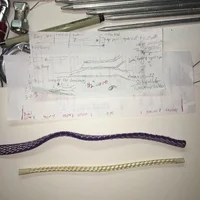
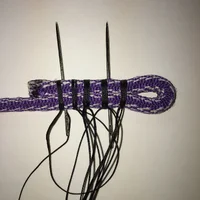
I wanted to make a single hitch cord out of the Bluewater runner instead of a loop. I haven't done bar tacks by hand very successfully and don't know how they should hold. But I can stitch cords so I went that route. It probably adds strength to the eye, but the weak spot is more then likely where the stitching starts.
It works great as a hitch cord, but needs a cinch samaratin to help descend because it is thin and hard to push down.'

Worthaug
Carpal tunnel level member
- Location
- North Cakilaki
Dyneema very well could be the worst choice for a hitch cord...View attachment 48619 View attachment 48620
I wanted to make a single hitch cord out of the Bluewater runner instead of a loop. I haven't done bar tacks by hand very successfully and don't know how they should hold. But I can stitch cords so I went that route. It probably adds strength to the eye, but the weak spot is more then likely where the stitching starts.
It works great as a hitch cord, but needs a cinch samaratin to help descend because it is thin and hard to push down.'
TimBr
Official Well Known Greeter
- Location
- Northern Virginia
moss
Been here much more than a while
- Location
- Carlisle, Massachusetts, U.S.
Yep, Dyneema has a relatively low melting point compared to most of the other fiber options you might consider for a hitch cord cover.
I, personally, don't see it as that much of a difference. It's approximately 100 degrees lower, but if enough friction is being generated to melt the dyneema, it wouldn't be long until there was enough to melt nylon or polyester. It's like you're in one of the back cars of a train and move to one of the front ones to get to your destination earlier.
moss
Been here much more than a while
- Location
- Carlisle, Massachusetts, U.S.
I, personally, don't see it as that much of a difference. It's approximately 100 degrees lower, but if enough friction is being generated to melt the dyneema, it wouldn't be long until there was enough to melt nylon or polyester. It's like you're in one of the back cars of a train and move to one of the front ones to get to your destination earlier.
Also depends on which variety of Dynema it is, SK78 for example is resistant to bending/abrasion fiber breakdown. Good news is you’re using it as the cover, you can monitor it easily.
There is core only in the eyes, and the the part that is sewn. The hitch is tied with just the tubular webbing. I've played around in the past using the loops as friction hitches, so this was more of a what if project. It will only be used for rec climbing, so no plans to mass produce.
moss
Been here much more than a while
- Location
- Carlisle, Massachusetts, U.S.
There is core only in the eyes, and the the part that is sewn. The hitch is tied with just the tubular webbing. I've played around in the past using the loops as friction hitches, so this was more of a what if project. It will only be used for rec climbing, so no plans to mass produce.
I’m not worried ;-)


