Paul, you've posted a great deal here, so I just want to clarify what I've gathered from reading it all.
Oceans sorry again for the brain splurge!
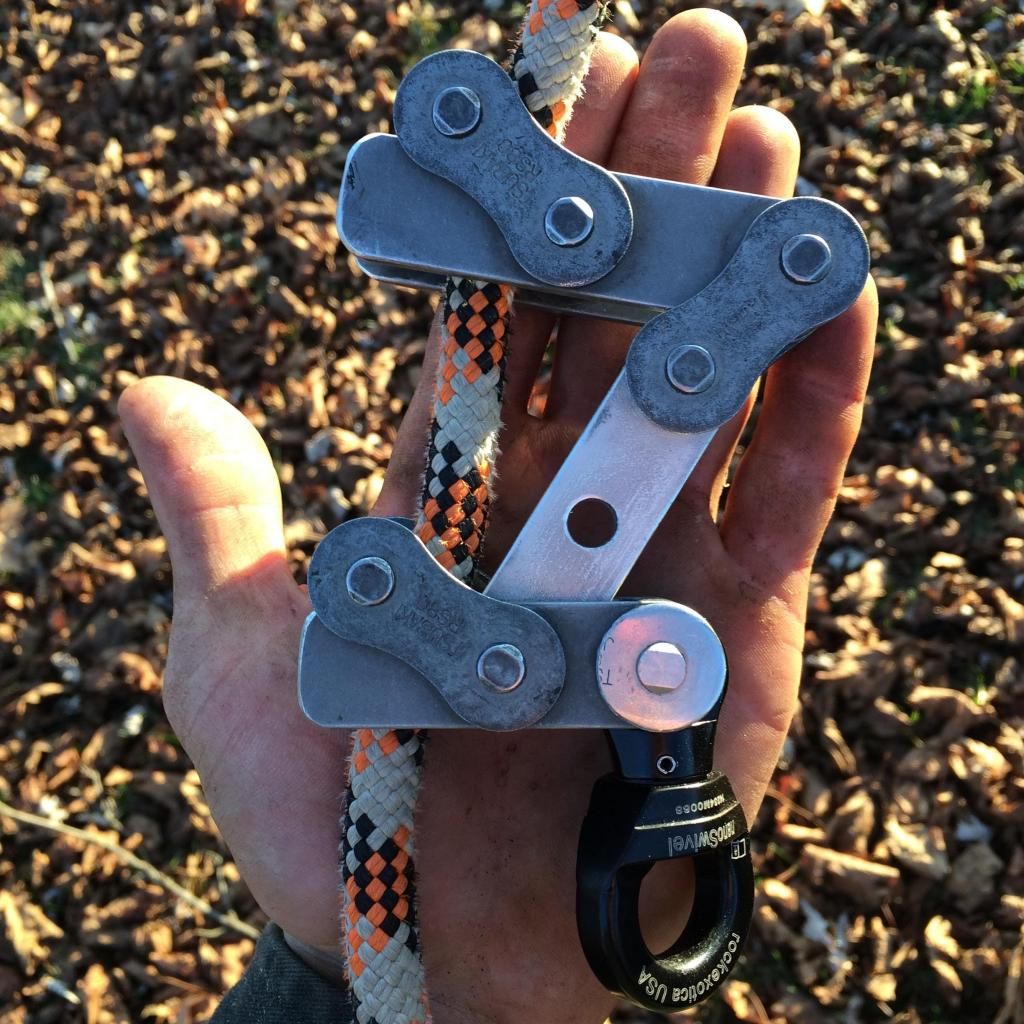
So, what you've done is flipped the lower arms, end for end, to increase 'A', installed the 19mm (3/4" bollard), and you've achieved the positive results described above.
Yes exactly.
If that's the case, then it's a non destructive way of adjusting the Bone for different lines. Good on you for conducting that experiment. Now I can truly see the need for multiple holes drilled into the arms (upper & lower) for ultra fine tuning along with the various bollard sizes.
The counter argument is that more holes = weakness.
The counter counter arguments are that more holes = lighter, and that the stress/strain (one each side of the hole) is mostly at the points where the pivots are active - so inactive holes are not problem.
Awesome! Maybe if all the information gets compiled and agreed upon, Gordon could be making these in a 1 size fits all (following adjustment) construction with a manual to describe configurations...or a chart that allows the user to find their point on the graph based on weight, climb line, etc...
Yea that could be quite fun. I don't climb enough, or have many ropes to do it though.
Paul, again, thanks for setting up the photo with pivot point diagrams.
No problem! I should have used L and U instead of A and C in hindsight.
So, has it been said that shortening 'C' will raise the angle of the Spine and put more friction into the lower Bollard? That appears to be one of the results, along with less MA in the upper arms.
I would clarify or correct that a little to say that shortening C:
1) Moves the friction towards the centreline reducing the upper arm friction and therefore increasing the load on the lower arm
2) Increases the MA of the upper arm
control because C is shorter with respect TC.
The second point is the reason Tyler has got good control even shortening the top arm as far as I can see.
I have tried previously moving the teardrop anchor outboard as you describe, but on my ropes it did not seem to make any discernible difference, and it caused the spine to tip a bit more when loaded. Be aware that you are putting more stress on the lower arm at the narrow point now that you have turned it backwards and it is 1/2" further from the fulcrum pivot hole at the spine.
Yes there is more torque+stress on A. And there will be more wear on the spine - but I have one that can be inverted...

I may try shortening C also and see if that does the trick for me with the lower arms back in their proper place.
Gordon do you think there is a significant risk associated with flipping the lower arms? If money and time were no object some proper destructive testing would be fun.
The more I play with and ponder this thing - the more amazed I am by it. To have such a flexible device using simply machined stock and lightly modified off the shelf parts is brilliant.
I even used it to belay a few days ago - worked great




 .
.