Cabling Trees... Your Opinion?

I follow you Wolter, but I am wondering about two situations. You say to put in a rope to catch a load if it does fail, right? That makes sense, but what if there is a problem already present like a break. Would you still put a line just to protect an injury or damage to a house?

Also, what about protecting the tree? To preserve a tree you might have to give it stability. What I mean is the idea of keeping a lead from breaking. To help it to not break in the first place. Wouldn't a large slacked line just capture it after it already broke?
 
You see Mark, I can't withstand reacting on the cabling issue (you asked me a few weeks back at an other topic, remember?).

[ QUOTE ]
I follow you Wolter, but I am wondering about two situations. You say to put in a rope to catch a load if it does fail, right? That makes sense, but what if there is a problem already present like a break.

[/ QUOTE ]
The only way to preserve a tree in the long run is by pruning. Bare with me on this one:
You've seen the old trees in, lets say England, right? Big oaks hundreds of years old but not that tall? Those trees have been pruned by nature for many of years.
If there is a break in the tree (a fork that broke open) and it is still in there (but open) you must remember that the outside year/growth rings have been stressed. This stressing results in a mechanism that makes the rings (in the years to come) more touch. When you take the tops down (even only one or two meters youve taken the overload of and the tree is stabilized.

[ QUOTE ]
Would you still put a line just to protect an injury or damage to a house?

[/ QUOTE ]
Yes

[ QUOTE ]
Also, what about protecting the tree? To preserve a tree you might have to give it stability.

[/ QUOTE ]
Pruning (even if it means in a brutal way, a tree can handle pruning back).
Pruning is done from the outside in (make the lever shorter) and not from the inside out (taking away building block factorys and leaving the lever as it is.

[ QUOTE ]
What I mean is the idea of keeping a lead from breaking. To help it to not break in the first place.

[/ QUOTE ]
Pruning.

[ QUOTE ]
Wouldn't a large slacked line just capture it after it already broke?

[/ QUOTE ]
Yes.

I am working in trees with one thing in mind for years now. A tree can manage.
I am in the fortunate situation that I am finally backed up about cabling by Mattheck.

Wolter
 
I don't disagree with your thinking Wolter. I agree that trees are very capable of coping. They are wonderous creatures. But they do fail. And sometimes they have a large enough section fail that will ultimately kill the tree. Or, it causes such a lack of confidence in safety that the owners feel obligated to remove the tree no matter what.

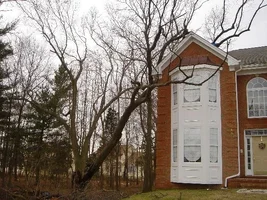
For instance, look at my attachment. It is an older Hickory that had a 1/3 section fail onto the house. Not only would this tree struggle to survive after this, the owner doesn't feel safe any more. To top it all off, the insurance company has now decided to force them to remove the tree (and two others) or lose their insurance policy.

I am thinking that the only way to preserve this tree and prevent that lead from failing would be to support it w/ a cable. Some would even suggest a rod near the crotch as well. I'm thinking that to preserve that lead through only pruning woulf disfigure the tree, stress it severely and cause severe decay as well. What do you think of this type of scenario?

FWIW, I do not like to use severe pruning except as a last resort. I would much rather install some cabling than top a tree or remove large limb wood.
 

Attachments

  • 23673-hickory1.webp
    23673-hickory1.webp
    131.5 KB · Views: 77
Dr. John Ball has some pretty interesting stats on the weight of various parts of the average tree. I don't know the exact numbers, but basically if you REALLY have to reduce weight loads you have to get the WOOD out of the tree. Foliage and small diameter branches only account for a very small percentage of weight, therefore you can only reduce but a percentage of this percentage.
 
yeah, another cabling war. well this one seems not like a war...

Anyway, I just haven't seen the terrible things that cabling is said to cause. I would like to see them though, if they exist; and I'm sure there has to be some, but it must not be frequent. I've been involved with tree work for 17 years. I'm sure that rot can happen around a rod or lag if the tree already had rot in it and you drilled through it. But I can honestly say I have not seen trees rot around lags or rods.

I have seen cables stop terrible things from happening though. Where an extreme condition(tornado, extreme rot, landslide, etc) happened and the cable held the failing tree from causing severe damage.

I'm just putting in my vote that steel hardware isn't evil as some might claim.

I think that synth. dynamic cable is new and therefor seems like it should be the side to be on, to be in the "cutting edge technology" group. I think that both steel cable and dynamic cable have applications that suit them best. It's just that if a situation is evident that the tree needs some major help where cabling is needed, then the steel is the one that usually meets the requirements. If a tree has a structural problem that might warrant dynamic help, then usually it can just be trimmed to correct that problem anyway instead of spending money on the dynamic installation. Usually if the problem is large enough for steel cable, I trim it and then install the hardware.

I have heard where a lead can snap off right above a steel cabling point (I haven't seen this yet myself, but I believe it), I can see how this could happen, especially if the cable was placed too low and if extreme winds occured (which would have split the tree off at the crotch, but instead choose the next flexing point).

Aaaaah, what am I doing, I didn't want to get into this again...... I just wanted to simply say, I believe steel hardware still has it's place and dynamic does also. I just wanted to show some support for steel hardware.

thanks,
 
[ QUOTE ]
Dr. John Ball has some pretty interesting stats on the weight of various parts of the average tree. I don't know the exact numbers, but basically if you REALLY have to reduce weight loads you have to get the WOOD out of the tree. Foliage and small diameter branches only account for a very small percentage of weight, therefore you can only reduce but a percentage of this percentage.

[/ QUOTE ]

WOOD is static weight. With pruning the outher crown you give the fail limb/tree much less dynamic (weigth)stress. Dynamic response is what a limb/tree needs to react in growth to the fail part. If it keeps in place by static cabling you reduces stress so reaction growth wont follow the static weight. Also present decay may go faster because growth hasnt a need to follow up the strength loss.
 
Hallo Mark,

What was the reason that the tree failed.

1. Was there decay in the crotch, I can't place the black spots there.
2. Shouldn't the leader have been pruned before, it looks like it was a big and heavy leader on a bad crotch.


[ QUOTE ]
FWIW, I do not like to use severe pruning except as a last resort. I would much rather install some cabling than top a tree or remove large limb wood.

[/ QUOTE ]

Help me out here Mark, you don't disagree, I know that but....

Think of that tree in 30 years while you've removed the leader that's leaning on to the house and you've reduced the rest of the tree.

Think of that tree in 30 years while you've put in cabling and due to the support, the top of that leader will start an explosiv groath as if the tree has no weight to bare. The crotch is going bad due to the decay but is not making any repair tissue because of the rest (no stress) in the tree caused by the cabling.

Think of that tree in 30 years while you've put in rods over the bad crotch
where you probably drill thru barrierzones.

I know what's gonna be my option, It's the one with a nice big new crown leaning from the house.


O and Mangoos, this is gonna hurt, but yes WOOD if that's wat it takes.

If keeping a branch in a tree takes cutting it one third back (IF POSSIBLE).
than do so. Maybe you have to reduce the branch over it to get the sun at the remains of the poor succer.
From this point on the tree starts regenerating and compensating where it needs to. That's something cabeling will never accomplisch.

<font color="red"> A tree is an dynamic living organism. Don't think you will help it by putting in static dead things. </font>
 
[ QUOTE ]
yeah, another cabling war. well this one seems not like a war...


[/ QUOTE ]

No war indeed, i call this a chips, beer and smoke topic. (lots to read, lots to argue and much to learn.

[ QUOTE ]

Anyway, I just haven't seen the terrible things that cabling is said to cause. I would like to see them though, if they exist; and I'm sure there has to be some, but it must not be frequent. I've been involved with tree work for 17 years. I'm sure that rot can happen around a rod or lag if the tree already had rot in it and you drilled through it. But I can honestly say I have not seen trees rot around lags or rods.


[/ QUOTE ]

Right, trees dont rot, cabling does! You all know static cabling gives broken tops above/at the cabling. What will prevent damage from broken limbs if they brake above an anchor? So if i am a customer and have a failed limb and damage after some storms i sue you a$$. With dynamic cabling failure can also happen but broken parts are to be secured in the tree/crown. Both static/dynamic cabling need to be checked reguarly. If dynamic fails slack or else its easy to adjust or replace. Static replacement needs some more drilling and so on.

[ QUOTE ]

I have seen cables stop terrible things from happening though. Where an extreme condition(tornado, extreme rot, landslide, etc) happened and the cable held the failing tree from causing severe damage.

[/ QUOTE ]

Fun, a cabling in a tree held the whole tree from making damage? Why shouldnt a dynamic cabling give the same benefits? Its known to be better for the tree BECAUSE the tree is in harmony with it and can fully responce on natural circumstances that are needed to keep the trees growth patern and bioligy in working order.

[ QUOTE ]

I'm just putting in my vote that steel hardware isn't evil as some might claim.

[/ QUOTE ]

Maybe it isnt evil, there are BETTER ways. For the tree, treeman, insurances and treeowners.

[ QUOTE ]

I think that synth. dynamic cable is new and therefor seems like it should be the side to be on, to be in the "cutting edge technology" group. I think that both steel cable and dynamic cable have applications that suit them best. It's just that if a situation is evident that the tree needs some major help where cabling is needed, then the steel is the one that usually meets the requirements. If a tree has a structural problem that might warrant dynamic help, then usually it can just be trimmed to correct that problem anyway instead of spending money on the dynamic installation. Usually if the problem is large enough for steel cable, I trim it and then install the hardware.

[/ QUOTE ]

Dynamic cabling isnt new. Its been around for about 20 years know i believe. Dynamic in combination with pruning works. Pruning to get the load off and dynamic cabling to prevent a damage to tree OR property if things do go wrong. The only solution to a structural problem is to replace the tree. If a structural problem (fungus) damage the trees crown stability so only static cabling can keep the crown in place, what will keep the crown from falling if the fungus digested to much needed wood? In this case even dynamic cant do much but i believe that when dynamic is used the tree is better and easier to monitor on comming failure. And because of dynamic cabling the crown can survive longer because the wood can react in growth and strength to the fungus attack.

[ QUOTE ]

I have heard where a lead can snap off right above a steel cabling point (I haven't seen this yet myself, but I believe it), I can see how this could happen, especially if the cable was placed too low and if extreme winds occured (which would have split the tree off at the crotch, but instead choose the next flexing point).

Aaaaah, what am I doing, I didn't want to get into this again...... I just wanted to simply say, I believe steel hardware still has it's place and dynamic does also. I just wanted to show some support for steel hardware.

thanks,

[/ QUOTE ]

I just wanna say first go dynamic and if the tree needs or is worth to preserve MAYBE static and bolds are the way.
 
/forum/images/graemlins/pbj.gif Yes Ronald,

It looks like a tandem write to get more typing done :-).


Mark, one more thing.

[ QUOTE ]
To top it all off, the insurance company has now decided to force them to remove the tree (and two others) or lose their insurance policy.

[/ QUOTE ]

Where do those pencil lickers get their arborists expertise?


Thanks all


We are all in title to make our own mistakes, let me make mine. Time will tell. Lets all drink a beer in, let's say 30 years.
 
[ QUOTE ]
/forum/images/graemlins/pbj.gif Yes Ronald,

It looks like a tandem write to get more typing done :-).


Mark, one more thing.

[ QUOTE ]
To top it all off, the insurance company has now decided to force them to remove the tree (and two others) or lose their insurance policy.

[/ QUOTE ]

Where do those pencil lickers get their arborists expertise?


[/ QUOTE ]

Wolter,

"Fun" indeed, It seems we are on the same track.

About those %$@*&amp;#@ insurances, i have had clients who were to remove trees that has damaged buildings/property OR an incredible increase of payment. Not even a fundamented report to that particular tree and its safety could do otherwise. (i did check up with our own insurances about liability and there was no problem....)
 
Wolter,

Thanks for adding your thoughts here (and Ronald and Dave...). This is the kind of discussion that makes progress possible. I appreciate it.

[ QUOTE ]
Help me out here Mark, you don't disagree, I know that but....

[/ QUOTE ]

I don't disagree 100%. I only disagree with your statements in certain situations. Tree work is too diverse to put a blanket statement on anything. One tree will be preserved with only pruning, another with pruning and a dynamic cable, and another will only fail with both of those practices. It all depends on the scenario for me. I just hate thinking of people going back to topping trees to help make them safer. /forum/images/graemlins/eyeye.gif I have done too many reconstructive prunings in my time.


[ QUOTE ]
Think of that tree in 30 years while you've removed the leader that's leaning on to the house and you've reduced the rest of the tree.


[/ QUOTE ]

That doesn't paint a good picture for me. If it loses 1/3 of the canopy from that lead failing and then I reduce the rest of the remaining canopy by 1/3, that is a serious diet for an older tree.

[ QUOTE ]
Think of that tree in 30 years while you've put in rods over the bad crotch
where you probably drill thru barrierzones.


[/ QUOTE ]

True. But how many barriers would those 1/3 reduction cuts break through. Not to mention the torn injury from the leader that broke already. Two small holes to help keep that lead in place and producing energy might seem better to me (for this one case).

[ QUOTE ]
1. Was there decay in the crotch, I can't place the black spots there.
2. Shouldn't the leader have been pruned before, it looks like it was a big and heavy leader on a bad crotch.


[/ QUOTE ]

Yes there was serious decay present. And pruning might have helped. However, we weren't given the chance with this case. That leader was a vertical stem. Not overly weighted or extending. But pruning it would have helped for a while.

Cabling a suspect tree would require extra effort down the road. But, so would reducing the crown. So, any measures we take to try to help a tree that is in trouble will not be finished until the tree is gone or we are- true?
 
You guys always talk about the tree not moving when it has cables:

This is not true. Do this; in the next really big wind storm, go to a large tree that has several cables and watch it. You will be suprized how much it moves and therefor how much reaction wood it must still put on.

At my parents house, there is a huge silver maple next to the house. So, I happened to be around a cabled tree in one of the tropical storms last year. We put 2 cables (maybe 3-5 years ago) in it to aid the two bad V shaped crotches. In the hurricane/tropical storms last year, I stood out in the yard and watched it. When the big gusts would blow, the whole crown would bend and sway trememdously. Think about it, when a gust blows, it blows in one direction, it bends that lead the opposite way and it is also blowing the other leads as well, so it doesn't matter that the cable is in it, the cable goes WITH all the leads. Now, what doesn't happen is the "wish-bone" breaking effect, as when the leads return and one goes too far. I always had the thought that the leads would be rigid with cables installed too until I watched this. I ask you, please watch one next time, there is more movement then you would ever think.

I've forgoten how to post "quotes" so I'll just do it like this:

"cabling rots" hmmm, it takes a long time for the galvanized stuff to rust away, and the hardware imbedded in the tree (void of oxygen) almost never seems to rust away.

"Fun, a cabling in a tree held the whole tree from making damage?" If I understand your statement here: Yes, if the cables were used as guide wires and anchored in the ground. Or, last year a willow tree was ripped apart, by a local tornado, I put in cables two weeks before it happened, the two large leads toward the house were yanked back away from the house by the cables. The tree's 4 way junction was split and it was also ripped out of the ground. I never thought they would have made it through that abuse, but they all did. (the house was spared, the pickup in the driveway wasn't). ....this was just an example of how well they can hold, the tornado could have flipped the tree toward the house and they would have pulled the other leads into the house too. I had cabled the tree cause it had open splits at the 4 way junction. I cabled the tree so that even if you took a saw and cut off a lead, it would still basically stay upright and not fall. The owners absolutely loved the tree, and the tree would have to be removed if not cabled and they wanted to keep it around as long as possible.

Well, fun talkin to ya. I do think the dynamic stuff is kinda ugly too. I saw a champion elm in Maryland, HUGE tree. Anyway, it had lots and lots of this black dynamic ropes in it and they stood out a lot. They also had a huge amount of slack in them. They tree seemed draped in long black ropes. It was winter, so I'm sure it looks better in the summer.

Anyway, fun talking cables with ya.

 
The first Cobra cabling system in Minnesota went into a silver maple in my backyard. A three-leg system. During wind storms I would walk my alley and look at now the other trees were moving compared to mine. It took a while to get a good understanding of the difference in the movements. Since all of the trees have different structures it isn't fair to make a direct comparison.

I do have some video of my trees whipping around in the wind and the trees across the alley. Their structure is pretty similar. Here is the way to think of the difference in movement. Think of what it looks like to see an underwater picture of a kelp field swaying in the waves. Then think of a woods full of pine trees in a wind storm. The water dampens the whipping and reduces the amplitude of the movement. That is the best description that I can come up with to compare the two.

Over the weekend I was at Arlington National Cemetary for a visit. When I was there for the NAA/TCIA Day of Service a few years ago I pruned and cabled a tree. I installed a Cobra system at the time. The tree still looks good. When I get my pics edited I'll make a post.

Sure, cables might look a little funky. But you have to agree that any cable is prettier than no tree.
 
[ QUOTE ]

I don't disagree 100%. I only disagree with your statements in certain situations. Tree work is too diverse to put a blanket statement on anything. One tree will be preserved with only pruning, another with pruning and a dynamic cable, and another will only fail with both of those practices. It all depends on the scenario for me. I just hate thinking of people going back to topping trees to help make them safer. /forum/images/graemlins/eyeye.gif I have done too many reconstructive prunings in my time.

[/ QUOTE ]
O Mark, I am with you 100%. That's wat is so difficult on a forum compared to a discussion under a tree. I am not a treetopper although my remarks sound like it.


[ QUOTE ]
True. But how many barriers would those 1/3 reduction cuts break through.

[/ QUOTE ]
NON, if you make the first fresh cuts you are the one that triggers the first barrierzone building.


[ QUOTE ]


Yes there was serious decay present.


[/ QUOTE ]

Thats wat I was afraid of. Don't you think the top to the house is too much crushed on the stembase? Along with de decay already in there to me looking at the pic it's a lost case.
I wasn't opting for a 1/3 takedown of the remains of the tree :-)

[ QUOTE ]

Cabling a suspect tree would require extra effort down the road. But, so would reducing the crown. So, any measures we take to try to help a tree that is in trouble will not be finished until the tree is gone or we are- true?

[/ QUOTE ]

True, but sometimes I see an overkill of pruning the watershoots that reclaim the space for the tree.

Wolter
 
[ QUOTE ]
You guys always talk about the tree not moving when it has cables:

This is not true. Do this; in the next really big wind storm, go to a large tree that has several cables and watch it. You will be suprized how much it moves and therefor how much reaction wood it must still put on.

[/ QUOTE ]

Hi X,

That kind of movement isnt what we mean. Maybe i had to get in further and will do so. Of course the whole tree and crown will move in a storm with static cabling. In a storm an advantage for dynamic is that the limbs are restraint AND dampened in movement. With static they are only restraint until the windguts get to hard and brake them on the anchor. You must see the "movement" of the limb in normal conditions that gives the benefit. Because of the slack the full weight and normal wind movement will make the tree put reaction growth were its needed. Growth in thicknes and strength at the crotch and not necessary above the anchor point in the limb. With static you can have the problem that the whole limb is going to hang itself in that cabling. So growth at the crotch is secondary because the (partly)weigth is hold by cabling. Also because a part of the weight is hold by cabling you can get harder growth above the anchor.

Then we come to stormy conditions were things get to the limit.

A static cabling is supporting a limb that has an less natural strength due to above reasons. Breaking, damage to crotch is more obvious.

A dynamic cabling had given the tree change to get the limb in natural balance and therefore a better change to survive extreme conditions.

After a storm when you have to check up the cabling, overloaded static cabling is hard to tell. You have to climb in and see/feel if the static is under stress.
With dynamic you can see from ground if stress is apearing due to reduced or none slack remaining. (if other visual problems like cracks are not visable)
[ QUOTE ]
I've forgoten how to post "quotes" so I'll just do it like this:

[/ QUOTE ]

Just klick the quote button above the message or use these tags,

[ quote ] text [ /quote ] (without space between [] )

[ QUOTE ]


"cabling rots" hmmm, it takes a long time for the galvanized stuff to rust away, and the hardware imbedded in the tree (void of oxygen) almost never seems to rust away.

[/ QUOTE ]

Yep a long time, i did find cabling thats rusted away (20 years) and especially the bolds and friction parts at cable/bold. As i mentioned before, how does the bolds react on tree sap? The bolds ive seen were rusted of at the outher side where the cambium is.

[ QUOTE ]

I cabled the tree so that even if you took a saw and cut off a lead, it would still basically stay upright and not fall. The owners absolutely loved the tree, and the tree would have to be removed if not cabled and they wanted to keep it around as long as possible.

[/ QUOTE ]

In this case a static/steel cabling was maybe in place with open cracks at the 4 leads. But with a tornado, what can stand that kind of torture? In such cases with cracked crotches i rather remove then placing cabling. Only if in the tree's surroundings isnt any obstacle or damage to happen i might consider conservation. I hate the idea that i cabled a tree so its assumed safe and in stormy weather it fails. Also with cracks, decay may fall in and setting the crown sharp. Let me end with that all is dependable on the specifick situation.

[ QUOTE ]


Well, fun talkin to ya. I do think the dynamic stuff is kinda ugly too. I saw a champion elm in Maryland, HUGE tree. Anyway, it had lots and lots of this black dynamic ropes in it and they stood out a lot. They also had a huge amount of slack in them. They tree seemed draped in long black ropes. It was winter, so I'm sure it looks better in the summer.

[/ QUOTE ]

Mwa, i think because you know what it is you see the difference. I spoke some passing people at a site where i cabled and they didnt see anything until i mentioned it. And still they had a hard time to see it. maybe the tree seen by you was overdone with cabling and not popper installed?

[ QUOTE ]
Anyway, fun talking cables with ya.
[/ QUOTE ]

Likewise,

Ronald
 
[ QUOTE ]
True, but sometimes I see an overkill of pruning the watershoots that reclaim the space for the tree.

[/ QUOTE ]

Absolutely. This is why I hesitate to discuss harsh pruning methods. Of all of the parts of the world I have been, I've rarely seen any under-pruning. Just over pruned, struggling trees are what I usually see.
 
Hi all. No static cables in those maples - silver maples, right? Bad, bad. Long term, these homeowners may be better off planting a very nice, well chosen, structurally sound brand new baby tree and planning to remove the maple near the deck in the next 10 years. It's not that big yet and 10 years go by more quickly than you think. If they don't feel safe, take out that lead, knowing that it's a partial removal, or a removal in stages. Putting cables into such a young tree could be a financial mistake, especially if pruning can't really "fix" the poor structure. The trees closer to the shed have terrible structure, volunteers, all grown together in multiple stems....could be helped by selective pruning...I'd be in the camp of replanting more intelligently and don't try to patch these poor structural issues with cables. If these trees were much larger, maybe I'd sing a tune of dynamic cabling the heck out of 'em...
Treat ASAP on the scab or you'll miss the infection period.
Cheers!
R /forum/images/graemlins/smile.gif
 

New threads New posts

Back
Top Bottom