
Am I the only one who gets this scared?

I don't even know how ready I am for that, and I've been the lead climber (that's pronounced "didn't have anyone more experienced present to answer my questions".) for the last 5 years.

I should find out if I'm ready for that.

At least if you s*** yourself from that height you have at least ten seconds to tell the guys over the Sena before it hits the ground!

We don't even have trees that tall here.


Sent from my iPhone using Tapatalk
 
Yea, I am blessed to live most of my life among some of the the most beautiful timber left on mother earth. Most of the trees I wreck are in the 140ft-200ft range. Its what I grew up doing, so I'm comfortable with it. Its not a whole lot different than what most of you are doing, just has a different skill set. Just started posting pics on the last page of the work photo thread. Check it out.

Will check it out for sure. I'm sure there's lots to learn from the climbers who do hella tall trees in terms of fear control.

We had a climber in a town a few hours away cut himself out of an 80ft tree last year. The garage he landed on saved his life. A garage from 150ft would do nothing I'm sure


Sent from my iPhone using Tapatalk
 
It can be a bit of a pain in the ass, but i have done a variation of lead climbing that has worked
Well and wasn't too time consuming.
Say the ideal crotch is at 100' but looks slightly iffy. Shoot your line lower say one that looks bomber at 80'. Hit that one work what you can in the tree on the way up. Get to your tie in and climb just so your level with it, pull up your tail and take a wrap around the stem then with a throw ball on your tail toss it up to the ideal tie in. Then climb up a ways and if needed slap in a webbing sling and clip a carabiner to it.
By doing this you can continue to use your base tie, get a feel for the tree, and if the highest point breaks out you have the anchor side of your line secured
Hope this makes sense
 
It can be a bit of a pain in the ass, but i have done a variation of lead climbing that has worked
Well and wasn't too time consuming.
Say the ideal crotch is at 100' but looks slightly iffy. Shoot your line lower say one that looks bomber at 80'. Hit that one work what you can in the tree on the way up. Get to your tie in and climb just so your level with it, pull up your tail and take a wrap around the stem then with a throw ball on your tail toss it up to the ideal tie in. Then climb up a ways and if needed slap in a webbing sling and clip a carabiner to it.
By doing this you can continue to use your base tie, get a feel for the tree, and if the highest point breaks out you have the anchor side of your line secured
Hope this makes sense

It does, yeah. Thanks.

Sounds like what I do now sometimes. I frequently find myself advancing my climbing line up a tree. But adding a sling and biner below me on a bomber crotch that could catch in the event of a main TIP failure up top sounds cool. Should only need to place one.


Sent from my iPhone using Tapatalk
 
or if your base tie might get the way you can just have some one on the ground undo it, yard up the tail and do running bow to that boomer crotch then tip toe up higher
 
  • Like
Reactions: Mel
I agree. I have experience with fall protection as well as fall restraint but from rated anchors and tree work is basically active fall restraint from unrated anchors. And you're right cause our equipment is meant for no shock loads. Fall pro has energy absorbers and fancy crap like that.

Side question.. do some tree harnesses have the deployment tags? Like when the equipment has been shock loaded. Now that I think about it, I haven't seen any tree equipment with that feature.

4a9dec2c039e501b7b3551ab7a2fdcd7.jpg


6cf72b787768529ca2b8854825f39ea5.jpg


Sent from my iPhone using Tapatalk
To my knowledge, nothing like that. Our stuff isn't meant to ever be shock loaded. If you fall vertically into your harness, even a few feet you'll injure yourself. You'll damage your body before you'll damage the equipment. If I got away with a short fall without too much pain, I'd check my harness and rope, but I wouldn't expect it to be damaged by it.
Just... never put yourself in a position where you could fall. Mainly that's about never climbing above your tie in and keeping the slack pulled out of your rope.
Taking a swing on the other hand can be perfectly safe, and often a complete blast!
The higher the tie in, the better. I accustomed myself to 'falling' off a limb and taking a swing on purpose. Do this on a low limb while tied in high. The movement will be slower than you think, like a long tire swing you might have had as a kid.

Sent from my SAMSUNG-SM-G930A using Tapatalk
 
It does, yeah. Thanks.

Sounds like what I do now sometimes. I frequently find myself advancing my climbing line up a tree. But adding a sling and biner below me on a bomber crotch that could catch in the event of a main TIP failure up top sounds cool. Should only need to place one.


Sent from my iPhone using Tapatalk

X2, about once a year. Never needed it, post hoc, but I do it because I always want to stay within the safe zone, and make it home. One redirect in good wood, free climb past it, lanyard in if needed with a breakaway lanyard (you can use a cheap keychain caribiner attached to your lanyard caribiner attached to your harness D-ring - just make sure it'll break before your body breaks if you ride down with the limb). The distance from the redirect needs to be well less than half the tree height, obviously... It's best to modify this, ideally, with a second dynamic line running through a belay device, tended by ground crew, which I have also done. This does not address everyday climbing however, lol. I think it's good to swing around in some wood for practice like the other guys said, and also place an SRT line over multiple branches.
 
To my knowledge, nothing like that. Our stuff isn't meant to ever be shock loaded. If you fall vertically into your harness, even a few feet you'll injure yourself. You'll damage your body before you'll damage the equipment. If I got away with a short fall without too much pain, I'd check my harness and rope, but I wouldn't expect it to be damaged by it.
Just... never put yourself in a position where you could fall. Mainly that's about never climbing above your tie in and keeping the slack pulled out of your rope.
Taking a swing on the other hand can be perfectly safe, and often a complete blast!
The higher the tie in, the better. I accustomed myself to 'falling' off a limb and taking a swing on purpose. Do this on a low limb while tied in high. The movement will be slower than you think, like a long tire swing you might have had as a kid.

Sent from my SAMSUNG-SM-G930A using Tapatalk

I agree, I should take more swings.

I had rigging gear in mind when I was asking about the load indicators too. I shoulda specified.


Sent from my iPhone using Tapatalk
 
Lmao!!! I can't believe it never occurred to me that I could straight up lead climb a tree. That's an extremely good point.

Can anyone find anything seriously wrong with this system? You could just base tie your srt line and just let out rope as you ascend and clip. It's kind of like, fishpoling your climbing line. Could still set a high point and have both. I'm very interested in trying this, if anything just to see how it could work in a tree.

I guess it would be gear-intensive, and then you'd have slings everywhere but might not be a bad trick to have up your sleeve for sketchier trees.


Sent from my iPhone using Tapatalk
This is a legitimate technique for advancing a base tied system. I have two "chain reactor" slings with carabiners and I alternate between them advancing the line 3 or 4 feet at a time. It's a royal pita and I don't love it, but it's bomb proof in the security department. You can leave one in if you want, but obviously you'll have to retrieve it before you descend.
I think it's better to choke the main stem with a canopy anchor or run through an adjustable false crotch on the main stem rather than over certain crotches if you're working in weaker or smaller diameter wood. Bottom line, is you shouldn't be wondering about your tie in after you start working.


Sent from my SAMSUNG-SM-G930A using Tapatalk
 
I agree, I should take more swings.

I had rigging gear in mind when I was asking about the load indicators too. I shoulda specified.


Sent from my iPhone using Tapatalk
No indicators in rigging gear either, and that stuff can see some ridiculous forces if you're negative rigging. Stay well within the working load limit of the weakest part of the system. If you're smart, that will ALWAYS be the rope. How can you tell if the tree itself it strong enough? Experience.

Sent from my SAMSUNG-SM-G930A using Tapatalk
 
  • Like
Reactions: Mel
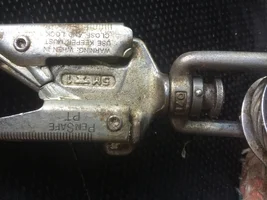
My Yale 5/8 steel core flip line has a snap that looks just like that. I inspected the crap out of it because it looked odd, never knew it was a over load.

It's more common on industrial rescue or rigging gear. I wouldn't be surprised if a snap had it. Is it a swivel snap?

You're supposed to retire it after you see that but if it's just for work positioning I wouldn't worry. I'd have to see a pic of it to make sure that's in fact what it is


Sent from my iPhone using Tapatalk
 
I guess I wasn't clear. It looked weird and I just didn't know it was a overload, never did I think I overloaded it.. I think it's odd that it isn't advertised as such, and or isn't common knowledge in the arborist world. Over loading that on a flop line would really that suck.
 
  • Like
Reactions: Mel
I'm really late to this thread but I'll throw my $0.02 in. I've never stopped processing information about the tree I'm going to climb, the conditions that are at play at the time, throughout the climb and leading up to it. If something spooks me, e.g., sickly swaying in a breeze, I stop and review what I know and check to see if anything has changed. In other words, is my fear/concern valid? Can I find a TIP that is better? Do I need to back it up? The more I do this in the tree the more I do it before I get into the tree. It all informs your future decision making capacity.

I won't play the macho game either. I don't need to prove anything to anyone. We are hear to enjoy that beer at the end of the day with all our limbs attached and functioning.
 
I'm really late to this thread but I'll throw my $0.02 in. I've never stopped processing information about the tree I'm going to climb, the conditions that are at play at the time, throughout the climb and leading up to it. If something spooks me, e.g., sickly swaying in a breeze, I stop and review what I know and check to see if anything has changed. In other words, is my fear/concern valid? Can I find a TIP that is better? Do I need to back it up? The more I do this in the tree the more I do it before I get into the tree. It all informs your future decision making capacity.

I won't play the macho game either. I don't need to prove anything to anyone. We are hear to enjoy that beer at the end of the day with all our limbs attached and functioning.
I find that once I've accepted the climb and the tie in, I don't even have room in my brain to think about those things once I've started ascending. That includes dead trees. I might feel butterflies and uncertainty before I climb, but those things are banished after I've decided I'm OK with it. This isn't bravado or some kind of statement about fearlessness. Far from it.
It honestly takes all my concentration to stay organized, and plan my moves. Perhaps it's my awkwardness, and part of it is dealing with the loss of one eye, but my dominant negative emotion is likely to be frustration rather than fear. Must come with old age!

Sent from my SAMSUNG-SM-G930A using Tapatalk
 
I find that once I've accepted the climb and the tie in, I don't even have room in my brain to think about those things once I've started ascending. That includes dead trees. I might feel butterflies and uncertainty before I climb, but those things are banished after I've decided I'm OK with it. This isn't bravado or some kind of statement about fearlessness. Far from it.
It honestly takes all my concentration to stay organized, and plan my moves. Perhaps it's my awkwardness, and part of it is dealing with the loss of one eye, but my dominant negative emotion is likely to be frustration rather than fear. Must come with old age!

Sent from my SAMSUNG-SM-G930A using Tapatalk

I read something similar from you sometime in the last year or two and it has really had an impact on my production. Thank you. I spend less time second guessing myself and more time moving to the work, doing the work, and repeating.
 
I spent a solid 20 minutes throwing from my spikes today into a tree next to my skinny tall dead pine. I thought it would be fine to just climb it then realized how much it was moving and how high I would have to go up to pop the top out and how little I wanted to be tied in up there. I was cussing up a storm! But I love to Spread the Load! The more support the better, especially for those pucker situations.:llorando:
 

New threads New posts

Back
Top Bottom