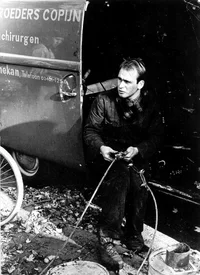
Well, well, well! It just took me till three minutes ago, Wolter, that you put an attachment of ME, (taken in appr. 1969), doing indeed GOOD OLD FASHIONED cable work. And you know what? Travel to the Dunedin Botanic Garden in downunder good old New Zealand and look for the large horse chestnut. 17 Cables, same system, re-inspected by me two years ago and still looking AS NEW. Internal decay? No. Internal discolouration? yes.
What about this tree if no cabling system was installed: it would no longer be there.
What's the secret: precise work: no 'slop' in the holes -between bolt and hole diameter: only 1 millimeter oversize.
Excellent seats on the sapwood at a 90degree angle. Proper assembly so that no air can enter into the hole, thereby ensuring that no decays process sets in.
Yes, I know, I am considered being from the 'old school'. I am also the first one to admit that in these days there were people who sort of 'over cabled' (Although I applied these methods only where really warranted).
Cabling and bracing technigues, if applied well, work very well and do have a minimum negative impact upon the tree. I must look for some other spectacular photos of cable and bracing work I did in the North Island in NZ.
So what about cabling here in the US? Well........ I have never seen so many broken cables in my life and also cables placed in totally unnecessary spaces. Any cabling system that restricts the upper canopy from dynamic movement is a prime aid to failure (either of the tree or the cable).
Maybe a cabling workshop is in place???
I am so impressed you got hold of that foto (Flying Kiwi Guy something to do with that?).
And last thing: Great to be on the Kiwi Board, and an Honor to be associated with so many dedicated people in the tree industry.
Yours,
Frank