












Navigation
Install the app
How to install the app on iOS
Follow along with the video below to see how to install our site as a web app on your home screen.
Note: This feature may not be available in some browsers.
More options
You are using an out of date browser. It may not display this or other websites correctly.
You should upgrade or use an alternative browser.
You should upgrade or use an alternative browser.
What’s your favourite lanyard set up
- Thread starter BrettoDalton
- Start date


Christrees
Been here a while
- Location
- New York
I use my positioner as a 2nd moving rope system. On my lower D's it works. Wellsorta, but, I like to use my lanyard as a second moving rope system allot, running on my bridge, and if I ever need it, I have a cord, 2 biners, and a pulley I can use for something worst case scenario

- Location
- Corvallis, Oregon
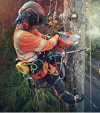

Sidewinder?anyone know what this lanyard tender/holder is?
Christrees
Been here a while
- Location
- New York
Looks like a nice setup... curious how well it would work?anyone know what this lanyard tender/holder is?
Winchman
Carpal tunnel level member
- Location
- Southwest Georgia
Yep, Rope Tec Sidewinder... http://rope-tek.com/sidewinder/

Anybody see that lanyard lupillo Santiago uses?
I just saw it in a video August posted on youtube last week.
It's like a 2 in 1 but I think he had 2 hitches and 2hc pulleys on one big carabineer.
Looked liked a DEDA with two friction hitches but a central connection at the hitch to saddle point.
His comment about the lanyard was for switching over a limb more than using the lanyard as a secondary climbing system e.g. a long lanyard.
Sent from my iPhone using Tapatalk

Lemonjello
Reads a lot...posts a little
- Location
- Oahu,HI
Probably because some genius would try to use a zillion as a climb system. I’m not saying it’s approved but a zillion with a short stiify tether/rope wrench works real good as single line long second positioning lanyard. HeheI'd like to try something like this Sean, but i cannot find that 6mm vectran anywhere. I thought it was disco'd.
I've spent alot of time mucking about trying to find my personal "Holy Grail".. I'm really partial to my CE but it has a ton of cover slack sewn into it which is extremely disappointing considering what they charge for it... It's like it was never milked before hand. It's so bad it almost makes the tail useless for use elsewhere
Regardless, i like the CE for the sole reason it terminates clean/compact & is able to self advance when used as a mini climb system connected to the pinto becket. If i could have my Positioner or my Zillon do the same, those two would be "my go to". Especially the Zillon that thing really is just awesome. . However, why none of these manufactures produce anything with a becket or second attachment point is beyond me. I really feel id be a good candidate for the little BOLA from Surveyor as it is designed with all of this in mind. Self advancing, second attachment point, super compact, etc.
Lemonjello
Reads a lot...posts a little
- Location
- Oahu,HI
ART posititioner with 12’ of tritec and EAShook snap as main.
Zillion with 30’ of tritec short stiffy tether and rope wrench and DMM thimble and DMM Boa carabiner (single leg work positioning)
Usually use my zigzag and climb line as second lanyard for passing limbs/advancing. An 8oz throw bag to help advance when needed. Been using the Captain (with beeline hitch cord and pinto) as a second lanyard since I got the new one with the rated hole with carabiner
Zillion with 30’ of tritec short stiffy tether and rope wrench and DMM thimble and DMM Boa carabiner (single leg work positioning)
Usually use my zigzag and climb line as second lanyard for passing limbs/advancing. An 8oz throw bag to help advance when needed. Been using the Captain (with beeline hitch cord and pinto) as a second lanyard since I got the new one with the rated hole with carabiner

Helmstein
Participating member
- Location
- Berkshire county
For pruning I love Gordon's BOLA on 25 ft of drenline with the excess stored in a tiny bag clipped to my harness. BOLA works well when I need to deploy my captins hook. Unfortunately my captins hook is In a tree that I cabled three months ago and haven't had the time to retrieve it.50’ KM3 with BOLA favorite , 15’ wire core or 12’ 16 or 24 strand with rope grab or prussic based on need.
Sent from my iPhone using Tapatalk
For removals I use the A.R.T. positioner with wire core lanyard.
Any questions please ask!

Serf Life
Been here much more than a while
- Location
- Maine Island
Where’s the tree with the Hook in it? Asking for a friend…For pruning I love Gordon's BOLA on 25 ft of drenline with the excess stored in a tiny bag clipped to my harness. BOLA works well when I need to deploy my captins hook. Unfortunately my captins hook is In a tree that I cabled three months ago and haven't had the time to retrieve it.
For removals I use the A.R.T. positioner with wire core lanyard.
Any questions please ask!
ghostice
Been here a while
Heads up maybe - even the newer Captains, although now rated at 25 kN or something, are still not PPE/ life support in the fine print . . . just sayin.ART posititioner with 12’ of tritec and EAShook snap as main.
Zillion with 30’ of tritec short stiffy tether and rope wrench and DMM thimble and DMM Boa carabiner (single leg work positioning)
Usually use my zigzag and climb line as second lanyard for passing limbs/advancing. An 8oz throw bag to help advance when needed. Been using the Captain (with beeline hitch cord and pinto) as a second lanyard since I got the new one with the rated hole with carabiner
DMM Wales Captain product page
Same on Wesspur's website currently
Take care out there.

moss
Been here much more than a while
- Location
- Carlisle, Massachusetts, U.S.
Yeah, the whole system, Hook and shackle is 23kn, the change is that the "racking eye" is now 15mm so it's easier to hang on your harness with whatever carabiner is available instead of the tiny XSRE which fit the small opening on the OG Hook. I put a small throwline loop on my OG Hook to do the same but the 15mm racking opening is a good improvement for sure.Heads up maybe - even the newer Captains, although now rated at 25 kN or something, are still not PPE/ life support in the fine print . . . just sayin.
DMM Wales Captain product page
Same on Wesspur's website currently
Take care out there.
By definition the Hook can never be considered PPE/Life support because it is an "open", not a locked anchoring point. The way I interpret that is never use a Hook as a primary line to work off of. Experienced climbers know they can depend on a 23kn Hook "lanyard" to hold them securely for 10 seconds while they make a change in their primary system if they want to do so on the rare occasion. And certainly 100% kosher for positioning.
In real practical terms, the most dangerous use of a Hook is its intended use, traversing or horizontal canopy movement. I've had the Hook come off the anchor branch in a tree-to-tree traverse only once in many uses but it was a scary moment when I was set free. Instead of enduring a heavy hit on the trunk of the "starting point" tree my main rope was caught by a fork on a long horizontal limb above me. Ended up with a shortened and harmless swing. There's a lot to consider using a Hook in its intended use. The other "lanyard" uses have many less variables and are likely safer.
-AJ
moss
Been here much more than a while
- Location
- Carlisle, Massachusetts, U.S.
ART posititioner with 12’ of tritec and EAShook snap as main.
Zillion with 30’ of tritec short stiffy tether and rope wrench and DMM thimble and DMM Boa carabiner (single leg work positioning)
Usually use my zigzag and climb line as second lanyard for passing limbs/advancing. An 8oz throw bag to help advance when needed. Been using the Captain (with beeline hitch cord and pinto) as a second lanyard since I got the new one with the rated hole with carabiner
That's interesting, so you're just flipping the Hook line around the trunk or limb then attaching the Hook with a biner through the 15mm racking opening to create a DdRT lanyard? That's cool.
-AJ

Burrapeg
Been here a while
- Location
- Puget Sound
An issue with using the hook even momentarily to move up in cedars and some other trees is if the limbs slope down and the hook when loaded suddenly slides sideways out away from the main trunk of the tree. When directly below the limb, it is not always obvious at how great an angle the limb slopes. It happened to me on a traverse too. I think this problem with the hook being able to slide is really one of its worst faults.
moss
Been here much more than a while
- Location
- Carlisle, Massachusetts, U.S.
That’s classic for Coast Redwood, Giant Sequoia, White Fir, Eastern Hemlock, Norway Spruce, Bald Cypress and many more. Their small hook-sized limbs are typically downward sloping and slippery even when dry. Not a good scenario for Hook use.An issue with using the hook even momentarily to move up in cedars and some other trees is if the limbs slope down and the hook when loaded suddenly slides sideways out away from the main trunk of the tree. When directly below the limb, it is not always obvious at how great an angle the limb slopes. It happened to me on a traverse too. I think this problem with the hook being able to slide is really one of its worst faults.
Theoretically you could put some sticky back coarse sandpaper or something similar on the inside of the Hook curve but that might create other problems.
The ease with which the Hook slides is a good feature when you hook a “normal” limb and want the Hook to slide downward and move closer to the limb union.
-AJ
Last edited:

Agree with all these points. I was using a hook to pull myself over to a branch on a dead Elm while supporter by my climb line in a taller healthy Red Oak. It turns out, the branch was more brittle than others in the tree and it broke with mild sideways pressure about halfway over to my destination. This branch was almost exactly the same diameter as the inside of the hook where I was connected so when it gave way, it didn't fall out of the hook. All 12' or so of it stayed wedged inside the hook and I was temporarily upside-down for a second. It all came to nothing because I was otherwise secured safely but that was way more dangerous than a temporary overhead use of the hook to move a lanyard or the like. The lesson for me here was that there's dead and then there's crispy dead, and you better know the difference! Still love the hook and use it regularly. Thanks @moss for the common sense filtering of the "rules". It helps newer climbers like myself trust their intuition.Yeah, the whole system, Hook and shackle is 23kn, the change is that the "racking eye" is now 15mm so it's easier to hang on your harness with whatever carabiner is available instead of the tiny XSRE which fit the small opening on the OG Hook. I put a small throwline loop on my OG Hook to do the same but the 15mm racking opening is a good improvement for sure.
By definition the Hook can never be considered PPE/Life support because it is an "open", not a locked anchoring point. The way I interpret that is never use a Hook as a primary line to work off of. Experienced climbers know they can depend on a 23kn Hook "lanyard" to hold them securely for 10 seconds while they make a change in their primary system if they want to do so on the rare occasion. And certainly 100% kosher for positioning.
In real practical terms, the most dangerous use of a Hook is its intended use, traversing or horizontal canopy movement. I've had the Hook come off the anchor branch in a tree-to-tree traverse only once in many uses but it was a scary moment when I was set free. Instead of enduring a heavy hit on the trunk of the "starting point" tree my main rope was caught by a fork on a long horizontal limb above me. Ended up with a shortened and harmless swing. There's a lot to consider using a Hook in its intended use. The other "lanyard" uses have many less variables and are likely safer.
-AJ
moss
Been here much more than a while
- Location
- Carlisle, Massachusetts, U.S.
The more experiences in trees you have the better your intuition ;-) When elm dies the wood deteriorates surprisingly quickly while still looking "solid enough". The oak species, honey locust and even big old white pine can have long-term tenacious deadwood. Make no mistake, as you learned elm does not have long-term tenacious deadwood.Agree with all these points. I was using a hook to pull myself over to a branch on a dead Elm while supporter by my climb line in a taller healthy Red Oak. It turns out, the branch was more brittle than others in the tree and it broke with mild sideways pressure about halfway over to my destination. This branch was almost exactly the same diameter as the inside of the hook where I was connected so when it gave way, it didn't fall out of the hook. All 12' or so of it stayed wedged inside the hook and I was temporarily upside-down for a second. It all came to nothing because I was otherwise secured safely but that was way more dangerous than a temporary overhead use of the hook to move a lanyard or the like. The lesson for me here was that there's dead and then there's crispy dead, and you better know the difference! Still love the hook and use it regularly. Thanks @moss for the common sense filtering of the "rules". It helps newer climbers like myself trust their intuition.
-AJ




















