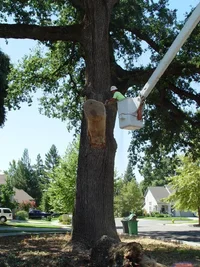
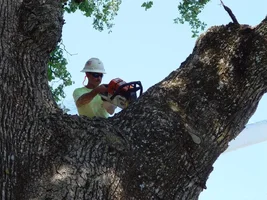
Well, what KIND of oak???

NickfromWI

Participating member
Location
Los Angeles, CA
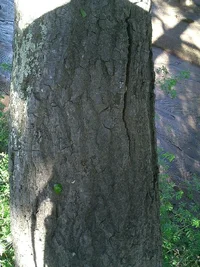
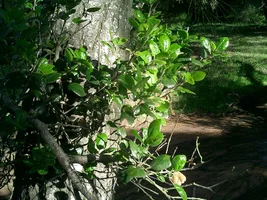
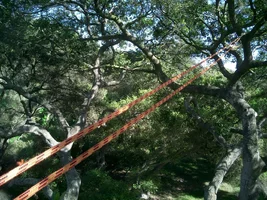
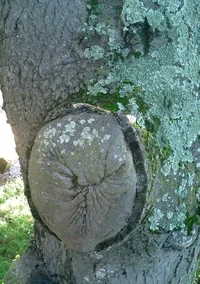
Okay, I climbed this tree the other day. I don't know my CA trees very well, so was hoping y'all could help me out on this one. Here's the background info first (the the pictures)

This tree isn't rampant in the arid area I'm in. But I see their widespread crown occasionally in ravines, canyons, and near other waterways. This one was growing on the bank of a creek that flows as drainage from a huge flower farm about a mile away. The creek bed is all sand and proably full of a lot of ferts and pesticides running from the flower farm.

Let me post a couple pics...
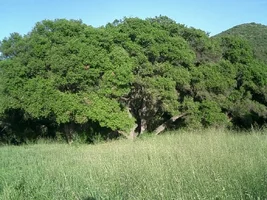
 
Ok, now let me break down the little I know. I've climbed a live oak of some sort in south carolina, so I was sure this was a live oak- no doubt about that. I remember when I first saw a live oak (I saw one before I'd ever heard of one) and my first thought (when looking at the leaves) was, "Is this some sort of a holly?"

Couple years ago I climbed some trees near Santa Barbara at Cachuma Lake (or is it lake cachuma?) and they had what I think were called Coastal Live Oaks and Blue Oaks (sorry, I don't remember the latin names). I see a lot of similarities between the trees I was seeing in the SE USA, the trees I saw at Cachuma, and of course the tree in this post. I want to get this all sorted out so next time I see a similar tree, I will know what I'm lookin' at.

Thanks guys!

love
nick
 
Nick,

Blue oaks (Q. douglasii) grow as far south as Pt Conception
and they are deciduous.

Coast live oaks (Q. agrifolia) are evergreens and
common along most of the CA coastal areas.
It could also be an interior live oak (Q. wislizenii) or
a canyon oak (Q. chrysolepis). All three can have significant
variations in the leaves. You can find a leaf with a smooth
margin close to a toothed one. I heard all sorts of theories
as to why this happens, genetics, sun exposure, deer access,
blah, blah.

If you look closely at the pictures of the leaves, note all the
tiny holes in the twigs. The were caused by wasps.

I am guessing Q. agrifolia because it is so common and the leaves
of Q. chrysolepis are pale green on the underside which
I didn't see in the picture.
 
I would say your probably correct Ptar. Now that I can see some pics and the size of the tree. That would be a Synipid wasp boring those little holes Right? Although there are many different typs.

ARe those interior leaves Nick ? They look fresh and not mature yet .Which may be an indication that its not a Costal. Costal live Oak leaves are usually fairly thick and not very plyable with a whitish tinge to the under side..If you get a chance to look at this tree later in the year, Take notice of the leaves through out the tree. You''ll notice they will sometimes very greatly in form and can fool a person as to what variety it may be . However , Costal Live Oaks get very large and stately vs, Canyon live oaks. Interior can get large to , but different leaf pattern. More elongated and smoother from what I have noticed.The leaves on this tree may not be mature yet. Just a guess though.

Sorry Mark, Definatly not a Valley Oak . Good try though

Heres a Valley Oak that had a latteral fail. To bad because this was a tree with about a 120' spread.

Greg
 

Attachments

  • 21669-hreitage tree #1.webp
    21669-hreitage tree #1.webp
    242.9 KB · Views: 137
Well Nick , After studying the pic and doing a little more research, I'm going to have to say Ptar is right once again. COstal live oak. All the trees mentioned are evergreens with exception of the valley oak.

Greg
 
Ohhhh....That kind!

I like having Ptar around, he always knows the answers to my ID questions!

Greg, yes, those leave ARE interior leaves and some are very new interior leaves. If I remember, next time I'll get some pics of the exterior leaves and take a look at the underside.

love
nick
 
[ QUOTE ]
I would say your probably correct Ptar. Now that I can see some pics and the size of the tree. That would be a Synipid wasp boring those little holes Right? Although there are many different typs.

[/ QUOTE ]

I dunno, I would guess gouty oak gall, Callirhytis quercuspunctata,
from the Cynipidae family like the cynipid gall wasp.

Great gall site.

quercuspunctata == spotted oak? maybe all these little holes make the tree
look like it has spots?
 

New threads New posts

Back
Top Bottom