V.T. or Not To Be?

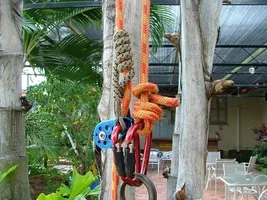
The Valdotain Tresse - This is knot I seem to see many people tieing incorrectly.

I know there can be variations with different numbers of turns and wraps but, once and for all is this the correct way to tie a V.T.? with the top piece of rope coming down and staying under the lower piece of rope for all the wraps????

please see attachment
 

Attachments

  • 94659-VT.webp
    94659-VT.webp
    114.7 KB · Views: 379
This is my point BrendonV,

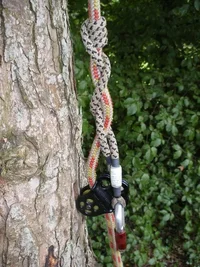
your V.T. looks right to me as well, and I bet it works just fine, but your have your wraps the opposite from mine. The top piece of rope which comes down from the turns going over the lower piece at the start of the wraps.

Which is correct?
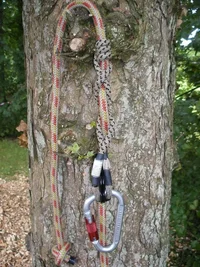
brendon's?
94661-NewTribe004.jpg


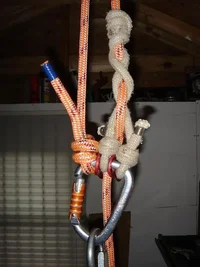
mine?

94660-VT2.JPG


Does it matter?
 
tockmal:


The following quotes are from the article 'An Overview of Climbing Hitches'

http://www.treebuzz.com/pdf/climbing_hitches.pdf

which can be found in the Articles section of this website (see the menuline at the top of this page). The article has more information on these and other climbing hitches (including the Machard and the Machard tresse), and is illustrated with good photos and drawings.


[ QUOTE ]
The Valdôtain is actually quite easy to tie.
The split-tail makes seven turns around the
climbing line (Figure 7). A carabiner is then
attached to the eyes of the split-tail, and the
carabiner is pulled down so that the legs of
the split-tail cascade into place (Figure 8).

[/ QUOTE ]


[ QUOTE ]
The Valdôtain tresse (also called the Vt) is
tied in a similar manner as the Valdôtain but
with one significant difference: Four turns
are made around the climbing line, then the legs are braided down the line, below the
wraps/turns. “Braided” means that, as the
legs are passed around the climbing line,
each leg alternates between being on top of,
then under, the other leg. After the first four
turns are taken around the climbing line,
the top leg continues around the line but
moves down (rather than up) the line and
is first on top of, then under, then on top of
the other leg. A carabiner is then attached
to the eyes of the split-tail and the knot is
set (Figure 9). When completed, the Valdôtain
tresse looks much like the Valdôtain
(compare Figures 9 and 8).

[/ QUOTE ]

 
tockmal, i use the vt as well and i use to use it like you have it, now a days my vt seems to have less helixs as it were than yours, mainly because i noticed my vt slipping more when it had that many twists, but i was also using a 10mm beeline on a 11mm rope, doesnt really make the greatest friction hitch set up, ive since switched my beeline and now im good to go, wish i had pics for ya, how do you like your treemotion pulley?
 
Mahk,

thanks, thats a great article.

“Braided” means that, as the
legs are passed around the climbing line,
each leg alternates between being on top of,
then under, the other leg."

understand now.
 
[ QUOTE ]


94660-VT2.JPG


Does it matter?

[/ QUOTE ]

[ QUOTE ]
“Braided” means that, as the
legs are passed around the climbing line,
each leg alternates between being on top of,
then under, the other leg.

[/ QUOTE ]

In your picture tockmal you do not have the braids wrapped over and then under, the same leg is on top of the second leg on both 'braids' coming down the rope. This is a small detail and of course I'm no expert. From what I understand, it doesn't matter if you start on top or underneath but as long as the braids are switched up as they go down the line... I'm sure you're friction hitch still works though...

jp
grin.gif
 

New threads New posts

Back
Top Bottom