Trees in trouble

data farm 26

Been here a while
Location
the raft
How about a thread for trees in trouble, post photos and source opinions and recommendations from the brain trust?

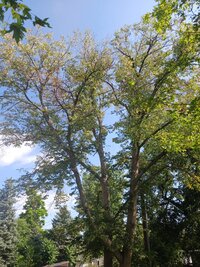
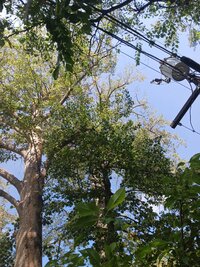
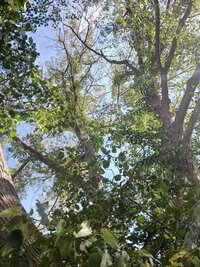
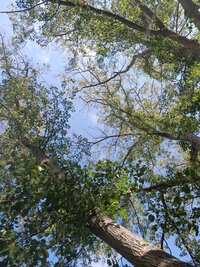
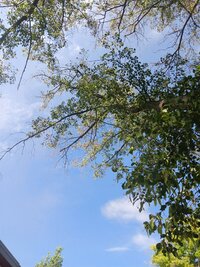
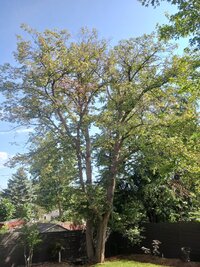
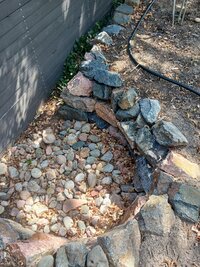
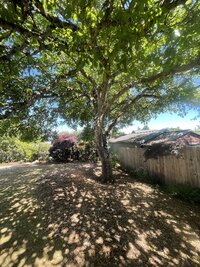
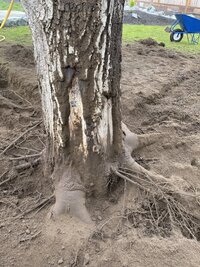
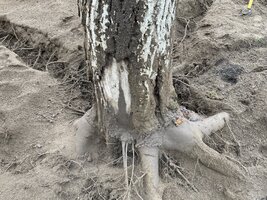
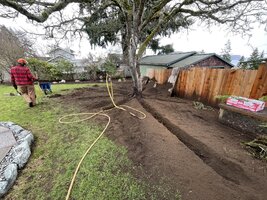
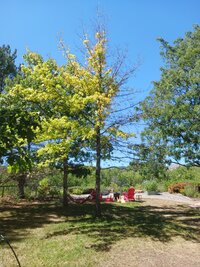
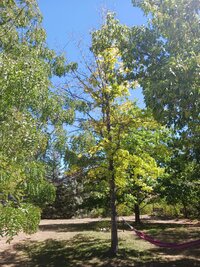
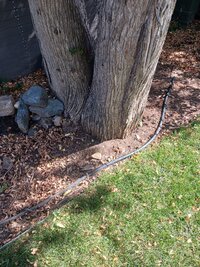
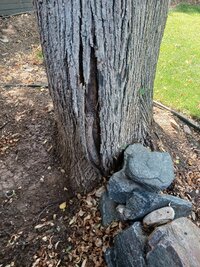
I'll start with this Linden, the old house was scraped about 10 years ago and a new one was put in along with a foot or two of soil on top of the roots and right up against the trunk. Do you folks think this tree is worth putting more resources into? I think it had been fertilized by Davey since it started to decline and had some dead branches removed.
20230823_102352.jpg20230823_102408.jpg20230823_102439.jpg20230823_102503.jpg20230823_102521.jpg20230823_102525.jpg20230823_102527.jpg20230823_102542.jpg
 
Looks like a pretty full canopy still, although that doesn’t always mean much.

Hard to “diagnose” just based off photos.

What does the property owner want? Are they keen to try and preserve it, or is it a source of constant worry that takes away from the enjoyment of their property?

Context in these situations is important.
 
One of the first things I may suggest if preserving is some pruning in the areas where those branches appear to be on decline and reaching towards the house.

Might be a candidate for cabling as well (couldn’t tell if it has already been or not).
 
I agree @climbingmonkey24 - IF they really want to keep it, I'd help paint a realistic picture. I'd give it less than 50% odds that its still here in 20 years. But it may be. But if we keep it well and manage the risk for 10 years are they OK with that?

If so, deadwood. I don't like the way its attached at the base - but don't get a really good look in the pics, so a cable might be a good idea.

Fertilized, with what? Based on what? Did they soil test?

I'd be more prone to use a tree growth regulator than a fertilizer for a tree that just lost a lot of its roots.

Having said all of that...12" of soil over the root system is bad. 24" is really bad, so first thing may be to figure that out. How much of the root system was impacted. Is there a way to change that at all? It kinda looks like the grade change ended at the fence? Could you, maybe start at that new multi-stemmed tree to the left in the one pic and made a semicircle connecting to the fence on the other side where you taper the soil back to original grade within about 2-3' of the trunk, then flat to the trunk? They'd loose yard. How important is that yard space? More or less than the tree?
 
I agree @climbingmonkey24 - IF they really want to keep it, I'd help paint a realistic picture. I'd give it less than 50% odds that its still here in 20 years. But it may be. But if we keep it well and manage the risk for 10 years are they OK with that?

If so, deadwood. I don't like the way its attached at the base - but don't get a really good look in the pics, so a cable might be a good idea.

Fertilized, with what? Based on what? Did they soil test?

I'd be more prone to use a tree growth regulator than a fertilizer for a tree that just lost a lot of its roots.

Having said all of that...12" of soil over the root system is bad. 24" is really bad, so first thing may be to figure that out. How much of the root system was impacted. Is there a way to change that at all? It kinda looks like the grade change ended at the fence? Could you, maybe start at that new multi-stemmed tree to the left in the one pic and made a semicircle connecting to the fence on the other side where you taper the soil back to original grade within about 2-3' of the trunk, then flat to the trunk? They'd loose yard. How important is that yard space? More or less than the tree?
This is pretty congruent with what I was thinking for the most part.

I told the tree owner that it looks like a lost cause to me unless there was major root zone remediation and even then it's far from a sure bet. I don't do this kind of work so I referred her to some people who have airspades and phc departments but she again just got told they would "fertilize" and it'll likely come around in a few years.

Pretty disappointing to me, I'm not a phc guy but I would have thought growth regulators and rcx would be the way to go with this tree. But just thinking abut how much soil would need to be removed just to make a difference, I didn't want to be involved.

Lindens in my experience don't handle disturbances to the root zone very well, seemed pretty likely this thing would just slowly decline, there were already quite a few big cuts on the main stem leading me to believe it's been dying back for a number of years.

Anyways the guy is going to fertilize it and we're going to remove the dead branches next week so we'll see what happens. My guess is we're going to be removing this thing in a few years but who knows. I recommended planting a replacement tree nearby just in case. This one hides some pretty ugly power poles from the yard.
 
  • Like
Reactions: ATH
I hVe had a similiar situation with a new construction home. Builder got my number and asked my opinion at the half way mark in the project. At that point a half dozen white oaks had 2-3 feet of fill on top of them. I gave him suggestions for remedy but he chose not to take it because it was too expensive. The house was a 1.2 million home.

There is an old book out there by P.P.Pirone who was a professor at Rutgers that has someremedies that I have seen work. The book is from the '50's and has some really old stuff in it that no longer recommended. Makes interesting reading.
 
Builder got my number and asked my opinion at the half way mark in the project.
Always
At that point a half dozen white oaks had 2-3 feet of fill on top of them.
Always
I gave him suggestions for remedy but he chose not to take it because it was too expensive.
Always
The house was a 1.2 million home.
Always.

Anyway to the linden- if the soil has only been there a handful of years there’s still time to air spade it out of the root zone- but the compaction and possible root flare wounds and trenching… dang who knows how exactly it will respond. Like others have said- depends on homeowners willingness to invest in this tree- remain honest and realistic.

From what I’ve observed in lindens here, they are pretty vigorous and can recover quickly from topping… might come down to our environment here being ideal for them- stoked on life, these buggers. Haven’t seen how one deals with construction stress- curious to see what happens!
 
Last edited:
Always

Always

Always

Always.

....
:LOL: or maybe thats :cry:

But, yeah. Always.

Actually there was one that was still in progress. Owner called me - heard from somebody else that trees shouldn't be buried. EVERYTHING had a lot of soil on it. fortunately, they were still in process so not much landscaping was done yet. In front there was a even slope from the house to the road with (2) +/-6" sugar maple that had about 12" of soil on them. I suggested we excavate those to ground level about 6' back from the trunk and they have a retaining wall put on the back side. I'm not a designer, but I think it looks great. That was about 7 years ago. The trees looked really yellow when we did that, but look fabulous now. How much does it cost to do a retaining wall 2' by 12' long? I'm sure his landscape guy was thrilled with the extra job I passed his way! Probably 4-5 times what they paid for us to do the excavation.

In the back yard, we were able to do more sloping. They lost a lot of "playable" yard space, but saved the trees. IRRC, there was a tree or two I advised "just have these removed because you are probably going to loose them anyhow and their absence will give you more open yard for the kids."

Again, in the back, by loader and AirKnife work was the cheap work...the changes in plans that the landscaper would have done with different stone work, etc. certainly added to the cost. I made several references to better planning from the start...
 
The tree will continue to decline and be a removal unless some serious RCX happens. I recently did this to an English walnut, nearly the same setup as yours. My guess is grade change at the flair isn’t as bad as 24” but I could be very wrong. I think I see a hint of one buttress root, or at least the flair from it. I’m seeing some dark spots on the bark of one of the stems. I’d guess this could be a root based pathogen like armillaria or phytopthroia (check the spelling).
Sounds like you already know the cause which is the development and fill. Any fertilizer is going to be BS, any treatment other than correcting the problem isn’t going to fix the tree.
With proper management the tree can recover, it doesn’t look too far along.
 
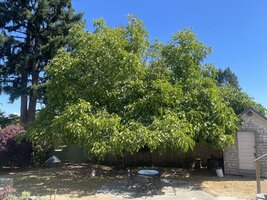
Here’s my walnut. It’s responded very well, but I’m also not declaring victory yet. It is a bit more than 30% girdled from an armillaria infection.IMG_1570.jpegIMG_1569.jpeg
It’s responded so well we will be doing heavy reductions over two cycles spaced 3 years apart. The photos don’t show it well, but it was topped too, with 4-6” regrowth which are being girdled by sapsuckers.
 
Last edited:
I'm not sure of the ph but generally the soils here are super alkaline. Almost certainly chlorosis though imo. To me it seems like a goner but some peeps are going to inject it with iron. I'd be really surprised if they could turn it around but I'm typically a pessimist when it comes to trees in trouble.
 
  • Like
Reactions: ATH

New threads New posts

Back
Top Bottom