SRT Reaching the tips.

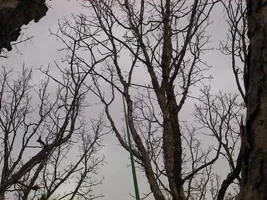
here is an example in a white oak. I would have never felt comfortable with this branch isolated, but bu threasding it back through neighboring crotches, I changed the angles and made it work, it was positioned directly over the center of the tree.
 

Attachments

  • 257468-srtredi.webp
    257468-srtredi.webp
    67 KB · Views: 225
ok, very compelling thread. my question is, does all this weaving and redirecting affect the possibility to be lowered? Srt appeals to me because the people I work with dont climb. Is my weight sufficient to counteract all this friction from natural crotches to be lowered if neccessary?
maybe its a dumb question, but I have 0 experience srt and when I use a throwline, the more limbs the line runs over the harder it is to get it to the ground.
getting all the outer tips is important, but not if it adds so much friction to the overall system...
thanks
 
Great thread so far! So, who is on the leading front with a retrievable/removable Srt redirect! Thanks for the info!! Slowly but surely being converted to Srt...
 
[ QUOTE ]
who is on the leading front with a retrievable/removable Srt redirect!

[/ QUOTE ]

There's nothing different in using a redi with Srt or DdRT...simpler if anything. Use a ring/ring and you're off.

It's really rare that I've needed to use a redi on SRT. There always seems to be a branch that will work.
 
Why would you need to come up with a retrievable/removable redirect? Natural crotch, its retrievable if you use the rope trick (i'll start another thread on that soon) And no need to remove from the ground. The reason r/r redirects are needed in Ddrt climbing is because of the need to manage friction. You don't have this problem in SRT, the friction never changes. Thats one of the beauties of SRT.

As far as the rescueable situation, depending on how you set your rope you would be able to be lowered. The way i did in this tree (and do with most tree) It would create to much friction (i think). I think rescueable SRT set ups are mostly only applicable in ascent where you are not able to quickly lower yourself. Most other situation that you would need to be rescued while working the tree you should either be lanyarded in (chainsaw cut) or your trapped (piece of wood swings back into you) neither situation will they be able to lower you anyways. If you take a swing and get hurt, they can not analyze the severity of the situation from the ground and therefore should not be "rescuing" you from the ground. That could lead to more injuries or worsening the injury. Those type of rescues should be handled delicately and by trained individual(s).

It took me a while to trust high TIP in SRT. Start low and slow, my confidence improved dramatically from doing small ordimental trees as well as smaller maples. I normally set my line in a large branch union initially and ascend. That way i can inspect my TIP and also plan my climb. I wouldn't want to set up that high from the ground. Also I test every TIP first before taking my lanyard off. Watching how the limb and tree reacts as i put weight into the line.

When i use a natural crotch redirect thats very high like in the pictures, i orient the rope to run on the backside of the lateral so the smaller limb is only holding it in place, not taking the majortiy of the weight of force from the rope. If this isn't clear i'll try and get a picture of it tomorrow. I really want to make sure i'm clear in what i'm saying and if i'm not let me know and i'll try and get pictures (i learn better visually, so assume most of you do as well).

Try everything low and slow before taking it to the skies.
grin.gif
 
How many folks doing SRT carry a small throwline while doing difficult crown cleans? It seems to me that it might be worth carrying in this scenario. At times much easier than wiggling your way through high crotches, or in trees with a lot of interior sprouts that might make monkey fisting problematic.
And are we sure that the forces on SRT natural crotches or high TIPS are less than what they would be with DRT? I think it would very much depend. More redundant, quite possibly, but less force? Not necessarily.
Also, chep, I believe you would have to have quite the labyrinthine path through a crown to keep ground folks from being able to lower you with an SRT system, provided you didn't have your lanyard on etc. That's what you were after right? Think about lowering a branch that weighs what you weigh in the tree. What would you have to do to keep it from moving with all resistance was eliminated at the knot/friction device/what have you.
I'll also say that I think broad weeping willow crowns with a lot of tip dead has probably been some of the most challenging pruning I've done. Nice job man!
 
caleb, look at the attachment in my post with the white oak. If that limb were isolated it would be pulled down and leverage that branch in an awful way. it would be very bouncy and scary because you would die if it broke. It was very skinny. the way i have the force with the SRT redirect is directly down the compression grain of that limb. when I put weight on the rope the limb is pulled in ward toward the other crotch. a limb failure would cost me a couple foot drop at the most. failure would have that branch pulled into the branch behind it This tree was made easy by having that awesome tie in point. but I never would have isolated that crotch by itself.

Its not about how much force its about direction of force.
 
[ QUOTE ]
Great illustrations!

Setting redis and not having to clear false crotches on the way out is a HUGE timesaver. Getting rid of rope friction makes SRT climbing smoother and my shoulders don't get worn out from yarding so much rope around corners.

To add a bit of weight to my access line I have a 12oz throwbag with a shoelace loop tied on. This gets girth hitched to my rope to give it weight and allow the Pantin to slide up. When I get into the tree I yard up my tail and hang the throwbag on my harness. If I need to advance my lanyard or reset my climbing line I use the throwbag for more weight.

[/ QUOTE ]

Excellent thread and I couldn't agree with Tom more. After seeing Tom's throwbag and shoelace loop at the Expo, I started doing the same thing and this works great. I used to tie my throw cube with line and throwbags inside of it onto the end of the SRT access line, but after ascending about 30' up the line, the heavy weight would cause the Pantin to kick out, which was a PITA. Tom's trick is the ticket and works great.
 
This is another aspect of SRT that requires rethinking the way a person climbs. In DdRT the loads on the TIP are typically vertical/compression or side loads/torque. If the TIP limb isn't very strong it will bend and can be dangerous. Most of us have probably ascended on a TIP that would not be used for working.

Like Kevin said, threading/lacing the SRT line keeps the loads mostly in compression. By choosing which way the rope goes around an SRT redi you can change the load on the branch.

Getting the most out of SRT requires a lot of new-think. There are some simple solutions to climbing problems that can be solved using SRT that are a challenge with DdRT.

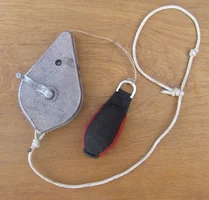
I've got a small throwbag/line setup that goes with me sometimes. I took a carpenter's chalkline, cleaned it, loaded it with throwline and but on a 10oz bag. I have a leash on the end so that I don't have to worry about the fumblies and I can work with both hands. The leash chokes onto my wrist. It's made with parachute cord, a slip knot and a stopper. Cost=zero, all stuff laying around.
 

Attachments

  • 257566-CS-chalklinethrowbag.webp
    257566-CS-chalklinethrowbag.webp
    53.1 KB · Views: 106
Nice thread Derrick! Having watched Derrick struggle through the process of learning SLT climbing, then making it work for him, I must emphasize the amount of thought process and pre planning that goes into a climb like this.

Discussing the redirects or which hardware to use is great and extremely valuable. However, do not overlook the forward vision before the climb and in the tree it takes to pull this off efficiently. Derrick goes through a well thought out series of checks and procedures before trusting a TIP or RD(redirect). He alluded to these. Read them and heed them! As he so wisely said go low and slow!!

In my judgement, what makes Derrick and efficient, competent SL climber is his readjustment in thinking that Tom explained here and in the past. That and he is freakishly tall:) !!! Adjust your perceptions and thinking then reap the possibilities and possibly overcome your lack of physical stature :) !!! Do not get too tied up in hardware (pun intended!) before you get the thought process down.

(For the record, I do not SLT climb and have done similar trees if not this very one Doubled Rope. If I remember correctly, my climb resembled T.K.'s in Hawaii albeit slower and not nearly as cool.)

Derrick you and I must put a video together to show this in motion. Stills cannot show the process well enough.

And Guy, Shame on you for suggesting a pole clip!! Did you not know tools on a pole are the devil's handiwork!!!!
crazy.gif
Somewhere akin to lighting up in an airplane!
grin.gif


Just kidding, but they are anathema unless absolutely necessary in our parts.

Tony
 
would using redirects reduce friction enough to enable lowering from any point in your climb? I am kinda hung up on the rescue bit.
i love the concept of weaving your way through the tree. it sees to open a lot of possibilities. but I really thought that a huge part of srt was the ability to be lowered.
do you srt climbers choose routes that would enable lowering? You never plan an accident I know, but how do you incorportate that aspect into your climb. or do you. wouldnt it be a bummer to get into a climbing style that makes you feel a bit safer because of a rescue factor, then not have it work in an emergency?I realize there are other benefits besides rescue, but i never really thought about the complications untill I see you guys weaving your 'webs' all over the tree
i am just asking. i hope that no one ever has to get lowered!
 
As my SRT climbing system evolved I realized that a rescue component would be easy to incorporate. The trunk wrap anchor is a result. In a rescue situation the trunk wraps can be reduced by unwrapping the rope but keeping the friction brake on.

Any additional friction from redi's or rope/tree contact will, of course, add friction.

I doubt that anyone plans on becoming a victim. But, if they do and still have some capabilities the victim has a chance of being lowered.

Think of it this way...with SRT their is a good chance that a ground-based lower can be completed. With DdRT there is no chance.

More of my thought and planning goes into eliminating redi's so that when I pull my rope out of the tree there isn't too much friction. One redi too many and the climber has to go up and rescue their rope...DAMHIKT! Hahahhaha!
 
Tom, isn't a climber using ddrt on a ffc off a single line as lowerable in the same parts of the crown as an srt climber would be? Or, now that I think about it, maybe there's more friction because the ddrt climber has both legs of his line instead of 1?

I have to disagree with the comment above about pole clips: shunning their use will lead to making bigger cuts than may be desirable, because you can't always climb out to the cut you'd rather make. Bigger cuts equal more decay, more stress on the tree.
 
Fred,

I hear what your saying. We use clips and saws when necessary. However, I have found as a trainer and manager that stressing appropriate use sparingly helps bring out the best in climbers like Derrick and others I have worked with.

Somedays the pole clip is Manna from on high. Most days it stays in the truck.

My comments to Guy were meant to be humorous.
grin.gif
grin.gif
grin.gif


Although, after I turn off my computer I plan on making the sign of the evil eye in your direction
smirk.gif


Peace,

Tony
 
[ QUOTE ]
I have to disagree with the comment above about pole clips: shunning their use will lead to making bigger cuts than may be desirable, because you can't always climb out to the cut you'd rather make. Bigger cuts equal more decay, more stress on the tree.

[/ QUOTE ]And they also mean more of the tree and its benefits is removed than was necessary.
frown.gif
Yeah Tony I knew that was messin', just as this is: if pole use is anathema in your parts, then maybe your parts are more attuned to the industrial athlete than the arborist.
shocked.gif


I pruned 8 trees 70'-100' tall in 5 hours yesterday, ascending SRT with some very high TIPs thanks to bigshot, and had energy last night thanks to wraptor, but that's another thread. On every ascent I took up the 7'-14' polesaw--indispensable for setting ropes and reaching tips- and twice called for the hayauchi. no WAY could the right, small, cuts have been made without it, given my physical limits, without a pole.

But I still descend the old way so I am interested in finding out more about the options. And Trev, SRT ascent will be demonstrated in Sydney next July 25 at 1 p.m. http://www.isa-arbor.com/events/conference/climbersCorner.aspx
As far as SRT working the tree and descent, we'll see what my old brain and body can learn in the interim...thanks all for showing the way.
smile.gif
 
But Tom it can have some of the same benefits,if you have a week tip you can stream your srt line over multiple unions.Then install your floating false crotch and go Doubled rope tech and have even a greater benefit of working thru a high efficiency pulley.
 
I know, Jimmy...its just my way of defining SRT :)

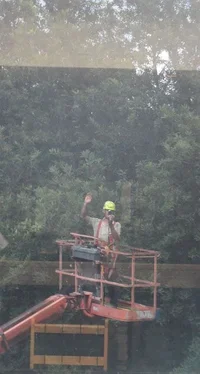
Whatever makes climbing easiest. Unfortunately for me...that means using the JLG a lot.
 

Attachments

  • 257760-CRreflectioninwindow.webp
    257760-CRreflectioninwindow.webp
    41.6 KB · Views: 68
[ QUOTE ]
Yeah Tony I knew that was messin', just as this is: if pole use is anathema in your parts, then maybe your parts are more attuned to the industrial athlete than the arborist.
shocked.gif


[/ QUOTE ]

Nice Guy! And your right it's a gun show around here! Gunna work with us, bring your sowing kit. WE'RE RIPPED!!!
grin.gif
grin.gif
grin.gif


All goofing aside is comes down to the cut. Make the right cut using whatever safe method you must, but make the proper cut else your wasting time and hurting trees.

Always remember we climb trees to prune them we don't happen to prune because we are up there.

Tony
 

New threads New posts

Back
Top Bottom