
Navigation
Install the app
How to install the app on iOS
Follow along with the video below to see how to install our site as a web app on your home screen.
Note: This feature may not be available in some browsers.
More options
You are using an out of date browser. It may not display this or other websites correctly.
You should upgrade or use an alternative browser.
You should upgrade or use an alternative browser.
slim flux on willow oak
- Thread starter Webster
- Start date


guymayor
Branched out member
- Location
- East US, Earth
What stress factors? And how much do you charge, $2/poopscoop?

treevet
Branched out member
- Location
- Cincinnati, Ohio
a little knowledge is a dangerous thing

TreeLogic
Branched out member
- Location
- Coastal SC
Webster, there are some good threads on lightning strikes here on the buzz. They may or may not not fit your situation but if they don't, you could always start a thread on it. This particular thread is about Slime Flux. The real problem with posting about a lightning strike here is that in the future, when people search about lightning strikes on trees, they might have learned something from your post, but they will have trouble finding it because it is in a Slime Flux thread. Food for thought.
As for the strike damage on the tree, in my experience no lightning strike is the same. They're all different. When they're bad it's pretty obvious (to us at least - not the client) the tree will probably succumb to it. Since yours doesn't seem to you to be too bad, and the tree didn't seem to be suffering prior to the strike, I prefer the 'wait and see' option. FWIW.
As for the strike damage on the tree, in my experience no lightning strike is the same. They're all different. When they're bad it's pretty obvious (to us at least - not the client) the tree will probably succumb to it. Since yours doesn't seem to you to be too bad, and the tree didn't seem to be suffering prior to the strike, I prefer the 'wait and see' option. FWIW.
Last edited:
treevet
Branched out member
- Location
- Cincinnati, Ohio
I have always taken the word "client" to refer to a person or entity that employs a professional to, amongst other services, make use of their monies alloted to a project in the best and most advantageous and economical means currently at hand. I think likely throwing away $690. of their hard earned money, unless they are excessively financially endowed, is a travesty and very unprofessional. This is a forum of opinions and that is mine. I can elaborate, but the fact as mentioned that this is off topic is a reason not to I suppose.
guymayor
Branched out member
- Location
- East US, Earth
vet, we are hired to provide a look at the range of reasonable actions available and help clients choose the best and most advantageous way to go for them. Unless they ask me to, I don't take the time to research their economic situation. We are not qualified to make budgetary decisions for them. It's not our business to know whether their money is hard earned or whether they have too much. Some cry poor at the beginning but then hand me the checkbook later on. Who am I to shortchange the tree by pinching the client's pennies for them.
Only they can determine what's economical.
I know what you're saying is ISA dogma we've been drenched in for decades, but like 1/3 Rules we often take that too far. It would be an unprofessional travesty to sit at a computer screen and judge what is or is not going on 12" below ground on a tree across the country. Delay can mean that more expensive treatments will be needed later on, or that the tree will be lost as a result of us sitting on our aspirations for being our client's Chief Financial Officer.
Wait and See is a strategy worth reconsidering. This applies to cleaning and tracing damaged bark after lightning, or after infection/infestation appears on a buttress root. A little inaction can be a very dangerous thing. From ISA's June issue:
"Here at the flare, the trunk broadens to form buttress roots. Are those black droplets fresh paint or something? “To realize that you do not understand, is a virtue,” Ru noted, quoting the Tao Te Ching.
I nodded as I pulled a chisel out of my bag. “Those black droplets are coming out of ‘bleeding lesions.’ It looks like a soil-borne organism, such as Phytophthora sp., is colonizing the phloem tissues under the bark. ..This pest should be managed with IPM treatments aimed at compartmentalization.” I flipped through pages 354–367 of my book on diseases. “‘Remove soil from stem tissue, dry the area, deeply aerate nearby soil, clean and heat the lesions, and amend the soil with calcium fertilizer and beneficial microorganisms to help speed compartmentalization.’”
Only they can determine what's economical.
I know what you're saying is ISA dogma we've been drenched in for decades, but like 1/3 Rules we often take that too far. It would be an unprofessional travesty to sit at a computer screen and judge what is or is not going on 12" below ground on a tree across the country. Delay can mean that more expensive treatments will be needed later on, or that the tree will be lost as a result of us sitting on our aspirations for being our client's Chief Financial Officer.
Wait and See is a strategy worth reconsidering. This applies to cleaning and tracing damaged bark after lightning, or after infection/infestation appears on a buttress root. A little inaction can be a very dangerous thing. From ISA's June issue:
"Here at the flare, the trunk broadens to form buttress roots. Are those black droplets fresh paint or something? “To realize that you do not understand, is a virtue,” Ru noted, quoting the Tao Te Ching.
I nodded as I pulled a chisel out of my bag. “Those black droplets are coming out of ‘bleeding lesions.’ It looks like a soil-borne organism, such as Phytophthora sp., is colonizing the phloem tissues under the bark. ..This pest should be managed with IPM treatments aimed at compartmentalization.” I flipped through pages 354–367 of my book on diseases. “‘Remove soil from stem tissue, dry the area, deeply aerate nearby soil, clean and heat the lesions, and amend the soil with calcium fertilizer and beneficial microorganisms to help speed compartmentalization.’”

” I f3lipped through pages 354–367 of my book on diseases. “‘Remove soil from stem tissue, dry the area, deeply aerate nearby soil, clean and heat the lesions, and amend the soil with calcium fertilizer and beneficial microorganisms to help speed compartmentalization.’”
Guy, what book is that?
treevet
Branched out member
- Location
- Cincinnati, Ohio
you are awesome guymayor
 I will be back a little later after work. I might have a few things to add. Hang in there Webby.
treevet
Branched out member
- Location
- Cincinnati, Ohio
Guy, what book is that?
I think it may be "Diseases of Trees and Shrubs" Sinclair, et al. but I have a first edition, 1987 and I don't think our pages match.
I remember some work involving excising cankers in fruit trees I read years ago, with a blow torch, but I don't think it was anything reviewed/published.
guymayor
Branched out member
- Location
- East US, Earth
2nd edition much added incl frothy flux. Sinclair verifies and reviews and publishes info from field work, like heating infections to sanitize. This book is essential imo if you seek to do diagnosis.
treevet
Branched out member
- Location
- Cincinnati, Ohio
vet, we are hired to provide a look at the range of reasonable actions available and help clients choose the best and most advantageous way to go for them. Unless they ask me to, I don't take the time to research their economic situation. We are not qualified to make budgetary decisions for them. It's not our business to know whether their money is hard earned or whether they have too much. Some cry poor at the beginning but then hand me the checkbook later on. Who am I to shortchange the tree by pinching the client's pennies for them.
Only they can determine what's economical.
I know what you're saying is ISA dogma we've been drenched in for decades, but like 1/3 Rules we often take that too far. It would be an unprofessional travesty to sit at a computer screen and judge what is or is not going on 12" below ground on a tree across the country. Delay can mean that more expensive treatments will be needed later on, or that the tree will be lost as a result of us sitting on our aspirations for being our client's Chief Financial Officer.
Wait and See is a strategy worth reconsidering. This applies to cleaning and tracing damaged bark after lightning, or after infection/infestation appears on a buttress root. A little inaction can be a very dangerous thing. From ISA's June issue:
"Here at the flare, the trunk broadens to form buttress roots. Are those black droplets fresh paint or something? “To realize that you do not understand, is a virtue,” Ru noted, quoting the Tao Te Ching.
I nodded as I pulled a chisel out of my bag. “Those black droplets are coming out of ‘bleeding lesions.’ It looks like a soil-borne organism, such as Phytophthora sp., is colonizing the phloem tissues under the bark. ..This pest should be managed with IPM treatments aimed at compartmentalization.” I flipped through pages 354–367 of my book on diseases. “‘Remove soil from stem tissue, dry the area, deeply aerate nearby soil, clean and heat the lesions, and amend the soil with calcium fertilizer and beneficial microorganisms to help speed compartmentalization.’”
Guy in this post you are vascillating between 2 different issues. But they do have some similarities. We have wounds in both, questionable treatments in both and some consideration of ethics....like it or not Guy...in both. In Mr. Webster's case, most experienced arborists have been around the block long enough to know that a lightning strike, not involved with an obvious and significant defect, is best waited on to see if the tree is going to die (expensive voodoo treatments are of no significance during this interim) so the HO's funds are not wasted when he may have the big expensive treatment (pruning cut at base) in short order.
Webster's bragged about gouging charge of $690 to fertilize the tree, at the wrong time of year I might add, later apologized for by adding he had to remove steaming piles of defacation, whether fabricated or not...remains unethical and I think that should be obvious to everyone. Dose and timing. Also any treatment could be equated to hurrying up on a 60 degree day to plow a driveway before the snow melts (for profit). Wait and see and a little watering MAY be beneficial although the climate at this time of year may render this needless too. At least he intervened in the hurried (for profit) preemptive possibly unwarranted removal of the tree and he should be applauded (golf clap) for that, although his ulterior motives may not have been pristine.
As for your treatment, we have discussed this before and I still have yet to see a blow torch described in any treatment based on science. "Honey, the tree is looking bad out front"...."Ok dear, I will get out the blow torch". Seems to me, as said earlier, you are doing more harm than good with such a non precise tool. Might as well beat on the wound with big steel sledge, not that wooden mallet you use for sounding. The tree is actively compartmentalizing and you are destroying any attempts in this effort. Sure you are stimulating callus formation, but so would the sledge. Why not a small mallet, real sharp chisel and trace out the stain?
Here is a short concise article on the dif. between slime flux and frothy flux. Guess I need to buy the newest edition of Sinclair's. http://kdminer.com/main.asp?SectionID=74&subsectionID=395&articleID=18004
guymayor
Branched out member
- Location
- East US, Earth
Dave, I agree you need the updated text; it's been out for 9 years now. In it you will see recommendations for applying heat to infections, old school treatment in orchards.
The article linked erroneously assumes there is one pathogen that kills cambium, and doesn't explain the shellac advice, which seems odd.
Many experienced arborists have been around the same block so many times listening to the same advice (based on erroneous assumptions; see above) over and over that they forget how to think for themselves.
The article linked erroneously assumes there is one pathogen that kills cambium, and doesn't explain the shellac advice, which seems odd.
Many experienced arborists have been around the same block so many times listening to the same advice (based on erroneous assumptions; see above) over and over that they forget how to think for themselves.
treevet
Branched out member
- Location
- Cincinnati, Ohio
Thinking for themselves, as taught by my friend and mentor, Al Shigo, involves challenging questionable practices, such as blow torching trees. Sometimes you get a little out of control. Many things become commonly accepted....because they are valid....and most important, they have properly conducted science behind them. Any published science on your technique?

guymayor
Branched out member
- Location
- East US, Earth
vet, I cited book and page numbers. If you want to question Cornell U, call em up. or better yet, get current with the 12-year-old industry references. 
The most questionable practice is to say something can't or shouldn't be done just because you don't know about it. That would eliminate a whooooooooole lot of arboriculture.
Too bad you missed out on the shingle oak: 29-pounds of fungus growing out of it. There was no published science on pruning such a tree, but we did it anyway. Bucket would not have been too much faster.
Pel, what kind of field test for pH do you recommend?
The most questionable practice is to say something can't or shouldn't be done just because you don't know about it. That would eliminate a whooooooooole lot of arboriculture.
Too bad you missed out on the shingle oak: 29-pounds of fungus growing out of it. There was no published science on pruning such a tree, but we did it anyway. Bucket would not have been too much faster.
Pel, what kind of field test for pH do you recommend?
treevet
Branched out member
- Location
- Cincinnati, Ohio
Don't think I want to spend $90.00 bucks just to find out if "blow torch" is in there my friend ...but is it? lol
Any picts from Terrace Park. We almost bought a house there instead of the one we bought in Wyoming, Oh...very similar town...lovely.
Any picts from Terrace Park. We almost bought a house there instead of the one we bought in Wyoming, Oh...very similar town...lovely.
treevet
Branched out member
- Location
- Cincinnati, Ohio
ps...I bought all the Shigo stuff about 15 years before you did too and maybe the other 70 or so texts in my library. That is not all reproachable ...is it? I know Shigo's science has not degraded one iota. Father of Modern Arboriculture...Whose your daddy? 
guymayor
Branched out member
- Location
- East US, Earth
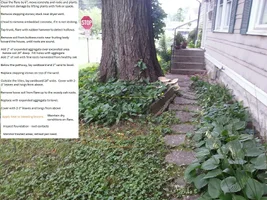
You're right; why pay $90. for a book on diseases of treeses? unless of course you are called to diagnose, and want to tread the murky waters between WaitandSee and CutItNow...o here's a reviewed-and-published account of blowtorch use on bleeding lesions. 7 smart reviewers. 
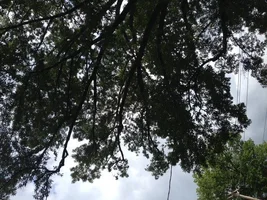
The job was great fun; it was the healthiest shingle oak i ever saw, and the red oak was growing like gangbusters.
The job was great fun; it was the healthiest shingle oak i ever saw, and the red oak was growing like gangbusters.
Attachments
New threads New posts
-
test
-
 Alternatives to standard asphalt around roots
- Started by southsoundtree
- Replies: 4
-
-

-

-
 For Sale: 2018 Vermeer BC1000XL Chipper | 918 Run Hours | Deutz Diesel
- Started by Blue Ribbon Tree
- Replies: 2
-

