Simple webbing pull test

Damn... the patterns marked 30% and 33% are the ones I see the most on stuff coming out of China... but, the bar tacking marked 66% is what I see on most quickdraw slings. I've seen the 70% and 100% patterns on USA made harnesses. Interesting. I'd really like to get a machine that can handle these materials. Clearly, @Pelorus is the man to talk to... right, Dave? You don't care if I call you up and bleed your brain out for useful information? ;)
 
Yes, that's

Yes, by vertical lines this is exactly what I was thinking.

Additionally, because of the weaker thread I am making the entire pattern a little longer and adding a bartack at each end of the long zig pattern.

To deal with the edge stretch problem, I am going to curve the bartacks away from the pull direction in a crescent.
 
When you guys use the term 'bartack' what do you mean?

From what I've read it is a complex stitch made
With a dedicated machine. It isn't just a real tight zig zag stitch
 
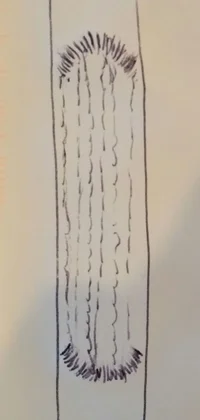
Something like this -
View attachment 42408

@Pelorus you tell me, do you see any strength add here?

It looks a bit like bartacking run amok. I think Padgett and Smith want the stitches to cross both the warp and woof of the fabric.
@ Jeff - I know almost nothing; yoyoman and Evo are the two to consult. I have broken a few machines though, and repaired some as well. With a sewing machine, timing IS everything... Delrin gears + heavy material is a bad combo.

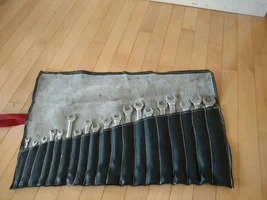
My sewing consists mostly of patching my clothes, esp. chainsaw pants that my seamstress wife is loathe to do. I did get bored enough one day awhile back to sew up a wrench pouch outta some marine grade vinyl.

IMG_20170127_152151018-2672x2004.webp

edit: one winter I also learned to sew and tie bowties. Winter can be rough up here.
 
My limited knowledge-

In sewing, a bartack is literally just a tight wide zigzag stitch.

In sewing industrial strength bartacks they use a programmable machine that can lay down anything from a smaller bar underneath, or multiple bars of increasing density, these machines also handle going backwards at the beginning and end to lock in the stitches.

They also have the advantage of better material control so the stitch placement is a lot more regulated.
 
Last edited:
For the stitch pattern, have you seen Smith and Padgett's book,On Rope for their recommended strongest pattern?

See also, How Strong is a Stitched Splice? in Nylon Highway #03 . and Sewn Seat Slings in Nylon Highway #07 Many things in On Rope were previously published in Nylon Highway in an expanded form.

Most back issues of Nylon Highway are available online, you can order the entire remaining set of paper copies for $7 (!) :
http://caves.org/section/vertical/nylhi.html
 
It looks a bit like bartacking run amok. I think Padgett and Smith want the stitches to cross both the warp and woof of the fabric.
@ Jeff - I know almost nothing; yoyoman and Evo are the two to consult. I have broken a few machines though, and repaired some as well. With a sewing machine, timing IS everything... Delrin gears + heavy material is a bad combo.

My sewing consists mostly of patching my clothes, esp. chainsaw pants that my seamstress wife is loathe to do. I did get bored enough one day awhile back to sew up a wrench pouch outta some marine grade vinyl.

edit: one winter I also learned to sew and tie bowties. Winter can be rough up here.

Nice tool roll!

I've worked in a couple of sewing shops on the digital embroidery side.

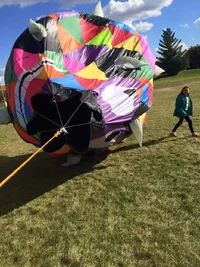
Most if the sewing I have done has been lighter weight, I have made sport kites and this 12' spike ball to terrorize kids at the park.
Spike.webp
It's a wind toy, you tie it to a tree with 50' or so of rope, the wind inflates it and the kids shove it around.
 
See also, How Strong is a Stitched Splice? in Nylon Highway #03 . and Sewn Seat Slings in Nylon Highway #07 Many things in On Rope were previously published in Nylon Highway in an expanded form.

Most back issues of Nylon Highway are available online, you can order the entire remaining set of paper copies for $7 (!) :
http://caves.org/section/vertical/nylhi.html

Great resource @hatchetation!

I had read the first link but the second was new to me, I don't like the idea of indicator stitches except for testing since they break the same thread running through the main stitches.

But both of these seem to support the warp and woof theory in On Rope which is good.
 
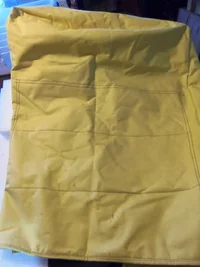
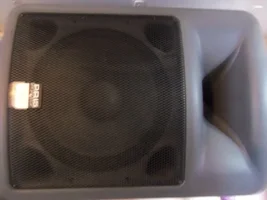
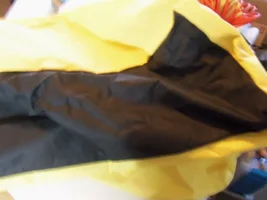
I spent one winter making covers for all the audio, live sound, guitar amp, etc. equipment I have (it's a substantial room full of shit) with the wife's Husqvarna machine. It's not a commercial unit, but it handled these materials fine. Pics are one of eight covers I made for some Peavey speakers used in a DJ/live sound rig. Orange fleece on interior view protects the speaker grill. Was a tedious, long process making all this stuff, but I learned a lot and actually enjoyed it. Saved a small fortune, too.. believe me!

SpkrCvr-1.webp SpkrCvr-2.webp SpkrCvr-3.webp SpkrCvr-4.webp

:)
 
I spent one winter making covers for all the audio, live sound, guitar amp, etc. equipment I have (it's a substantial room full of shit) with the wife's Husqvarna machine. It's not a commercial unit, but it handled these materials fine. Pics are one of eight covers I made for some Peavey speakers used in a DJ/live sound rig. Orange fleece on interior view protects the speaker grill. Was a tedious, long process making all this stuff, but I learned a lot and actually enjoyed it. Saved a small fortune, too.. believe me!

View attachment 42443 View attachment 42444 View attachment 42445 View attachment 42446

:)

Nice!
 
I found the best machine to use (unless you go industrial) is a Paff 130. After much research they seem to be the best "home" machine and are sought after by hobbyist sail makers. They can handle heavier threads and needles, and accept hand cranks. I'm currently looking for a hand crank for mine. It was given to me, with a bad motor. I just slapped it on my singer treadle and it works great (after much cleaning and oiling). A hand crank would be bomb, as with webbing the stitching run is fairly short, and it's easy to over run the stitching
 
I found the best machine to use (unless you go industrial) is a Paff 130. After much research they seem to be the best "home" machine and are sought after by hobbyist sail makers. They can handle heavier threads and needles, and accept hand cranks. I'm currently looking for a hand crank for mine. It was given to me, with a bad motor. I just slapped it on my singer treadle and it works great (after much cleaning and oiling). A hand crank would be bomb, as with webbing the stitching run is fairly short, and it's easy to over run the stitching

Adding Paff 130 to my Craigslist searches.
 
Read up on the belt, that's the issue with those machines. If there is oil on the belt, pass it up (from what I read), mine was free. Sailwright makes a decent walking foot but you would be dropping a grand easy.
 

New threads New posts

Kask Stihl NORTHEASTERN Arborists Wesspur TreeStuff.com Teufelberger Westminster X-Rigging Teufelberger
Back
Top Bottom